Grain10 recipes
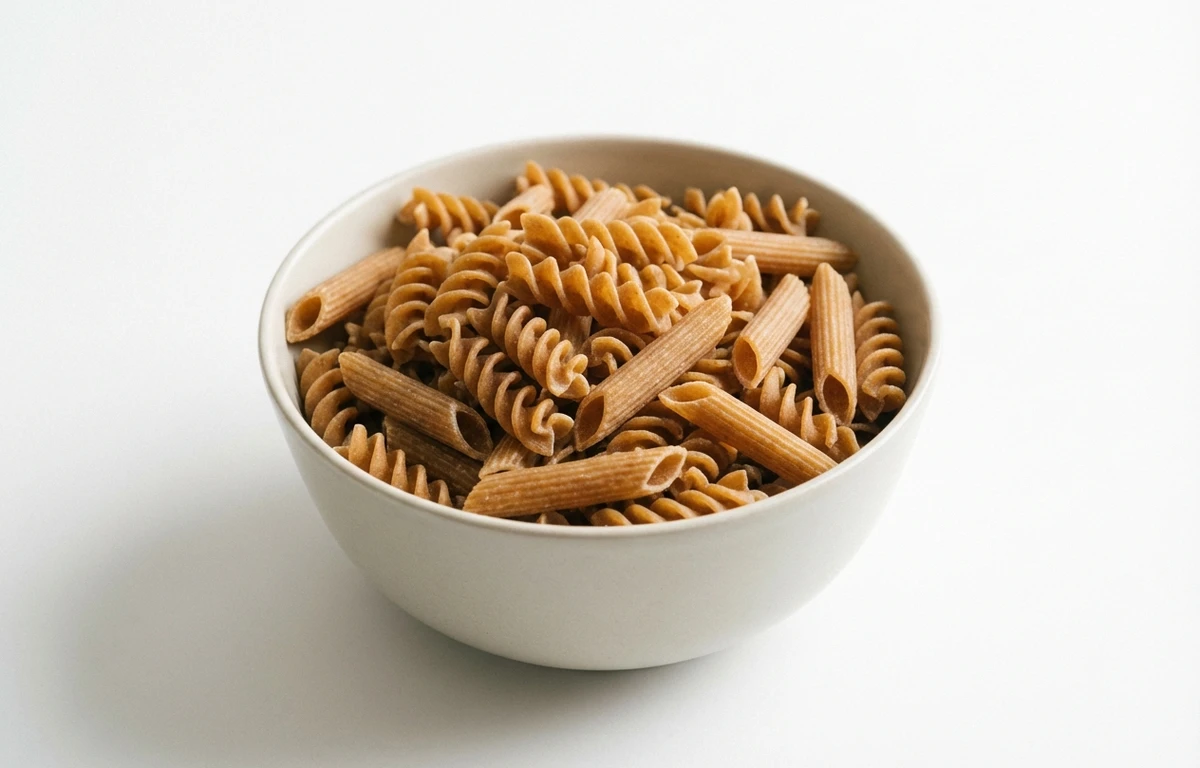
dry whole-wheat pasta.
VegetarianVeganGluten-freeDairy-freeNut-freePeanut-freeSoy-freeEgg-freeShellfish-freeHoney-freeAlcohol-freeWhole grain
ALSO KNOWN AS
small pasta, drywhole-wheat pasta
SERVING
CALORIES
352
PROTEIN
13.9g
CARBS
73.4g
FAT
2.9g
FIBER
9.2g
NUTRITION PROFILE · per 100 g
Everything in this ingredient.
MACRONUTRIENTS
Calories352kcal—
Protein13.9g28%
Carbohydrates73.4g27%
Fiber9.2g33%
Sugar2.7g5%
Total fat2.9g4%
Saturated fat0.43g2%
Trans fat0g—
Cholesterol0mg0%
Water8.2g—
MINERALS
Sodium6.0mg0%
Potassium434mg9%
Calcium29mg2%
Iron3.6mg20%
Magnesium114mg27%
Phosphorus300mg24%
Zinc2.1mg19%
Copper0.36mg40%
Manganese2.5mg109%
Selenium70.7µg129%
VITAMINS
Vitamin A0µg0%
Vitamin C0mg0%
Vitamin D0µg0%
Vitamin E0.49mg3%
Vitamin K1.9µg2%
Thiamin (B1)0.41mg34%
Riboflavin (B2)0.11mg8%
Niacin (B3)6.9mg43%
Pantothenic acid (B5)0.70mg14%
Vitamin B60.20mg12%
Folate (B9)47µg12%
Vitamin B120µg0%
%DV based on a 2,000 cal diet. Source: USDA FoodData Central. A dash in the %DV column means there’s no established Daily Value for that nutrient.
MEASUREMENT CONVERSIONS
How much is what.
1 cup100g
1 tablespoon6.3g
1 teaspoon2.1g
1 ml0.4g
1 liter416.7g
HEALTH BENEFITS
Why eat it.
- ✓High in dietary fiber, which supports digestive health and promotes satiety.
- ✓Provides complex carbohydrates for sustained energy release.
- ✓Contains important minerals such as manganese, selenium, and phosphorus.
- ✓Has a lower glycemic index than refined pasta, which can help in blood sugar management.
COOKING TIPS
In the kitchen.
- 1Use a large pot with ample salted boiling water (at least 4 quarts per pound) to prevent pasta from clumping.
- 2Whole-wheat pasta typically requires a longer cooking time than refined pasta; test for al dente texture, which should be firm to the bite.
- 3Its nutty, robust flavor pairs well with hearty sauces like pesto, chunky vegetable marinara, or simple olive oil and garlic.
- 4Reserve a cup of the starchy cooking water before draining to help emulsify and bind the sauce to the pasta.
STORAGE
Keep it fresh.
- Store in a cool, dark, and dry place, such as a pantry or cupboard, to maintain quality.
- Keep in an airtight container or its original sealed packaging to protect from moisture and pests; it can be stored for up to 2 years.
FAQ
Frequently asked questions.
Is dry whole-wheat pasta healthy?
Yes, whole-wheat pasta is generally considered very healthy. It's rich in dietary fiber, which aids digestion and promotes satiety, and provides complex carbohydrates for sustained energy. It also contains essential minerals like manganese, selenium, and phosphorus.
How much protein, carbs, and calories are in dry whole-wheat pasta?
Per 100g of dry whole-wheat pasta, there are approximately 352 calories, 13.87g of protein, 73.37g of carbohydrates, and 2.93g of fat. These values will change once cooked due to water absorption.
Is whole-wheat pasta good for weight loss?
Whole-wheat pasta can be beneficial for weight loss when consumed in moderation as part of a balanced diet. Its high fiber content helps you feel full longer, reducing overall calorie intake. The complex carbohydrates also provide sustained energy, preventing energy crashes and cravings.
Is whole-wheat pasta gluten-free?
No, whole-wheat pasta is not gluten-free. It is made from wheat, which naturally contains gluten. Individuals with celiac disease or gluten sensitivity should opt for gluten-free pasta alternatives made from rice, corn, or legumes.
Can diabetics eat whole-wheat pasta?
Yes, diabetics can often eat whole-wheat pasta in controlled portions. It has a lower glycemic index (GI) compared to refined white pasta, meaning it causes a slower and more gradual rise in blood sugar. Pairing it with protein and vegetables can further help manage blood sugar response.
How do you cook dry whole-wheat pasta?
Cook whole-wheat pasta similarly to regular pasta: boil a large pot of salted water, add the pasta, and stir occasionally. Whole-wheat pasta often requires a slightly longer cooking time than white pasta, so check the package instructions for al dente doneness, typically 8-12 minutes.
What does whole-wheat pasta taste like compared to regular pasta?
Whole-wheat pasta has a slightly nuttier, earthier flavor and a firmer, chewier texture than refined white pasta. While some prefer the neutral taste of white pasta, many enjoy the distinct flavor profile of whole-wheat, especially with robust sauces.
How do you store dry whole-wheat pasta?
Dry whole-wheat pasta should be stored in a cool, dry place, away from direct sunlight and moisture. Keep it in its original packaging or an airtight container to protect it from pests and maintain freshness. Properly stored, it can last for up to two years.
Is whole-wheat pasta low-carb or keto-friendly?
No, whole-wheat pasta is not considered low-carb or keto-friendly. With approximately 73g of carbohydrates per 100g (dry), it is a significant source of carbs. Individuals following low-carb or ketogenic diets should seek specific low-carb pasta alternatives.
Why choose whole-wheat pasta over regular white pasta?
Choosing whole-wheat pasta offers significant nutritional advantages over regular white pasta. It provides more dietary fiber, which aids digestion and satiety, and a higher content of essential minerals. Its lower glycemic index also contributes to better blood sugar management.
RECIPES
Cook with dry whole-wheat pasta.
10 recipes · sorted by what’s quick