Other1 recipes
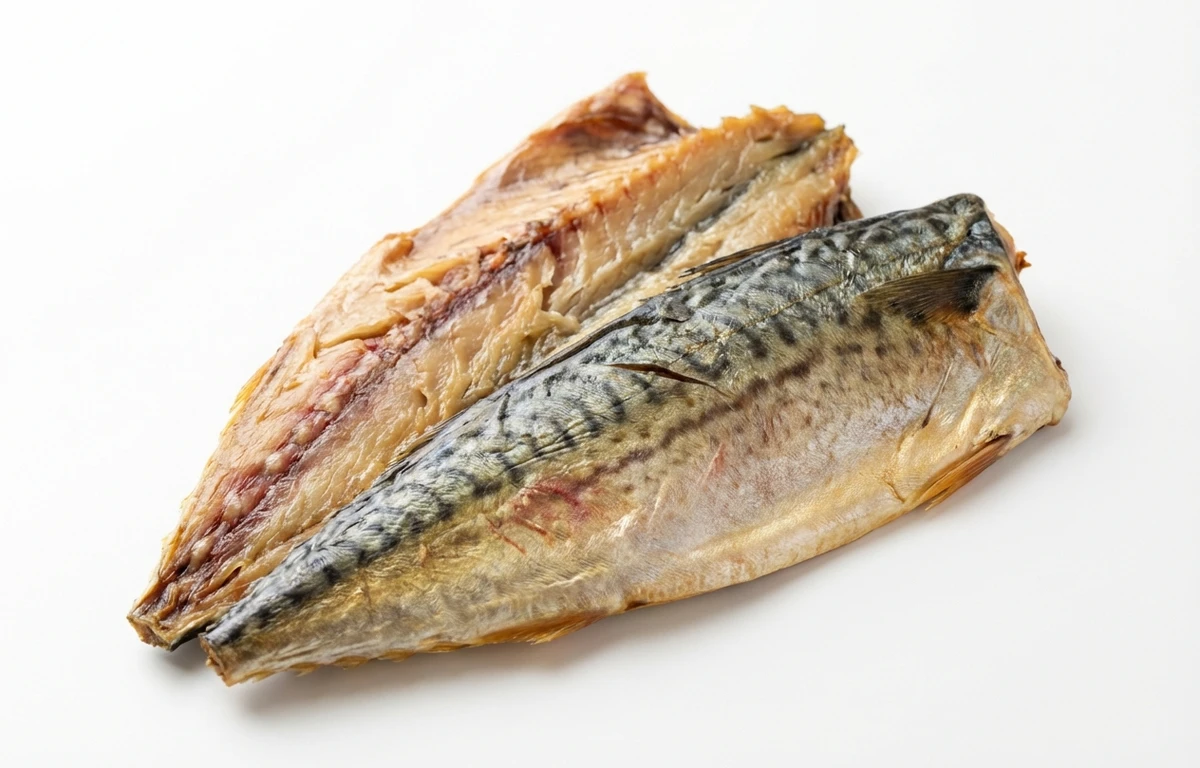
dried mackerel.
VegetarianVeganGluten-freeDairy-freeNut-freePeanut-freeSoy-freeEgg-freeShellfish-freeHoney-freeAlcohol-free
ALSO KNOWN AS
sukka bangdadried mackerel fishsukka bangda fish
SERVING
CALORIES
340
PROTEIN
46.2g
CARBS
0g
FAT
16.8g
FIBER
0g
NUTRITION PROFILE · per 100 g
Everything in this ingredient.
MACRONUTRIENTS
Calories340kcal—
Protein46.2g92%
Carbohydrates0g0%
Fiber0g0%
Sugar0g0%
Total fat16.8g22%
Saturated fat3.8g19%
Cholesterol150mg50%
Water29.5g—
MINERALS
Sodium6900mg300%
Potassium700mg15%
Calcium100mg8%
Iron2.5mg14%
Magnesium60mg14%
Phosphorus254mg20%
Zinc1.1mg10%
Copper0.10mg11%
Selenium73.4µg133%
VITAMINS
Vitamin A50µg6%
Vitamin C0mg0%
Vitamin D20µg100%
Vitamin E2.4mg16%
Vitamin K7.8µg7%
Thiamin (B1)0.02mg2%
Riboflavin (B2)0.19mg15%
Niacin (B3)3.3mg21%
Vitamin B60.41mg24%
Folate (B9)15µg4%
Vitamin B1212µg500%
%DV based on a 2,000 cal diet. Source: USDA FoodData Central. A dash in the %DV column means there’s no established Daily Value for that nutrient.
MEASUREMENT CONVERSIONS
How much is what.
1 cup136g
1 tablespoon8.5g
1 teaspoon2.8g
1 ml0.6g
1 liter566.7g
1 piece80g
HEALTH BENEFITS
Why eat it.
- ✓Excellent source of Omega-3 fatty acids (EPA and DHA), which support heart health and cognitive function.
- ✓Rich in high-quality complete protein, essential for muscle building and tissue repair.
- ✓Concentrated source of Vitamin D and Vitamin B12, crucial for bone health and red blood cell formation.
- ✓Provides significant amounts of minerals like selenium, an important antioxidant.
COOKING TIPS
In the kitchen.
- 1Rehydrate by soaking in warm water for 20-30 minutes before cooking to soften the flesh and reduce saltiness.
- 2Flake the rehydrated fish and add it to stews, soups, or rice dishes to impart a deep umami and smoky flavor.
- 3Lightly grill or pan-fry small pieces until crispy and serve as a side dish or a topping for salads and congee.
- 4Use as a base for flavorful broths by simmering it with aromatics like ginger and scallions.
STORAGE
Keep it fresh.
- Store in a cool, dry, and dark place, such as a pantry, in an airtight container to prevent moisture absorption.
- For long-term storage (several months to a year), place in a sealed bag or container and keep in the refrigerator or freezer to maintain quality and prevent spoilage.
FAQ
Frequently asked questions.
Is dried mackerel healthy?
Yes, dried mackerel is highly nutritious. It's an excellent source of heart-healthy Omega-3 fatty acids, high-quality protein, and essential vitamins like D and B12. While it's calorie-dense due to its fat content, its nutritional benefits make it a valuable addition to a balanced diet.
How much protein and calories are in dried mackerel?
Per 100g, dried mackerel contains approximately 340 calories and a significant 46.2g of protein. It also provides 16.8g of fat and 0g of carbohydrates, making it a very protein-rich and low-carb food.
What are the main health benefits of eating dried mackerel?
Dried mackerel is packed with Omega-3 fatty acids (EPA and DHA), which are crucial for heart health and cognitive function. It also provides high-quality protein for muscle repair, and is a concentrated source of Vitamin D and B12, supporting bone health and red blood cell production.
Is dried mackerel keto-friendly?
Yes, dried mackerel is very keto-friendly. With 0g of carbohydrates per 100g and high protein and fat content, it fits well into a ketogenic diet. It provides essential nutrients without adding carbs.
Is dried mackerel gluten-free?
Yes, dried mackerel is naturally gluten-free. As a pure seafood product, it does not contain any gluten. However, always check product labels for any added ingredients or cross-contamination if you have severe gluten sensitivity.
Can diabetics eat dried mackerel?
Yes, dried mackerel can be a good option for diabetics. It has 0g of carbohydrates, which helps manage blood sugar levels, and its high protein content can promote satiety. The healthy fats and Omega-3s are also beneficial for cardiovascular health, which is important for diabetics.
How do you prepare or cook dried mackerel?
Dried mackerel often needs to be rehydrated by soaking in water for several hours or overnight before cooking. After soaking, it can be grilled, fried, baked, or added to stews and soups. It's commonly used in Asian and Mediterranean cuisines to impart a rich, savory flavor.
What does dried mackerel taste like?
Dried mackerel has a strong, intensely savory, and salty flavor with a distinct umami profile. The drying process concentrates its natural fishy taste, making it much more potent than fresh mackerel. It adds a deep, rich seafood essence to dishes.
How should I store dried mackerel?
Dried mackerel should be stored in an airtight container in a cool, dry place away from direct sunlight. For longer preservation, especially in humid climates, refrigeration or freezing is recommended. This prevents spoilage and maintains its quality.
How long does dried mackerel last?
When stored properly in a cool, dry place, dried mackerel can last for several months, typically 3-6 months. If refrigerated, its shelf life can extend to 6-12 months, and if frozen, it can last even longer, up to a year or more.
RECIPES
Cook with dried mackerel.
1 recipes · sorted by what’s quick