
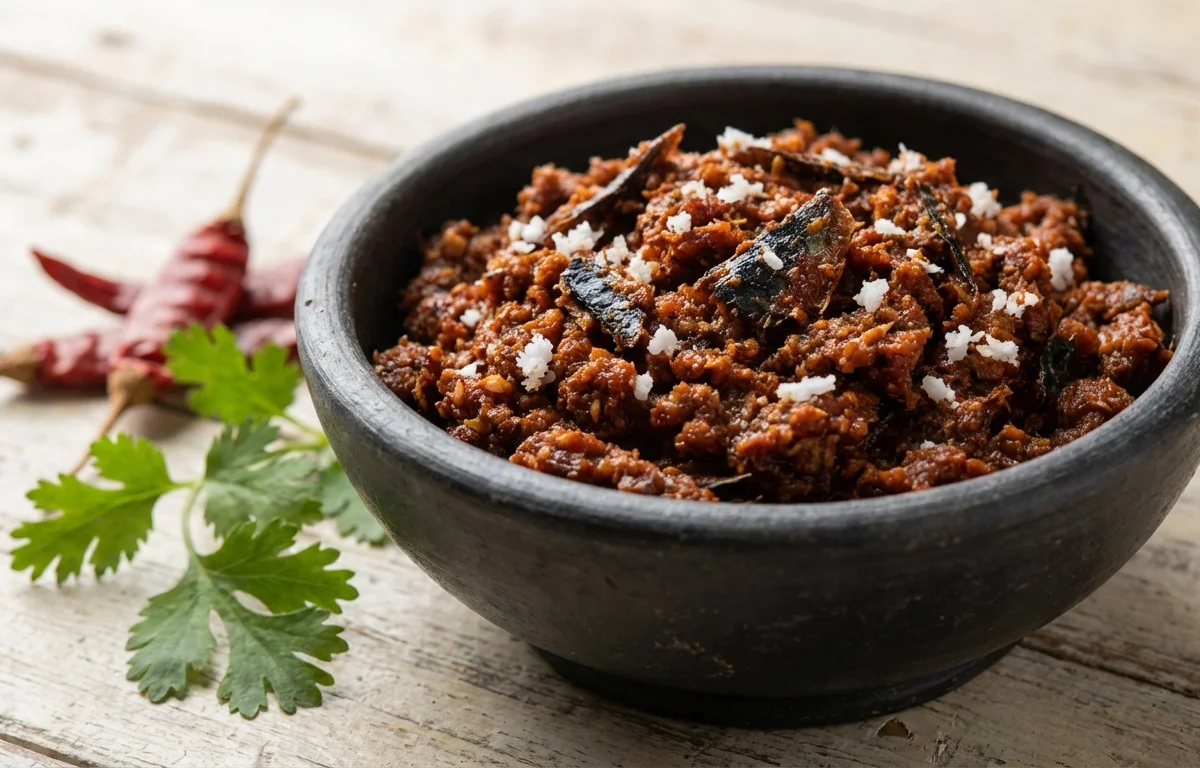
Sukka Bangda Chutney
A fiery and tangy Goan specialty, this dry chutney is made from salted mackerel, fresh coconut, and aromatic spices. It's a perfect side dish that packs a punch of coastal flavor, often enjoyed with rice and dal.
For 4 servings
Prepare the Dried Mackerel
- Rinse the dried mackerel thoroughly under cold running water to remove excess salt and any impurities.
- Place the fish in a bowl and cover with warm water. Let it soak for 30 minutes to soften the flesh and further reduce saltiness.
- Drain the water completely. Carefully remove and discard the head, tail, and the central bone of each mackerel.
- Using your fingers, flake the fish meat into small pieces, ensuring you remove any remaining tiny bones. Set the flaked fish aside.
Grind the Chutney Masala
- In a grinder or small food processor, combine the grated fresh coconut, dried red chilies, garlic cloves, ginger, and tamarind paste.
- Add the turmeric powder to the grinder.
- Grind the mixture to a coarse, crumbly paste. Do not add any water; the moisture from the coconut should be sufficient. This coarse texture is key to the final dish.
Cook the Chutney
- Heat the coconut oil in a heavy-bottomed pan or kadai over medium heat.
- Add the finely chopped onion and sauté for 4-5 minutes until it turns soft, translucent, and light golden at the edges.
- Add the ground coconut masala to the pan. Stir and cook for 3-4 minutes until the raw smell of the spices disappears and the mixture becomes aromatic.
- Add the flaked mackerel to the pan. Taste the fish first, then add salt accordingly (you may need very little). Mix gently to combine everything well.
- Reduce the heat to low, cover the pan, and let it cook for 5-6 minutes, stirring occasionally. This allows the fish to absorb the flavors of the masala. The chutney is ready when it's relatively dry and fragrant.
Serve
- Turn off the heat and let the chutney rest for a few minutes.
- Serve warm as a side dish with Goan rice porridge (pez), steamed rice and dal, or with flatbreads like bhakri or chapati.
What to keep in mind.
6 tips from the recipe — small details that make a real difference to the final dish.
- 1Soaking the fish is a critical step. Don't skip it, or the chutney will be excessively salty.
- 2Always taste the flaked fish before adding any salt to the dish. You may need very little or no salt at all.
- 3Using freshly grated coconut provides the best texture and authentic flavor compared to desiccated or frozen coconut.
- 4For a deeper red color without too much heat, use a mix of Byadgi (for heat) and Kashmiri (for color) red chilies.
- 5This chutney stores well in an airtight container in the refrigerator for up to 4 days. The flavors often deepen the next day.
- 6Adjust the amount of tamarind paste to your preference for tanginess. Start with a little and add more if needed.
Adapt it for your goals.
Different Protein
This recipe works wonderfully with other dried seafood. Try using dried prawns (sukat) or dried Bombay duck (bombil) for a different flavor profile.
Flavor EnhancerFlavor Enhancer
For a subtle sweetness to balance the heat and tang, add a small pinch of jaggery powder along with the tamarind paste.
Vegetarian VersionVegetarian Version
For a vegetarian alternative, replace the dried fish with finely chopped mushrooms or crumbled firm tofu. Sauté them until browned before adding the masala.
Why this is on our healthy list.
Rich in Omega-3 Fatty Acids
Mackerel is an excellent source of Omega-3s, which are crucial for brain health, reducing inflammation, and supporting a healthy cardiovascular system.
Anti-inflammatory Properties
The use of spices like turmeric, ginger, and garlic provides powerful anti-inflammatory compounds that help combat oxidative stress and inflammation in the body.
Source of Healthy Fats
Coconut provides medium-chain triglycerides (MCTs), a type of saturated fat that is easily digestible and serves as a quick source of energy for the body and brain.
Frequently asked questions
One serving of Sukka Bangda Chutney (approximately 1/4 cup or 95g) contains an estimated 240-260 calories. The majority of calories come from the healthy fats in coconut, coconut oil, and the mackerel itself.