Grain
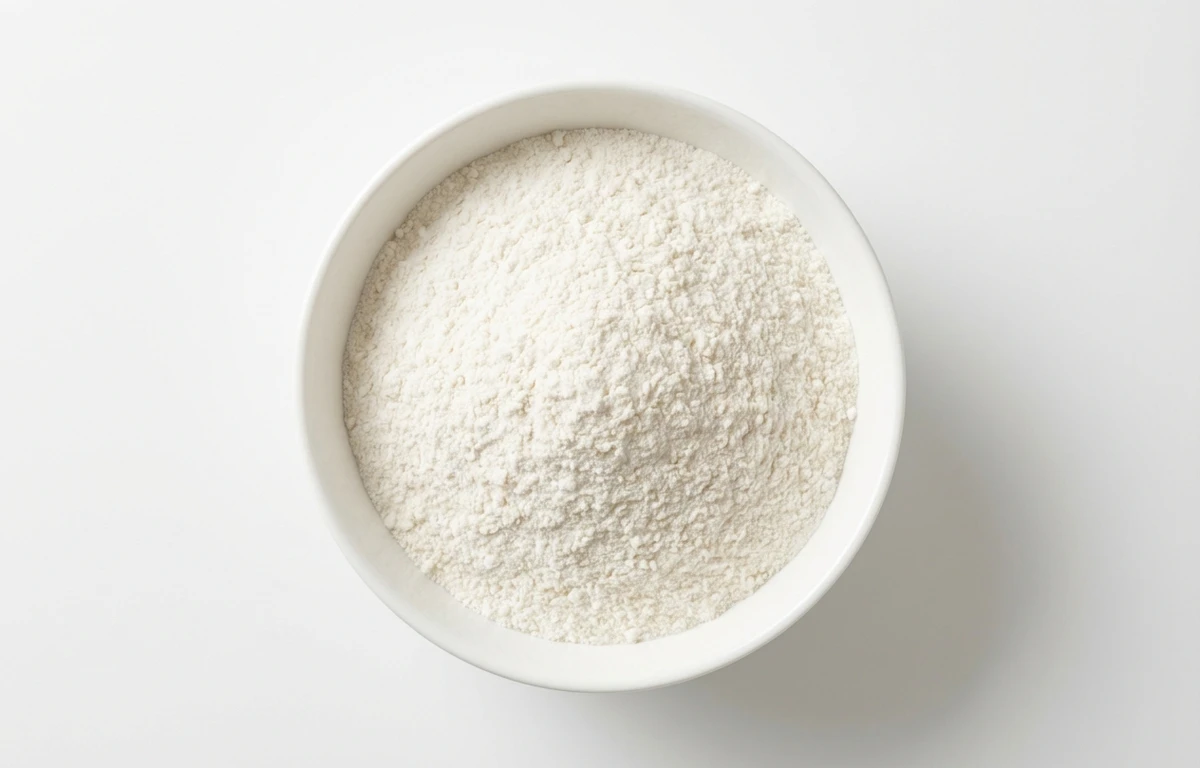
unenriched white rice flour.
VegetarianVeganGluten-freeDairy-freeNut-freePeanut-freeSoy-freeEgg-freeShellfish-freeHoney-freeAlcohol-free
ALSO KNOWN AS
white rice flour
SERVING
CALORIES
366
PROTEIN
5.9g
CARBS
80.1g
FAT
1.4g
FIBER
2.4g
NUTRITION PROFILE · per 100 g
Everything in this ingredient.
MACRONUTRIENTS
Calories366kcal—
Protein5.9g12%
Carbohydrates80.1g29%
Fiber2.4g9%
Sugar0.10g0%
Total fat1.4g2%
Saturated fat0.40g2%
Trans fat0g—
Cholesterol0mg0%
Water11.9g—
MINERALS
Sodium0mg0%
Potassium76mg2%
Calcium10mg1%
Iron0.40mg2%
Magnesium35mg8%
Phosphorus98mg8%
Zinc0.80mg7%
Copper0.10mg11%
Manganese1.2mg52%
Selenium15.1µg27%
VITAMINS
Vitamin A0µg0%
Vitamin C0mg0%
Vitamin D0µg0%
Vitamin E0.10mg1%
Vitamin K0µg0%
Thiamin (B1)0.14mg12%
Riboflavin (B2)0.02mg2%
Niacin (B3)2.6mg16%
Pantothenic acid (B5)0.80mg16%
Vitamin B60.40mg24%
Folate (B9)4.0µg1%
Vitamin B120µg0%
%DV based on a 2,000 cal diet. Source: USDA FoodData Central. A dash in the %DV column means there’s no established Daily Value for that nutrient.
MEASUREMENT CONVERSIONS
How much is what.
1 cup160.8g
1 tablespoon10.1g
1 teaspoon3.4g
1 ml0.7g
1 liter670g
HEALTH BENEFITS
Why eat it.
- ✓Naturally gluten-free, making it a suitable alternative for individuals with celiac disease or gluten sensitivity.
- ✓Easily digestible and low in fiber, which can be beneficial for those with sensitive digestive systems.
- ✓Provides a quick source of energy due to its high simple carbohydrate content.
- ✓Can be used to create light and crispy coatings for fried foods as it absorbs less oil than wheat flour.
COOKING TIPS
In the kitchen.
- 1Use as a thickening agent for soups, sauces, and gravies; it creates a smooth, glossy finish without a floury taste.
- 2In gluten-free baking, combine with other flours like tapioca starch or potato starch to improve texture and prevent a dry, crumbly result.
- 3Excellent for making light, crispy batters for tempura or other fried foods.
- 4Forms the base for many Asian noodles and desserts, such as mochi, providing a distinct chewy texture.
STORAGE
Keep it fresh.
- Store in an airtight container in a cool, dark, and dry place like a pantry for up to one year.
- For extended freshness, refrigerate or freeze in a sealed container to prevent it from becoming stale or attracting pests.
FAQ
Frequently asked questions.
Is unenriched white rice flour healthy?
Unenriched white rice flour is a good source of quick energy and is very easy on the digestive system. However, because it is unenriched and low in fiber, it lacks the added vitamins and minerals found in fortified flours, so it should be balanced with nutrient-dense foods.
How many calories and carbs are in white rice flour?
Per 100g, unenriched white rice flour contains approximately 366 calories and 80.1g of carbohydrates. It is a high-carb ingredient with a modest protein content of about 5.9g and very little fat.
Is white rice flour gluten-free?
Yes, white rice flour is naturally gluten-free. This makes it a safe and popular alternative for individuals with celiac disease, gluten intolerance, or those simply looking to avoid wheat-based products.
Can I substitute white rice flour for all-purpose wheat flour?
It is not a direct 1:1 substitute in baking because it lacks gluten, which provides structure. For best results, use it in a gluten-free flour blend or use it for thickening sauces and creating crispy coatings for fried foods.
What is the difference between unenriched and enriched rice flour?
Unenriched rice flour is the pure ground grain without any additives. Enriched rice flour has had specific nutrients, such as iron, niacin, and thiamine, added back into it after the milling process to replace what was lost.
Is white rice flour keto-friendly?
No, white rice flour is not keto-friendly. It is very high in carbohydrates (80.1g per 100g) and low in fiber, which can cause a significant spike in blood sugar and disrupt ketosis.
How do you use white rice flour to make food crispy?
White rice flour is excellent for frying because it absorbs less oil than wheat flour. Use it as a light dusting for fish or chicken, or mix it into tempura batter to achieve a very light, airy, and crunchy texture.
Is white rice flour easy to digest?
Yes, it is highly digestible and low in fiber, making it gentle on the gastrointestinal tract. It is often recommended for individuals with sensitive digestive systems or those following a low-residue diet.
How should I store white rice flour and how long does it last?
Store it in an airtight container in a cool, dry place to prevent it from absorbing moisture or odors. It typically stays fresh for up to 12 months, though you can store it in the fridge or freezer to extend its shelf life further.
What does white rice flour taste like?
It has a very neutral, mild, and slightly sweet flavor. This makes it a versatile ingredient that doesn't compete with other flavors in recipes, whether you are making delicate pastries or savory sauces.