Poultry
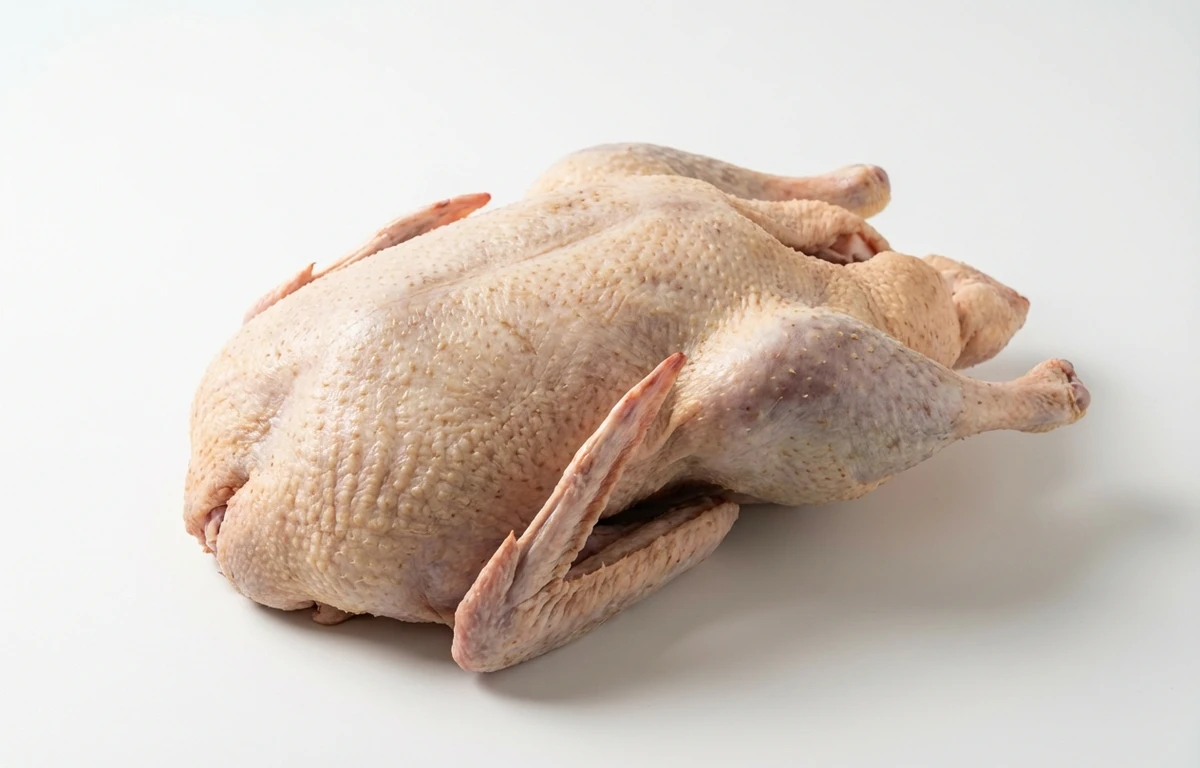
raw goose.
VegetarianVeganGluten-freeDairy-freeNut-freePeanut-freeSoy-freeEgg-freeShellfish-freeHoney-freeAlcohol-free
ALSO KNOWN AS
goose
SERVING
CALORIES
371
PROTEIN
15.9g
CARBS
0g
FAT
33.6g
FIBER
0g
NUTRITION PROFILE · per 100 g
Everything in this ingredient.
MACRONUTRIENTS
Calories371kcal—
Protein15.9g32%
Carbohydrates0g0%
Fiber0g0%
Sugar0g0%
Total fat33.6g43%
Saturated fat11g55%
Trans fat0g—
Cholesterol80mg27%
Water49.7g—
MINERALS
Sodium70mg3%
Potassium270mg6%
Calcium12mg1%
Iron2.5mg14%
Magnesium16mg4%
Phosphorus212mg17%
Zinc2.3mg21%
Copper0.24mg27%
Manganese0.02mg1%
Selenium15.5µg28%
VITAMINS
Vitamin A12µg1%
Vitamin C0mg0%
Vitamin D0.10µg1%
Vitamin E0.70mg5%
Vitamin K0µg0%
Thiamin (B1)0.08mg7%
Riboflavin (B2)0.24mg18%
Niacin (B3)4.1mg26%
Pantothenic acid (B5)1.4mg28%
Vitamin B60.37mg22%
Folate (B9)2.0µg1%
Vitamin B120.40µg17%
%DV based on a 2,000 cal diet. Source: USDA FoodData Central. A dash in the %DV column means there’s no established Daily Value for that nutrient.
MEASUREMENT CONVERSIONS
How much is what.
1 cup150g
1 tablespoon9g
1 teaspoon3g
1 oz28.4g
1 lb453.6g
1 piece150g
HEALTH BENEFITS
Why eat it.
- ✓Excellent source of high-quality, complete protein for muscle building and repair.
- ✓Rich in B vitamins, particularly niacin (B3) and B6, which are essential for energy metabolism and nervous system function.
- ✓Provides key minerals like iron for red blood cell production, phosphorus for bone health, and selenium, a powerful antioxidant.
- ✓Contains a high proportion of monounsaturated fats, particularly oleic acid, which can support heart health when consumed in moderation.
COOKING TIPS
In the kitchen.
- 1Prick the skin all over before roasting to allow the abundant fat to render out, creating a crispy skin. Save the rendered fat for roasting vegetables.
- 2Roast until the internal temperature of the thickest part of the thigh reaches 165°F (74°C) to ensure food safety.
- 3Due to its richness, pair goose with acidic or tart flavors like apples, cranberries, red cabbage, or citrus glazes to balance the flavor profile.
- 4Goose is also well-suited for slow-cooking methods like confit or braising, which results in exceptionally tender and flavorful meat.
STORAGE
Keep it fresh.
- Refrigerate raw goose at or below 40°F (4°C) on the bottom shelf and use within 1-2 days.
- For long-term storage, freeze at 0°F (-18°C) in an airtight wrapper or freezer bag for up to 6 months for optimal quality.
FAQ
Frequently asked questions.
Is goose meat healthy?
Goose is a nutrient-dense poultry providing high-quality protein, B vitamins, and essential minerals like iron and selenium. While it is higher in fat and calories than chicken or turkey, it contains beneficial monounsaturated fats like oleic acid which can support heart health when consumed in moderation.
How much protein and fat are in goose?
A 100g serving of raw goose contains approximately 15.86g of protein and 33.62g of fat. It is a calorie-dense meat, providing about 371 calories per 100g, making it significantly richer than most other common poultry.
Is goose keto-friendly?
Yes, goose is excellent for a ketogenic or low-carb diet because it contains zero carbohydrates and is high in fat. Its high fat-to-protein ratio helps individuals meet their daily fat macros while providing essential micronutrients like B vitamins and phosphorus.
How do you prepare and cook raw goose?
Goose is most commonly roasted whole. Because it is very fatty, it is important to prick the skin (without piercing the meat) to allow the fat to render out during cooking. The rendered fat is highly prized and can be saved for roasting vegetables later.
What does goose taste like?
Goose has a rich, savory flavor that is more similar to duck or even beef than to chicken. It consists entirely of dark meat, which is succulent, flavorful, and slightly gamey, especially when the skin is rendered and crisped.
How should raw goose be stored and how long does it last?
Raw goose should be kept in the coldest part of the refrigerator, ideally at or below 40°F (4°C), for 1 to 2 days. For longer storage, wrap it tightly in freezer-safe packaging and freeze it for up to 6 to 9 months.
How can you tell if raw goose has gone bad?
Fresh goose should have a neutral smell and a pinkish-red color. If the meat develops a sour or ammonia-like odor, a slimy or tacky texture, or a greyish or greenish tint, it has likely spoiled and should be discarded immediately.
Is goose gluten-free?
Yes, raw goose is naturally gluten-free as it is a pure animal protein. However, if you are buying a pre-marinated or stuffed goose, check the label carefully as those additions often contain wheat-based ingredients or thickeners.
Why is goose meat darker than chicken or turkey?
Goose meat is dark because geese are migratory birds that use their muscles for sustained flight. This requires a high concentration of myoglobin, a protein that stores oxygen in muscle cells and gives the meat its characteristic deep red or dark brown color.
Is goose good for weight loss?
Due to its high calorie count of 371 per 100g and high fat content, goose should be eaten in moderation if you are following a calorie-restricted weight loss plan. However, its high protein content can help with satiety, and much of the fat can be rendered off during the cooking process.