Grain2 recipes
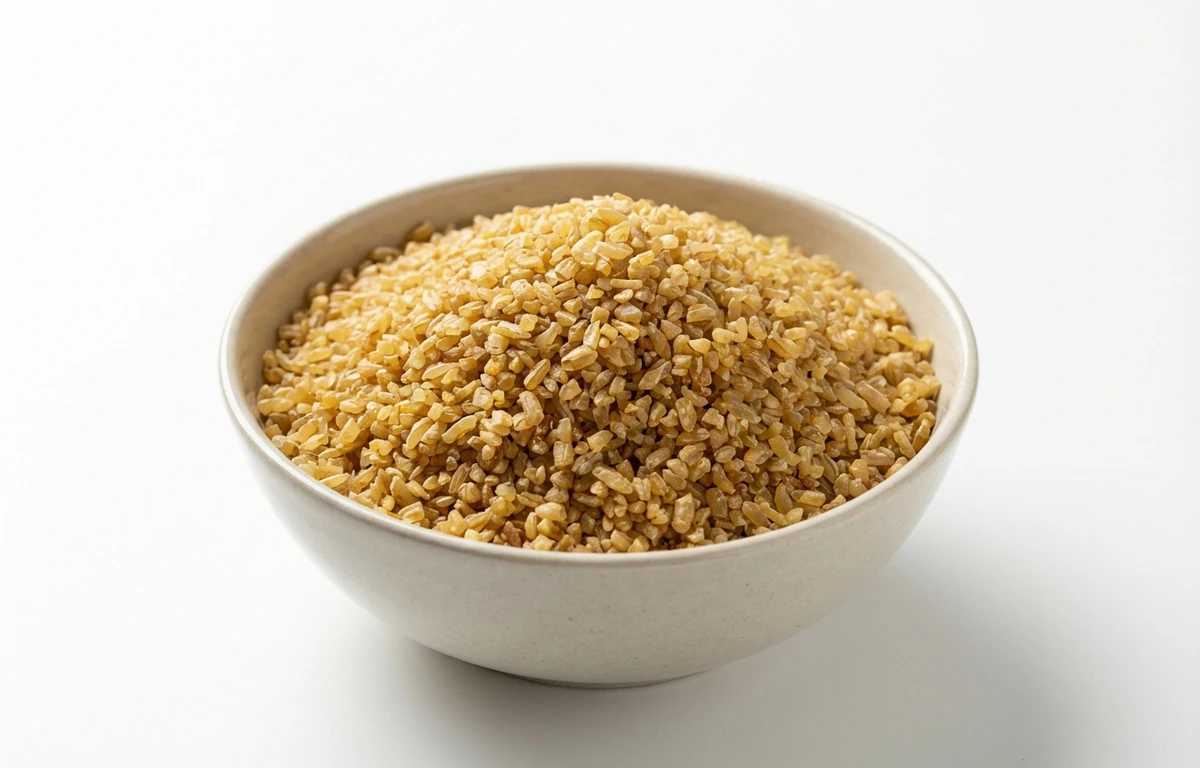
raw dry bulgur.
VegetarianVeganGluten-freeDairy-freeNut-freePeanut-freeSoy-freeEgg-freeShellfish-freeHoney-freeAlcohol-freeWhole grain
ALSO KNOWN AS
bulgur
SERVING
CALORIES
342
PROTEIN
12.3g
CARBS
75.9g
FAT
1.3g
FIBER
18.3g
NUTRITION PROFILE · per 100 g
Everything in this ingredient.
MACRONUTRIENTS
Calories342kcal—
Protein12.3g25%
Carbohydrates75.9g28%
Fiber18.3g65%
Sugar0.40g1%
Total fat1.3g2%
Saturated fat0.23g1%
Trans fat0g—
Cholesterol0mg0%
Water9.0g—
MINERALS
Sodium17mg1%
Potassium410mg9%
Calcium35mg3%
Iron2.5mg14%
Magnesium164mg39%
Phosphorus300mg24%
Zinc1.9mg18%
Copper0.34mg38%
Manganese3.0mg133%
Selenium2.3µg4%
VITAMINS
Vitamin A0µg0%
Vitamin C0mg0%
Vitamin D0µg0%
Vitamin E0.06mg0%
Vitamin K1.9µg2%
Thiamin (B1)0.23mg19%
Riboflavin (B2)0.12mg9%
Niacin (B3)5.1mg32%
Pantothenic acid (B5)1.1mg21%
Vitamin B60.34mg20%
Folate (B9)27µg7%
Vitamin B120µg0%
%DV based on a 2,000 cal diet. Source: USDA FoodData Central. A dash in the %DV column means there’s no established Daily Value for that nutrient.
MEASUREMENT CONVERSIONS
How much is what.
1 cup156g
1 tablespoon9.8g
1 teaspoon3.3g
1 ml0.7g
1 liter650g
HEALTH BENEFITS
Why eat it.
- ✓High in dietary fiber, which supports digestive health and promotes satiety.
- ✓A good source of manganese, magnesium, and iron, essential for bone health, energy production, and oxygen transport.
- ✓Has a low glycemic index, which can help in managing blood sugar levels.
- ✓Supports heart health by contributing to lower cholesterol and blood pressure levels due to its whole grain and fiber content.
COOKING TIPS
In the kitchen.
- 1Bulgur is par-cooked, so it requires minimal cooking. Fine bulgur can be rehydrated by soaking in hot water or broth for 15-20 minutes.
- 2For coarse bulgur, use a 1:2 ratio of bulgur to liquid (e.g., 1 cup bulgur to 2 cups water). Bring to a boil, then simmer for 10-15 minutes until tender.
- 3Toast the dry bulgur in a pan with a little oil for a few minutes before adding liquid to enhance its nutty flavor.
- 4Use as a base for salads like tabbouleh, in pilafs, as a substitute for rice, or to add texture and nutrients to soups, stews, and veggie burgers.
STORAGE
Keep it fresh.
- Store raw dry bulgur in an airtight container in a cool, dark, and dry place like a pantry for up to 24 months.
- For extended freshness, especially in warm climates, store it in the refrigerator or freezer to prevent the natural oils in the wheat germ from becoming rancid.
FAQ
Frequently asked questions.
Is bulgur healthy?
Yes, bulgur is a highly nutritious whole grain. It is rich in dietary fiber, manganese, magnesium, and iron, which support digestive health, bone strength, and efficient energy production.
Is bulgur good for weight loss?
Bulgur is excellent for weight management because it is high in fiber and has a low glycemic index. These properties promote satiety, helping you feel full longer and preventing the blood sugar spikes that can lead to cravings.
How much protein and carbs are in bulgur?
Raw dry bulgur contains approximately 12.3g of protein and 75.9g of carbohydrates per 100g. While it is high in carbs, most of these are complex carbohydrates that provide sustained energy.
Is bulgur gluten-free?
No, bulgur is not gluten-free. It is made from cracked whole-grain wheat, meaning it contains gluten and is unsuitable for individuals with celiac disease or gluten intolerance.
Is bulgur keto-friendly?
Bulgur is not keto-friendly as it contains nearly 76g of carbohydrates per 100g. It is a high-carb whole grain that is better suited for balanced or high-fiber diets rather than low-carb or ketogenic lifestyles.
How do you cook raw dry bulgur?
Because bulgur is typically parboiled during processing, it cooks quickly. You can simply soak it in boiling water (using a 1:2 ratio of grain to water) for 15-20 minutes, or simmer it on the stove for 10-12 minutes until the water is absorbed.
What does bulgur taste like?
Bulgur has a mild, nutty flavor and a pleasant, chewy texture. Its neutral profile allows it to easily absorb the flavors of broths, herbs, and dressings, making it a staple in salads like tabbouleh.
How should I store dry bulgur and how long does it last?
Store dry bulgur in an airtight container in a cool, dry place away from sunlight. When stored properly, it can last for up to 12 months; you can also store it in the freezer to extend its freshness.
Do I need to wash or rinse bulgur before cooking?
Rinsing is not strictly necessary because bulgur is cleaned and parboiled during production. However, a quick rinse in a fine-mesh sieve can help remove any surface dust or excess starch before preparation.
What is the difference between bulgur and cracked wheat?
The main difference is that bulgur is parboiled (partially cooked) before being dried and cracked, whereas cracked wheat is completely raw. This makes bulgur much faster to prepare and gives it a longer shelf life.
RECIPES
Cook with raw dry bulgur.
2 recipes · sorted by what’s quick