Seafood
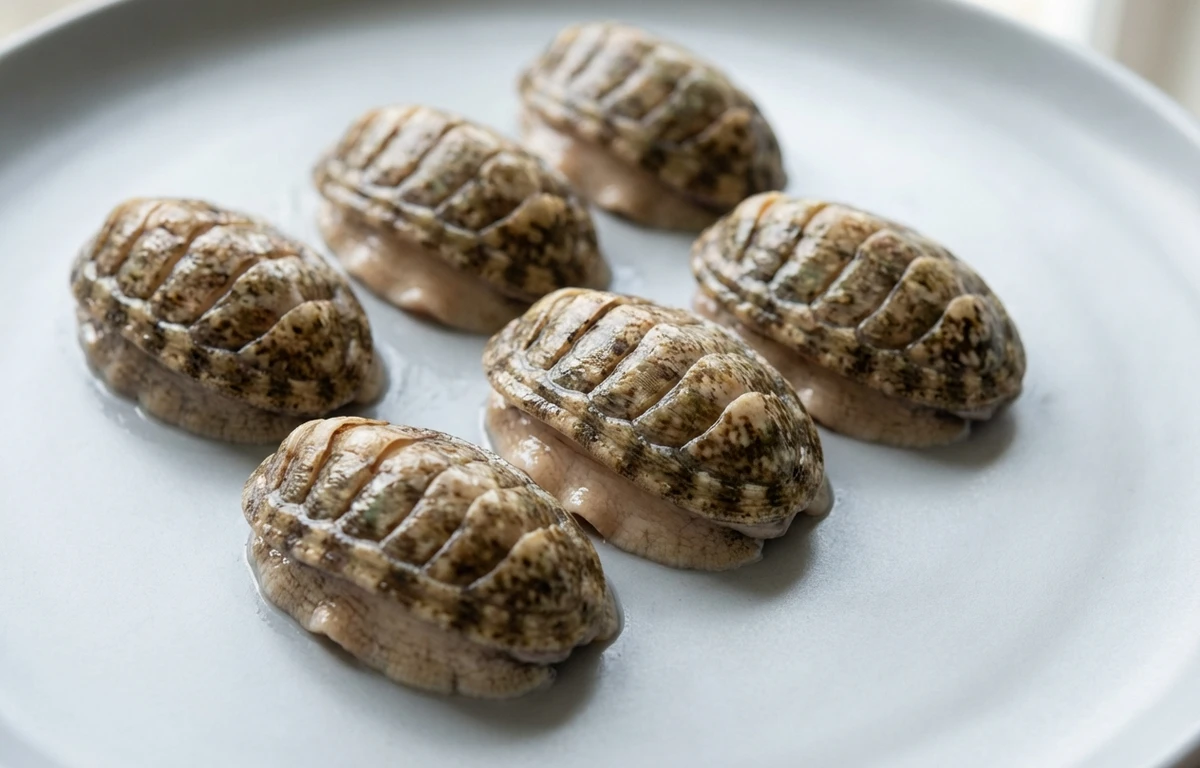
raw chiton.
VegetarianVeganGluten-freeDairy-freeNut-freePeanut-freeSoy-freeEgg-freeShellfish-freeHoney-freeAlcohol-freeKosher
ALSO KNOWN AS
gumboots
SERVING
CALORIES
92
PROTEIN
17.5g
CARBS
2.8g
FAT
1.1g
FIBER
0g
NUTRITION PROFILE · per 100 g
Everything in this ingredient.
MACRONUTRIENTS
Calories92kcal—
Protein17.5g35%
Carbohydrates2.8g1%
Fiber0g0%
Sugar0g0%
Total fat1.1g1%
Saturated fat0.30g2%
Trans fat0g—
Cholesterol75mg25%
Water77.2g—
MINERALS
Sodium280mg12%
Potassium250mg5%
Calcium40mg3%
Iron4.5mg25%
Magnesium50mg12%
Phosphorus180mg14%
Zinc2.1mg19%
Copper0.20mg22%
Manganese0.10mg4%
Selenium44.8µg81%
VITAMINS
Vitamin A15µg2%
Vitamin C2.0mg2%
Vitamin D0.10µg1%
Vitamin E0.80mg5%
Vitamin K0.10µg0%
Thiamin (B1)0.05mg4%
Riboflavin (B2)0.15mg12%
Niacin (B3)2.5mg16%
Pantothenic acid (B5)0.40mg8%
Vitamin B60.10mg6%
Folate (B9)10µg3%
Vitamin B1212µg500%
%DV based on a 2,000 cal diet. Source: USDA FoodData Central. A dash in the %DV column means there’s no established Daily Value for that nutrient.
MEASUREMENT CONVERSIONS
How much is what.
1 oz28.4g
1 lb453.6g
1 piece30g
HEALTH BENEFITS
Why eat it.
- ✓Excellent source of lean protein, crucial for muscle building and tissue repair.
- ✓Rich in iron, which is essential for oxygen transport in the blood and preventing anemia.
- ✓Provides significant amounts of zinc, a mineral vital for immune system function and wound healing.
- ✓Contains omega-3 fatty acids, which support cardiovascular health and may reduce inflammation.
COOKING TIPS
In the kitchen.
- 1The edible part is the muscular foot, which is notoriously tough and requires tenderizing by pounding with a mallet before cooking.
- 2Chitons can be eaten raw, often marinated in citrus juice (like a ceviche), which helps to tenderize the meat.
- 3For cooking, use slow, moist-heat methods like stewing or braising to break down the tough muscle fibers.
- 4Before preparation, the eight shell plates and internal organs must be removed, and the foot thoroughly cleaned.
STORAGE
Keep it fresh.
- Store live chitons on ice or in the coldest part of the refrigerator (32-40°F or 0-4°C) under a damp cloth for up to 48 hours.
- Shucked chiton meat should be kept in an airtight container, refrigerated, and consumed within 1-2 days.
- For long-term storage, freeze the cleaned meat at 0°F (-18°C) in a freezer-safe bag or container for up to 3 months.
FAQ
Frequently asked questions.
Is raw chiton healthy?
Yes, raw chiton is very healthy. It's an excellent source of lean protein, rich in essential minerals like iron and zinc, and contains beneficial omega-3 fatty acids. These nutrients support muscle health, immune function, and cardiovascular well-being.
What are the nutritional benefits of raw chiton?
Raw chiton is packed with nutrients. Per 100g, it offers 17.5g of lean protein, vital for muscle repair, and is low in fat (1.1g). It's also a good source of iron for oxygen transport, zinc for immunity, and omega-3s for heart health.
How much protein is in raw chiton?
Raw chiton is an excellent protein source, providing approximately 17.5 grams of protein per 100-gram serving. This makes it a significant contributor to daily protein intake, supporting muscle growth and overall body function.
Is raw chiton suitable for a keto diet?
Yes, raw chiton can be suitable for a keto diet. With only 2.8 grams of carbohydrates and 1.1 grams of fat per 100g, alongside a high protein content, it fits well within low-carb dietary guidelines.
Is raw chiton gluten-free?
Yes, raw chiton is naturally gluten-free. As a whole, unprocessed seafood, it does not contain any wheat, barley, or rye, making it a safe option for individuals with celiac disease or gluten sensitivity.
Can people with shellfish allergies eat chiton?
Chiton is a mollusk, belonging to the same phylum as clams, oysters, and mussels, which are common shellfish allergens. Therefore, individuals with known shellfish allergies should avoid chiton to prevent allergic reactions.
How do you prepare and cook chiton?
Chiton typically requires cleaning to remove its shell and internal organs, leaving the edible foot. It can be prepared in various ways, including boiling, steaming, grilling, or frying, often seasoned simply to highlight its natural flavor.
What does chiton taste like?
Chiton generally has a mild, slightly sweet, and briny flavor, similar to other mollusks like clams or abalone. Its texture can be firm and somewhat chewy, depending on the cooking method.
How do you store fresh chiton?
Fresh chiton should be stored in the coldest part of your refrigerator, ideally on a bed of ice or in a container with a damp cloth, for no more than 1-2 days. Ensure they are alive and tightly closed before storage.
How do you know if chiton is fresh?
Fresh chiton should be firm to the touch and, if alive, should react to touch by contracting slightly. Avoid any chiton that smells strongly fishy, has a slimy texture, or appears discolored.