Seafood1 recipes
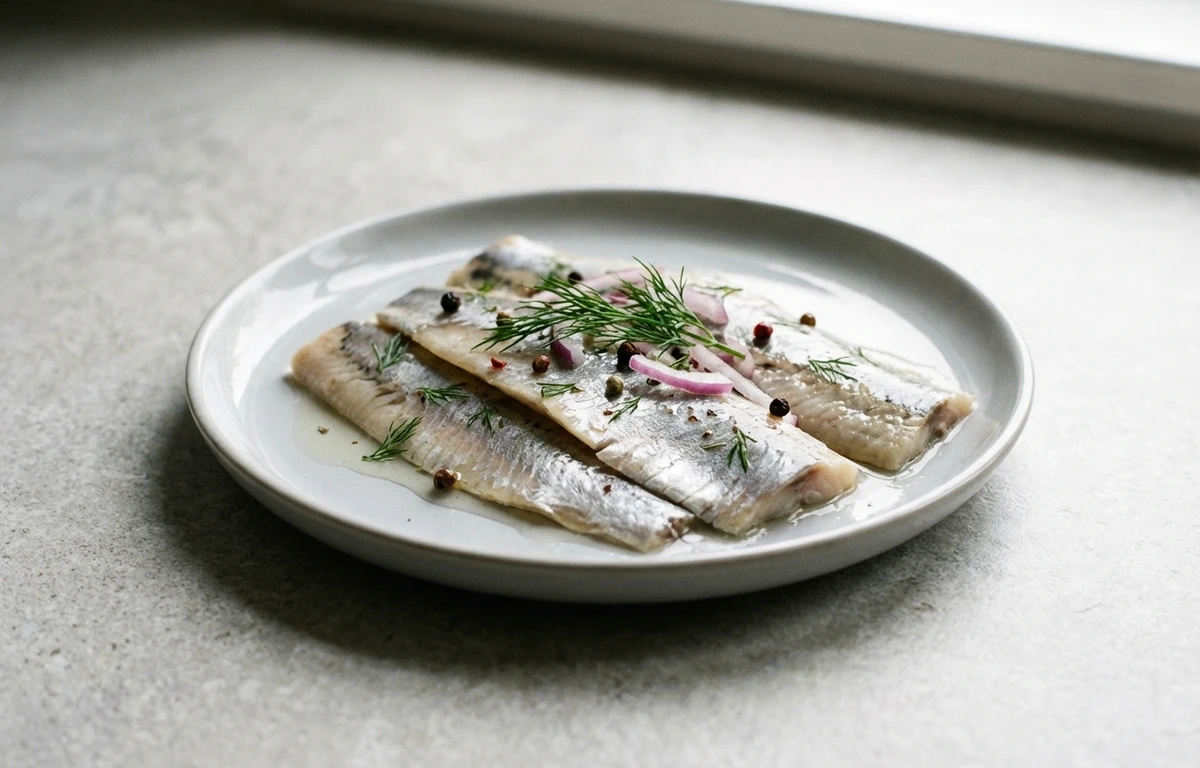
pickled atlantic herring.
VegetarianVeganGluten-freeDairy-freeNut-freePeanut-freeSoy-freeEgg-freeShellfish-freeHoney-freeAlcohol-freeFermented
ALSO KNOWN AS
pickled herring
SERVING
CALORIES
262
PROTEIN
14.2g
CARBS
9.6g
FAT
18g
FIBER
0g
NUTRITION PROFILE · per 100 g
Everything in this ingredient.
MACRONUTRIENTS
Calories262kcal—
Protein14.2g28%
Carbohydrates9.6g4%
Fiber0g0%
Sugar7.7g15%
Total fat18g23%
Saturated fat2.4g12%
Cholesterol13mg4%
Water55.2g—
MINERALS
Sodium870mg38%
Potassium69mg1%
Calcium77mg6%
Iron1.2mg7%
Magnesium8.0mg2%
Phosphorus89mg7%
Zinc0.53mg5%
Copper0.11mg12%
Manganese0.04mg2%
Selenium58.5µg106%
VITAMINS
Vitamin A258µg29%
Vitamin C0mg0%
Vitamin D2.8µg14%
Vitamin E1.7mg11%
Vitamin K0.20µg0%
Thiamin (B1)0.04mg3%
Riboflavin (B2)0.14mg11%
Niacin (B3)3.3mg21%
Pantothenic acid (B5)0.08mg2%
Vitamin B60.17mg10%
Folate (B9)2.0µg1%
Vitamin B124.3µg178%
%DV based on a 2,000 cal diet. Source: USDA FoodData Central. A dash in the %DV column means there’s no established Daily Value for that nutrient.
MEASUREMENT CONVERSIONS
How much is what.
1 cup140g
1 tablespoon8.8g
1 teaspoon2.9g
1 ml0.6g
1 liter583.3g
1 piece15g
HEALTH BENEFITS
Why eat it.
- ✓Excellent source of omega-3 fatty acids (EPA and DHA), which support cardiovascular health and brain function.
- ✓Rich in Vitamin D, essential for calcium absorption, bone health, and immune system regulation.
- ✓High in selenium, a powerful antioxidant that helps protect cells from damage.
- ✓Provides a significant amount of high-quality, complete protein, crucial for muscle maintenance and repair.
COOKING TIPS
In the kitchen.
- 1Serve chilled directly from the jar on dark rye or pumpernickel bread, often accompanied by sour cream, sliced red onions, and fresh dill.
- 2Chop and incorporate into salads with boiled potatoes, beets, apples, and a creamy dressing to make a classic Northern European herring salad (Heringssalat).
- 3The strong, salty, and acidic flavor pairs well with neutral bases like boiled new potatoes, hard-boiled eggs, or crispbread crackers.
- 4For a milder flavor, you can gently rinse the herring fillets under cold running water before serving to remove some of the excess brine.
STORAGE
Keep it fresh.
- Store unopened jars in the refrigerator or a cool, dark pantry. Always check the 'best by' date on the packaging.
- Once opened, keep the herring fully submerged in its brine in an airtight container in the refrigerator and consume within one to two weeks for optimal flavor and safety.
FAQ
Frequently asked questions.
Is pickled Atlantic herring healthy?
Yes, pickled Atlantic herring is very healthy due to its rich content of omega-3 fatty acids (EPA and DHA), Vitamin D, and selenium, which support heart, brain, and bone health. It also provides high-quality protein. However, its pickling process means it can be high in sodium and sometimes sugar.
How much protein, fat, and calories are in pickled Atlantic herring?
Per 100g, pickled Atlantic herring contains approximately 262 calories, 14.19g of protein, 18g of fat (including beneficial omega-3s), and 9.64g of carbohydrates. This makes it a calorie-dense and protein-rich food.
Is pickled Atlantic herring gluten-free?
Generally, pickled Atlantic herring is gluten-free as it's primarily fish, salt, vinegar, and spices. However, always check the ingredient label as some brands might use additives or brining solutions that contain gluten-containing ingredients.
Can people with diabetes eat pickled Atlantic herring?
Diabetics can generally eat pickled Atlantic herring in moderation. While herring itself is low in carbs, the pickling liquid often contains added sugar, which contributes to the 9.64g of carbs per 100g. It's best to check the specific product's sugar content and factor it into dietary plans.
How is pickled Atlantic herring typically served or eaten?
It's commonly served cold, often with dark rye bread, boiled potatoes, sour cream, or onions. It's a staple in Scandinavian and Eastern European cuisines, frequently appearing in salads, open-faced sandwiches, or as part of a smorgasbord.
What does pickled Atlantic herring taste and feel like?
Pickled Atlantic herring has a distinct salty, tangy, and often slightly sweet flavor profile, characteristic of its vinegar and spice brine. The texture is firm yet tender, with a rich, oily mouthfeel from the fish itself.
How should pickled Atlantic herring be stored, and how long does it last?
Pickled Atlantic herring must always be stored in the refrigerator, submerged in its pickling liquid. Once opened, it typically lasts for 1-2 weeks, but always refer to the 'best by' date and storage instructions on the packaging for specific guidance.
How do you know if pickled Atlantic herring is spoiled?
Signs of spoilage include an off-odor (beyond its usual pungent smell), a slimy texture, discoloration, or the presence of mold. If you notice any of these, it's best to discard the product to ensure food safety.
Is pickled Atlantic herring high in sodium?
Yes, due to the pickling process, pickled Atlantic herring is typically high in sodium. While sodium is essential, excessive intake can be a concern for blood pressure, so it should be consumed in moderation, especially by those on sodium-restricted diets.
Is pickled Atlantic herring safe to eat during pregnancy?
Atlantic herring is generally low in mercury, making it a good choice for fish during pregnancy. However, as a cured, ready-to-eat product, there's a small risk of Listeria. Pregnant women should consult their doctor and ensure the product is from a reputable source and consumed well within its shelf life.
RECIPES
Cook with pickled atlantic herring.
1 recipes · sorted by what’s quick