Grain
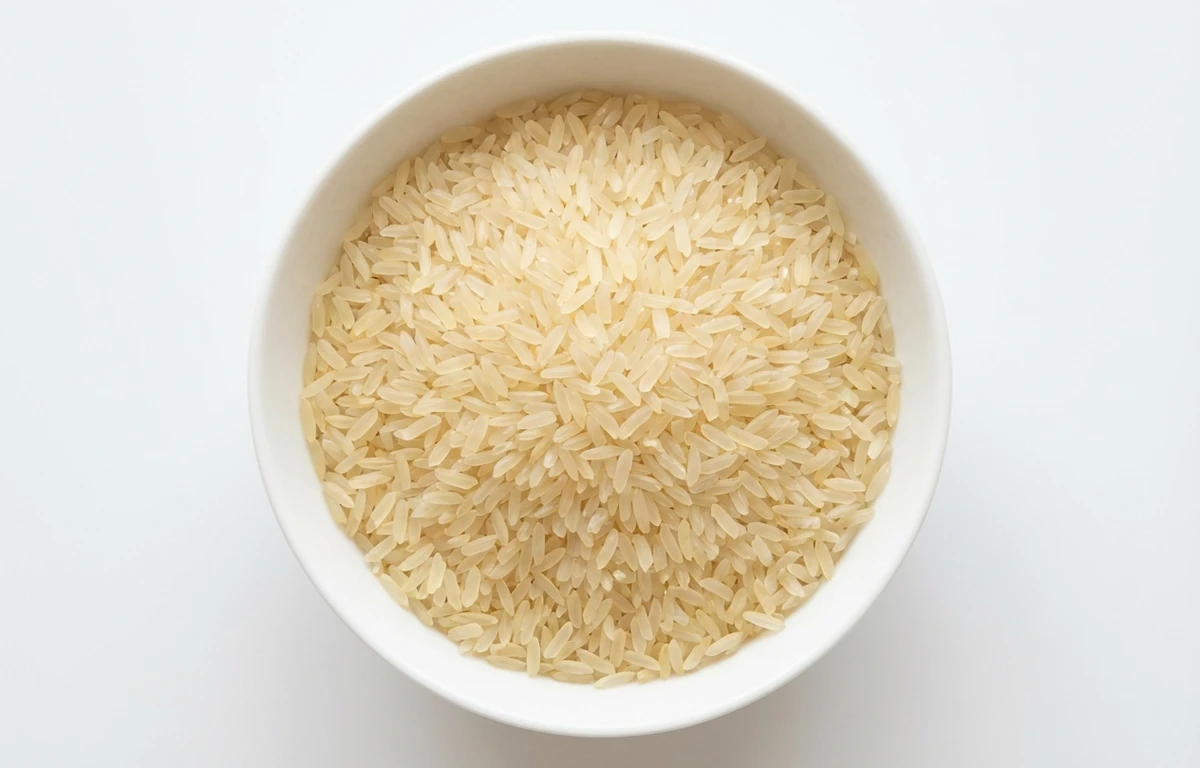
parboiled milled rice.
VegetarianVeganGluten-freeDairy-freeNut-freePeanut-freeSoy-freeEgg-freeShellfish-freeHoney-freeAlcohol-free
SERVING
CALORIES
352
PROTEIN
7.8g
CARBS
77.2g
FAT
0.55g
FIBER
3.7g
NUTRITION PROFILE · per 100 g
Everything in this ingredient.
MACRONUTRIENTS
Calories352kcal—
Protein7.8g16%
Carbohydrates77.2g28%
Fiber3.7g13%
Sugar0.67g1%
Total fat0.55g1%
Saturated fat0.15g1%
Trans fat0g—
Cholesterol0mg0%
Water10.1g—
MINERALS
Sodium3.2mg0%
Potassium142mg3%
Calcium8.1mg1%
Iron0.72mg4%
Magnesium26.7mg6%
Phosphorus140mg11%
Zinc1.1mg10%
Copper0.27mg30%
Manganese0.79mg34%
Selenium1.2µg2%
VITAMINS
Vitamin A0µg0%
Vitamin C0mg0%
Vitamin D0µg0%
Vitamin E0.09mg1%
Vitamin K1.5µg1%
Thiamin (B1)0.17mg14%
Riboflavin (B2)0.06mg5%
Niacin (B3)2.5mg16%
Pantothenic acid (B5)0.55mg11%
Vitamin B60.22mg13%
Biotin (B7)0.31µg1%
Folate (B9)9.8µg2%
%DV based on a 2,000 cal diet. Source: USDA FoodData Central. A dash in the %DV column means there’s no established Daily Value for that nutrient.
MEASUREMENT CONVERSIONS
How much is what.
1 cup185g
1 tablespoon11.5g
1 teaspoon3.8g
1 oz28.4g
1 lb453.6g
1 ml0.8g
1 liter780g
HEALTH BENEFITS
Why eat it.
- ✓Retains more nutrients, particularly B vitamins like thiamine and niacin, compared to regular white rice due to the parboiling process.
- ✓Has a lower glycemic index than standard white rice, causing a slower increase in blood sugar levels.
- ✓The parboiling process creates resistant starch, which acts as a prebiotic to support beneficial gut bacteria.
- ✓Naturally gluten-free, making it a suitable carbohydrate for individuals with celiac disease or gluten sensitivity.
COOKING TIPS
In the kitchen.
- 1Parboiled rice grains remain firm, fluffy, and separate after cooking, making it ideal for pilafs, fried rice, and casseroles where distinct grains are desired.
- 2Unlike most rice, it's often recommended not to rinse parboiled rice before cooking to avoid washing away the water-soluble nutrients transferred to the endosperm during processing.
- 3Typically requires a slightly higher water-to-rice ratio (e.g., 2.25 cups of water to 1 cup of rice) and a longer cooking time (20-25 minutes) than regular white rice.
- 4For added flavor, cook the rice in broth or stock instead of water and add aromatics like a bay leaf or cardamom pods.
STORAGE
Keep it fresh.
- Store uncooked parboiled rice in an airtight container in a cool, dark, and dry pantry. It can be stored indefinitely under proper conditions.
- Refrigerate cooked rice in a sealed container within two hours of cooking and consume within 3-4 days.
FAQ
Frequently asked questions.
Is parboiled milled rice healthy?
Yes, parboiled milled rice is considered a healthy grain option. The parboiling process helps it retain more B vitamins, like thiamine and niacin, compared to regular white rice. It also has a lower glycemic index and contains resistant starch, which supports gut health.
How does parboiled rice compare nutritionally to regular white rice?
Parboiled rice is nutritionally superior to regular white rice because the parboiling process drives nutrients from the husk into the grain. This results in higher levels of B vitamins, such as thiamine and niacin, and minerals. It also typically has a lower glycemic index.
What are the calorie and carbohydrate counts for parboiled milled rice?
Per 100g of uncooked parboiled milled rice, there are approximately 351.58 calories and 77.16 grams of carbohydrates. It also provides about 7.81 grams of protein and 0.55 grams of fat, making it a good source of energy.
Is parboiled milled rice gluten-free?
Yes, parboiled milled rice is naturally gluten-free. Rice itself does not contain gluten, making it a safe and suitable carbohydrate choice for individuals with celiac disease, gluten sensitivity, or those following a gluten-free diet.
Is parboiled milled rice suitable for diabetics?
Parboiled milled rice can be a better option for diabetics compared to regular white rice. It has a lower glycemic index, meaning it causes a slower and more gradual rise in blood sugar levels. However, portion control is still important for managing blood glucose.
How do you cook parboiled milled rice?
To cook parboiled milled rice, use a ratio of about 2 cups of water to 1 cup of rice. Bring the water to a boil, add the rice, reduce heat to low, cover, and simmer for 20-25 minutes until the water is absorbed and the rice is tender. Let it rest for a few minutes before fluffing.
What does parboiled milled rice taste like and what is its texture?
Parboiled milled rice has a mild, slightly nutty flavor and a firmer, less sticky texture compared to regular white rice. The grains remain separate and fluffy after cooking, making it versatile for various dishes.
How should I store parboiled milled rice?
Uncooked parboiled milled rice should be stored in an airtight container in a cool, dry, and dark place, such as a pantry or cupboard. This protects it from moisture, pests, and light, which can degrade its quality.
How long does parboiled milled rice last?
When stored properly in an airtight container in a cool, dry place, uncooked parboiled milled rice can last for up to 1-2 years. Cooked parboiled rice should be refrigerated and consumed within 3-4 days.
What is 'parboiling' and why is it done to rice?
Parboiling is a process where rice is partially boiled in its husk. This process drives nutrients from the bran into the starchy endosperm, making the milled rice more nutritious. It also makes the grains firmer, less sticky when cooked, and gives them a lower glycemic index.