Nut Seed10 recipes
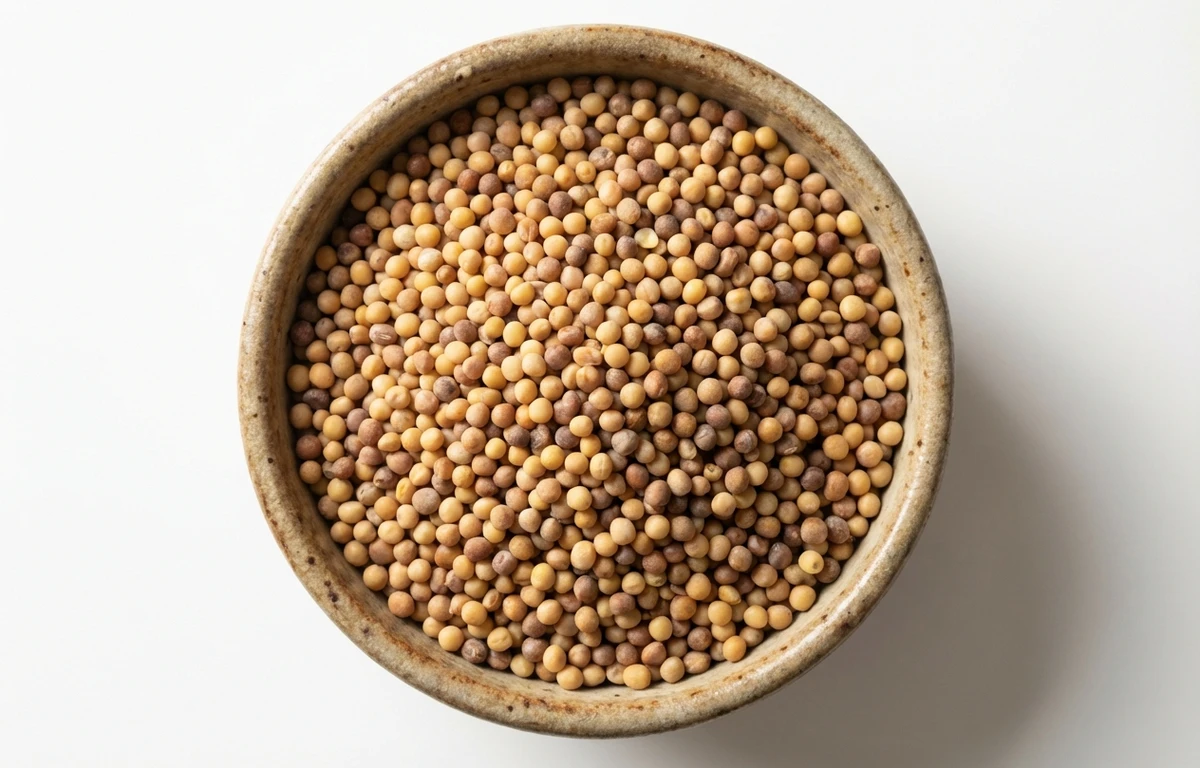
mustard seeds.
VegetarianVeganGluten-freeDairy-freeNut-freePeanut-freeSoy-freeEgg-freeShellfish-freeHoney-freeAlcohol-free
ALSO KNOWN AS
mohriavalumustard seedraisarsonkaduguavamohorimustard seedsshorshesorisa
SERVING
CALORIES
508
PROTEIN
26.1g
CARBS
28.1g
FAT
36.2g
FIBER
12.2g
NUTRITION PROFILE · per 100 g
Everything in this ingredient.
MACRONUTRIENTS
Calories508kcal—
Protein26.1g52%
Carbohydrates28.1g10%
Fiber12.2g44%
Sugar6.8g14%
Total fat36.2g46%
Saturated fat2.0g10%
Trans fat0g—
Cholesterol0mg0%
Water5.3g—
MINERALS
Sodium13mg1%
Potassium738mg16%
Calcium266mg20%
Iron9.2mg51%
Magnesium370mg88%
Phosphorus828mg66%
Zinc6.1mg55%
Copper0.64mg71%
Manganese2.5mg107%
Selenium208µg378%
VITAMINS
Vitamin A3.0µg0%
Vitamin C7.1mg8%
Vitamin D0µg0%
Vitamin E5.1mg34%
Vitamin K5.4µg5%
Thiamin (B1)0.81mg68%
Riboflavin (B2)0.26mg20%
Niacin (B3)4.7mg30%
Pantothenic acid (B5)0.81mg16%
Vitamin B60.40mg24%
Biotin (B7)1.4µg5%
Folate (B9)76µg19%
Vitamin B120µg0%
%DV based on a 2,000 cal diet. Source: USDA FoodData Central. A dash in the %DV column means there’s no established Daily Value for that nutrient.
MEASUREMENT CONVERSIONS
How much is what.
1 cup180g
1 tablespoon11g
1 teaspoon3g
1 oz28.4g
1 lb453.6g
1 ml0.8g
1 liter750g
HEALTH BENEFITS
Why eat it.
- ✓Rich in selenium and magnesium which have anti-inflammatory properties
- ✓Contains glucosinolates that may help protect against certain cancers
- ✓Good source of dietary fiber to support digestive health
- ✓High in antioxidants that help reduce oxidative stress
- ✓Contains omega-3 fatty acids beneficial for heart health
COOKING TIPS
In the kitchen.
- 1Temper in hot oil (tadka) until they pop to release their full aroma
- 2Grind into a paste with water or vinegar to activate the pungent enzymes
- 3Avoid over-roasting as they can become excessively bitter
STORAGE
Keep it fresh.
- Store in an airtight container in a cool, dark, and dry place
- Whole seeds can last up to 1-2 years if stored properly
- Keep away from direct sunlight to preserve essential oils and flavor
FAQ
Frequently asked questions.
How long do mustard seeds last?
Whole mustard seeds stay fresh for 1 to 2 years when stored in an airtight container in a cool, dark place.
What is the best substitute for mustard seeds?
Mustard powder (use 1 tsp powder for 1 tbsp seeds) or prepared mustard can work, though the texture will differ. Horseradish is a good alternative for heat.
Why do mustard seeds pop when heated?
The moisture inside the seed turns to steam, building pressure until the outer hull bursts, which also releases the aromatic oils.
Are mustard seeds gluten-free?
Yes, pure mustard seeds are naturally gluten-free. However, always check labels on pre-packaged spice blends for cross-contamination.
How do I make mustard seeds less bitter?
Soaking them in cold water or milk for several hours before grinding can help reduce bitterness. Cooking them briefly in oil also mellows the flavor.
Can I freeze mustard seeds?
Yes, you can freeze them to extend shelf life, though it is generally unnecessary if kept in a cool, dry pantry.
What is the difference between whole and ground mustard?
Whole seeds provide texture and a nutty flavor when tempered, while ground mustard provides immediate heat and acts as an emulsifier in sauces.
How do I pick high-quality mustard seeds?
Look for seeds that are uniform in size and color, free from dust or debris, and have a clean, sharp scent when crushed.
RECIPES
Cook with mustard seeds.
10 recipes · sorted by what’s quick