Protein8 recipes
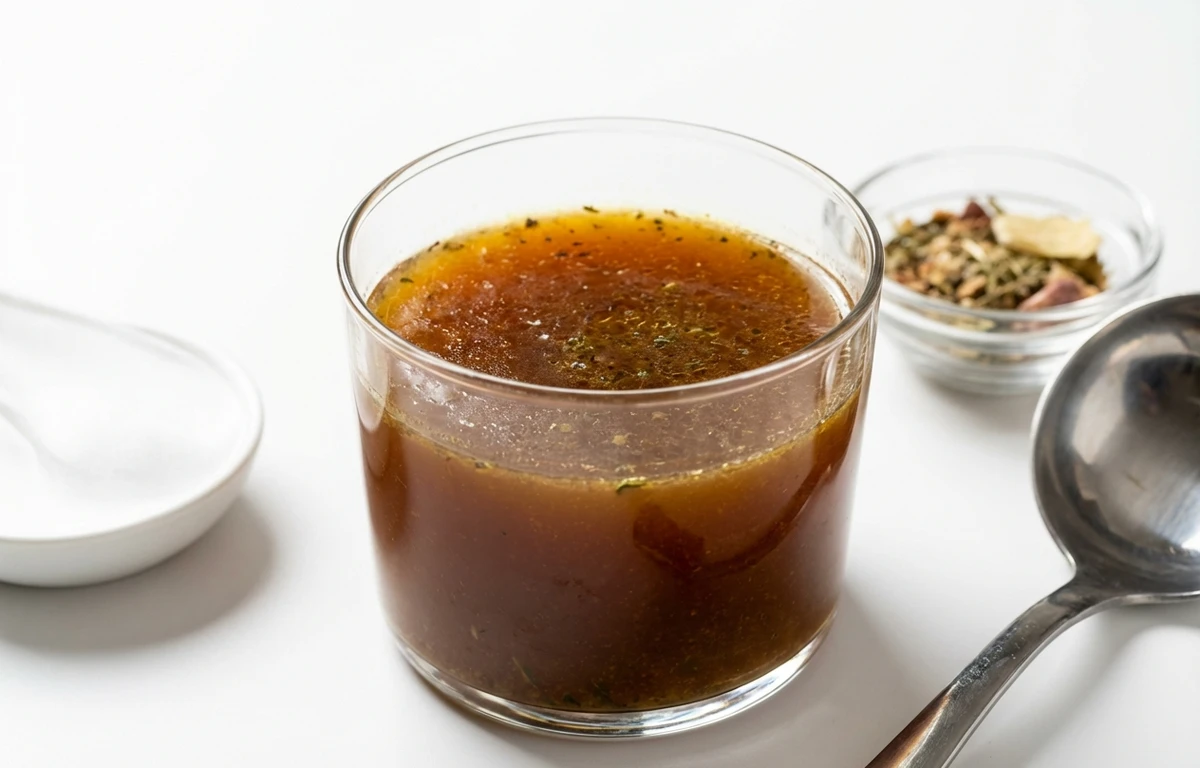
low-sodium beef broth.
VegetarianVeganGluten-freeDairy-freeNut-freePeanut-freeSoy-freeEgg-freeShellfish-freeHoney-freeAlcohol-free
ALSO KNOWN AS
reduced sodium beef brothlow salt beef stock
SERVING
CALORIES
6
PROTEIN
1.2g
CARBS
0.21g
FAT
0.08g
FIBER
0g
NUTRITION PROFILE · per 100 g
Everything in this ingredient.
MACRONUTRIENTS
Calories6.0kcal—
Protein1.2g2%
Carbohydrates0.21g0%
Fiber0g0%
Sugar0.20g0%
Total fat0.08g0%
Saturated fat0.03g0%
Trans fat0g—
Cholesterol0mg0%
Water98g—
MINERALS
Sodium180mg8%
Potassium23mg0%
Calcium2.0mg0%
Iron0.04mg0%
Magnesium1.0mg0%
Phosphorus10mg1%
Zinc0.32mg3%
Copper0.01mg1%
Manganese0.01mg0%
Selenium0µg0%
VITAMINS
Vitamin A0µg0%
Vitamin C0mg0%
Vitamin D0µg0%
Vitamin E0mg0%
Thiamin (B1)0.02mg2%
Riboflavin (B2)0.09mg7%
Niacin (B3)0.50mg3%
Pantothenic acid (B5)0.05mg1%
Vitamin B60.11mg6%
Vitamin B120µg0%
%DV based on a 2,000 cal diet. Source: USDA FoodData Central. A dash in the %DV column means there’s no established Daily Value for that nutrient.
MEASUREMENT CONVERSIONS
How much is what.
1 cup213g
1 tablespoon13.3g
1 teaspoon4.4g
1 ml0.9g
1 liter887.5g
HEALTH BENEFITS
Why eat it.
- ✓Supports hydration due to its high water and electrolyte content.
- ✓Lower in sodium compared to regular broth, which is beneficial for blood pressure management.
- ✓Contains collagen and gelatin, which may support joint, skin, and gut health.
- ✓Provides a low-calorie, flavorful base for soups and sauces, aiding in weight management.
COOKING TIPS
In the kitchen.
- 1Use as a base for soups, stews, and gravies, allowing you to control the final salt content of the dish.
- 2Deglaze the pan after searing meats to create a rich, flavorful pan sauce.
- 3Substitute for water when cooking grains like rice, quinoa, or risotto to add savory depth.
- 4Use as a braising liquid for tough cuts of meat to make them tender and moist.
STORAGE
Keep it fresh.
- Store unopened cartons or cans in a cool, dark pantry for up to the expiration date, typically 1-2 years.
- Once opened, transfer to an airtight container and refrigerate for up to 5 days, or freeze in portions for up to 6 months.
FAQ
Frequently asked questions.
Is low-sodium beef broth healthy?
Yes, low-sodium beef broth is a healthy choice. It's very low in calories and fat, provides hydration, and contains beneficial compounds like collagen and gelatin. Its reduced sodium content is particularly good for heart health and blood pressure management.
How many calories and how much protein are in low-sodium beef broth?
Per 100g, low-sodium beef broth contains approximately 6 calories, 1.2g of protein, 0.21g of carbohydrates, and 0.08g of fat. It's a very low-calorie and low-fat option, making it a light base for meals.
Is low-sodium beef broth good for weight loss?
Yes, it can be beneficial for weight loss. Its very low-calorie and low-fat profile makes it an excellent base for flavorful, satisfying meals without adding significant calories. It can help you feel full and hydrated, supporting overall dietary goals.
Is low-sodium beef broth gluten-free?
Most low-sodium beef broths are naturally gluten-free, as they are typically made from beef, water, and vegetables. However, always check the ingredient label to ensure no gluten-containing additives or cross-contamination occurred during processing, especially if you have celiac disease or a gluten sensitivity.
Is low-sodium beef broth keto-friendly?
Yes, low-sodium beef broth is highly keto-friendly. It contains minimal carbohydrates (around 0.21g per 100g) and is very low in calories, making it an excellent hydrating and flavorful option for those following a ketogenic diet.
What are the best ways to use low-sodium beef broth in cooking?
It's incredibly versatile. Use it as a base for soups, stews, and gravies, to deglaze pans, to cook grains like rice or quinoa, or to braise meats and vegetables. It adds depth of flavor without excess salt, allowing you to control seasoning.
What does low-sodium beef broth taste like?
Low-sodium beef broth has a savory, umami-rich flavor with a subtle beef essence. It's less salty than regular broth, allowing the natural flavors of the beef and any added aromatics to shine through, providing a clean, robust taste.
How should I store low-sodium beef broth?
Unopened cartons or cans of low-sodium beef broth can be stored in a cool, dry pantry away from direct sunlight. Once opened, transfer any unused portion to an airtight container and refrigerate promptly.
How long does low-sodium beef broth last once opened?
Once opened and refrigerated, low-sodium beef broth typically lasts for about 4-7 days. For longer storage, it can be frozen in ice cube trays or freezer-safe containers for up to 3-6 months, then thawed as needed.
What is the difference between low-sodium beef broth and regular beef broth?
The primary difference is the sodium content. Low-sodium beef broth contains significantly less salt, making it a healthier option for those monitoring their sodium intake. Regular broth can have a much higher sodium level, often exceeding 500mg per serving, while low-sodium versions are typically under 140mg per serving.
RECIPES
Cook with low-sodium beef broth.
8 recipes · sorted by what’s quick