Fruit
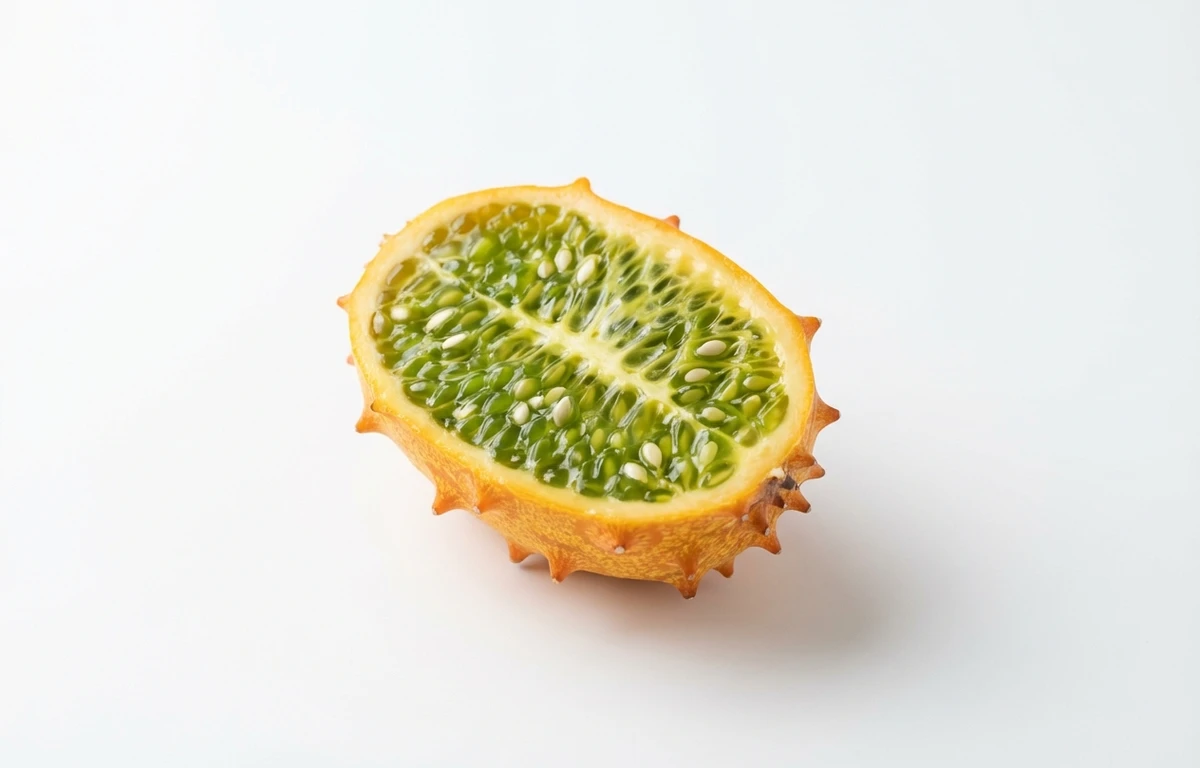
horned melon.
VegetarianVeganGluten-freeDairy-freeNut-freePeanut-freeSoy-freeEgg-freeShellfish-freeHoney-freeAlcohol-free
ALSO KNOWN AS
kiwano
SERVING
CALORIES
44
PROTEIN
1.8g
CARBS
7.6g
FAT
1.3g
FIBER
0.50g
NUTRITION PROFILE · per 100 g
Everything in this ingredient.
MACRONUTRIENTS
Calories44kcal—
Protein1.8g4%
Carbohydrates7.6g3%
Fiber0.50g2%
Sugar3.5g7%
Total fat1.3g2%
Saturated fat0.20g1%
Trans fat0g—
Cholesterol0mg0%
Water89g—
MINERALS
Sodium2.0mg0%
Potassium123mg3%
Calcium13mg1%
Iron1.1mg6%
Magnesium40mg10%
Phosphorus37mg3%
Zinc0.50mg5%
Copper0.02mg2%
Manganese0.04mg2%
Selenium0.10µg0%
VITAMINS
Vitamin A7.0µg1%
Vitamin C5.3mg6%
Vitamin D0µg0%
Vitamin E0mg0%
Vitamin K0µg0%
Thiamin (B1)0.03mg3%
Riboflavin (B2)0.02mg2%
Niacin (B3)0.60mg4%
Pantothenic acid (B5)0.20mg4%
Vitamin B60.06mg4%
Folate (B9)3.0µg1%
Vitamin B120µg0%
%DV based on a 2,000 cal diet. Source: USDA FoodData Central. A dash in the %DV column means there’s no established Daily Value for that nutrient.
MEASUREMENT CONVERSIONS
How much is what.
1 cup233g
1 tablespoon14.6g
1 teaspoon4.9g
1 ml1g
1 liter970.8g
HEALTH BENEFITS
Why eat it.
- ✓Rich in antioxidants like vitamin C, vitamin A, and zinc, which help combat oxidative stress.
- ✓High water content (approximately 88%) makes it excellent for hydration.
- ✓Provides essential minerals such as magnesium and potassium, supporting nerve function and blood pressure regulation.
- ✓Contains beneficial unsaturated fatty acids, including linoleic acid (omega-6) and oleic acid (omega-9).
COOKING TIPS
In the kitchen.
- 1To prepare, slice the melon in half lengthwise and scoop out the gelatinous pulp with a spoon.
- 2The pulp and edible seeds can be eaten raw; the flavor is a unique combination of cucumber, kiwi, and banana.
- 3Incorporate the pulp into smoothies, cocktails, yogurt parfaits, or use it as a topping for desserts and salads.
- 4The hollowed-out spiky shell can be used as a decorative and unique serving bowl.
STORAGE
Keep it fresh.
- Store whole, unripe horned melons at room temperature (68-72°F or 20-22°C) away from direct sunlight until they turn a deep orange color.
- Once ripe, they can be stored in the refrigerator for up to one week to maintain freshness.
- Scooped-out pulp should be kept in an airtight container in the refrigerator and consumed within 2 days.
FAQ
Frequently asked questions.
Is horned melon healthy?
Yes, horned melon is very healthy. It's rich in antioxidants like vitamins C and A, and zinc, which help combat oxidative stress. Its high water content (around 88%) makes it excellent for hydration, and it provides essential minerals like magnesium and potassium for overall bodily functions.
What are the main nutritional facts for horned melon?
Per 100g, horned melon contains approximately 44 calories, 1.8g of protein, 7.6g of carbohydrates, and 1.3g of fat. It's also a good source of dietary fiber and various vitamins and minerals, contributing to its health benefits.
Is horned melon good for weight loss?
Yes, horned melon can be beneficial for weight loss due to its low-calorie count and high water content, which can promote feelings of fullness. Its fiber content also aids digestion and can help reduce overall calorie intake.
Is horned melon suitable for diabetics?
Horned melon has a relatively low carbohydrate content (7.6g per 100g) and natural sugars. While it can be consumed by diabetics in moderation, it's always best to monitor blood sugar levels and consult with a healthcare professional regarding portion sizes.
Is horned melon keto-friendly?
With 7.6g of carbohydrates per 100g, horned melon is not strictly keto-friendly in large quantities. While it's lower in carbs than many fruits, consuming too much could quickly exceed daily carb limits for a ketogenic diet, so consume sparingly if following keto.
How do you eat or prepare horned melon?
To eat, simply cut the melon in half and scoop out the jelly-like pulp with a spoon; the seeds are edible. It can be enjoyed fresh, added to fruit salads, smoothies, or used as a unique garnish for various dishes.
What does horned melon taste like?
Horned melon has a mild, subtly sweet, and slightly tart flavor, often described as a cross between a cucumber, zucchini, and passion fruit or lime. Its texture is jelly-like with small, edible seeds.
How do you know when a horned melon is ripe and how should it be stored?
A ripe horned melon will have a vibrant orange skin and feel firm but not hard. Store unripe melons at room temperature until they ripen, then refrigerate for up to two weeks to maintain freshness.
Can horned melon be used in savory dishes?
Yes, its mild and slightly tart flavor makes it surprisingly versatile for savory applications. Horned melon can be incorporated into salsas, dressings, marinades, or as a refreshing addition to seafood or chicken salads.
Does horned melon have any unique health benefits beyond general nutrition?
Beyond its general nutritional profile, horned melon is notable for its high antioxidant content, including vitamins C, A, and zinc, which actively combat oxidative stress. It also contains beneficial unsaturated fatty acids like linoleic (omega-6) and oleic (omega-9) acids, supporting heart health.