Grain
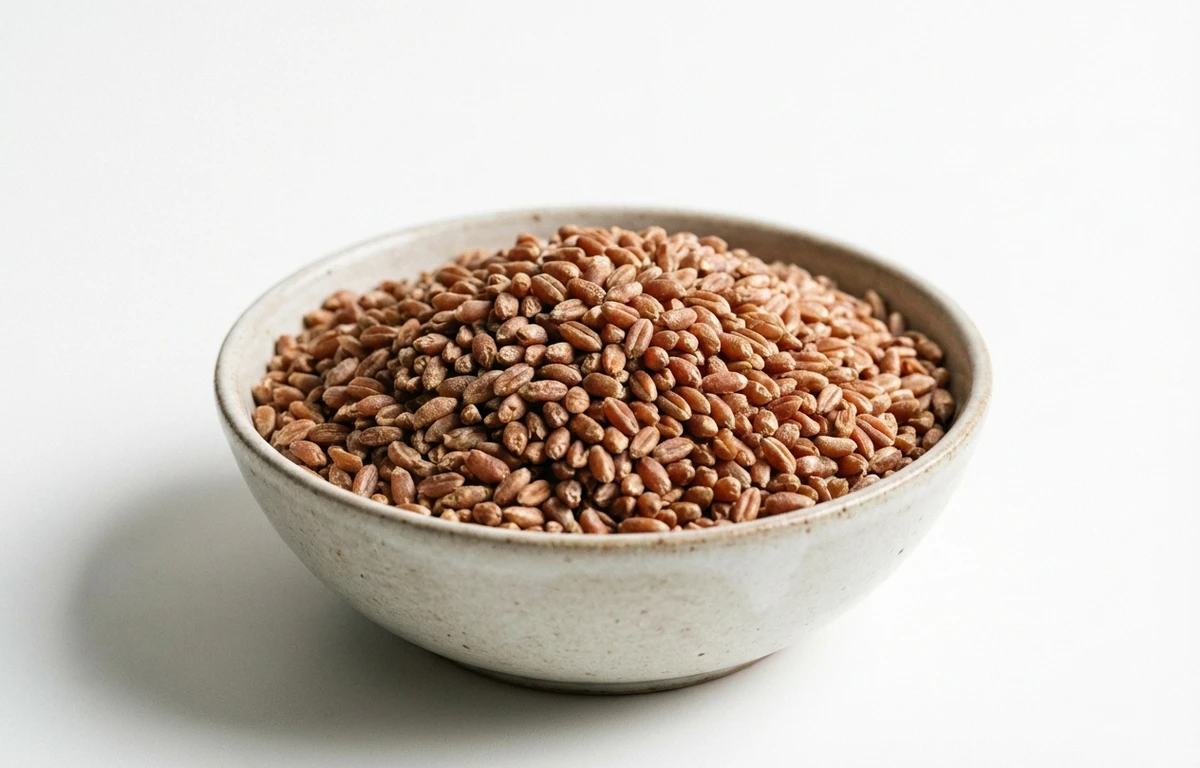
hard red spring wheat.
VegetarianVeganGluten-freeDairy-freeNut-freePeanut-freeSoy-freeEgg-freeShellfish-freeHoney-freeAlcohol-freeWhole grain
ALSO KNOWN AS
spring wheat
SERVING
CALORIES
329
PROTEIN
15.4g
CARBS
68g
FAT
1.9g
FIBER
12.2g
NUTRITION PROFILE · per 100 g
Everything in this ingredient.
MACRONUTRIENTS
Calories329kcal—
Protein15.4g31%
Carbohydrates68g25%
Fiber12.2g44%
Sugar0.41g1%
Total fat1.9g2%
Saturated fat0.31g2%
Cholesterol0mg0%
Water12.8g—
MINERALS
Sodium2.0mg0%
Potassium340mg7%
Calcium25mg2%
Iron3.6mg20%
Magnesium124mg30%
Phosphorus332mg27%
Zinc2.8mg25%
Copper0.41mg46%
Manganese4.1mg177%
Selenium70.7µg129%
VITAMINS
Vitamin A0µg0%
Vitamin C0mg0%
Vitamin D0µg0%
Vitamin E1.0mg7%
Vitamin K1.9µg2%
Thiamin (B1)0.50mg42%
Riboflavin (B2)0.11mg8%
Niacin (B3)5.7mg36%
Pantothenic acid (B5)0.94mg19%
Vitamin B60.34mg20%
Folate (B9)43µg11%
Vitamin B120µg0%
%DV based on a 2,000 cal diet. Source: USDA FoodData Central. A dash in the %DV column means there’s no established Daily Value for that nutrient.
MEASUREMENT CONVERSIONS
How much is what.
1 cup192g
1 tablespoon12g
1 teaspoon4g
1 ml0.8g
1 liter800g
HEALTH BENEFITS
Why eat it.
- ✓High in dietary fiber, which supports digestive health and helps maintain stable blood sugar levels.
- ✓Excellent source of protein for a grain, crucial for muscle repair and building tissues.
- ✓Rich in essential minerals such as manganese, selenium, and phosphorus, which support bone health, metabolism, and antioxidant defense.
- ✓Provides B-vitamins like niacin and thiamine, essential for converting food into energy.
COOKING TIPS
In the kitchen.
- 1Ideal for milling into high-protein flour for making yeast breads, bagels, and pizza doughs due to its high gluten content which provides excellent structure and chew.
- 2Cook whole wheat berries by simmering in water or broth (1 part grain to 3 parts liquid) for about 50-60 minutes until tender; soaking overnight can reduce cooking time.
- 3Use cooked wheat berries as a base for grain salads, add them to soups and stews for texture, or serve as a hearty side dish.
- 4Sprout the berries for a few days to increase nutrient availability and add a sweet, crunchy element to salads and sandwiches.
STORAGE
Keep it fresh.
- Store whole wheat berries in a sealed, airtight container in a cool, dark, and dry place for up to 6 months.
- For long-term storage (over a year), place the airtight container in a freezer to prevent the oils in the germ from going rancid.
FAQ
Frequently asked questions.
Is hard red spring wheat healthy?
Yes, hard red spring wheat is very healthy. It's a whole grain rich in dietary fiber, protein, and essential minerals like manganese, selenium, and phosphorus, supporting digestive health, muscle repair, and overall well-being. It also provides B-vitamins for energy metabolism.
How much protein and calories are in hard red spring wheat?
Per 100g, hard red spring wheat contains approximately 329 calories and an impressive 15.4g of protein, making it one of the higher-protein grains. It also provides about 68g of carbohydrates and 1.92g of fat.
Is hard red spring wheat good for weight loss?
Hard red spring wheat can be beneficial for weight management due to its high fiber content, which promotes satiety and helps you feel full longer. Its protein content also aids in muscle maintenance, which is important during weight loss. However, portion control is key due to its calorie density.
Is hard red spring wheat gluten-free?
No, hard red spring wheat is not gluten-free. As a type of wheat, it naturally contains gluten, which is responsible for its excellent baking properties. Individuals with celiac disease or gluten sensitivity should avoid it.
Is hard red spring wheat keto-friendly?
No, hard red spring wheat is not keto-friendly. With approximately 68g of carbohydrates per 100g, it is too high in carbs to fit into a ketogenic diet, which typically restricts net carb intake to 20-50g per day.
What is hard red spring wheat used for?
Hard red spring wheat is highly valued for its strong gluten content and high protein, making it ideal for baking yeast breads, rolls, and other products requiring good structure and elasticity. It's also used in some pasta and noodle production.
How do you cook whole hard red spring wheat berries?
To cook whole hard red spring wheat berries, rinse them thoroughly, then combine one part wheat berries with three parts water or broth. Bring to a boil, then reduce heat, cover, and simmer for 60-90 minutes until tender but still chewy.
How should I store hard red spring wheat?
Whole hard red spring wheat berries should be stored in an airtight container in a cool, dark, and dry place to prevent spoilage and insect infestation. Properly stored, they can last for several years. Flour made from it has a shorter shelf life and is best kept in the refrigerator or freezer.
What is the difference between hard red spring wheat and other wheat types?
Hard red spring wheat is known for its high protein content and strong gluten, which gives dough excellent elasticity and strength, making it superior for bread baking. Other types like soft wheat have lower protein and are better for cakes or pastries, while durum wheat is primarily for pasta.
Can hard red spring wheat be eaten raw?
While technically edible, it's not recommended to eat raw hard red spring wheat berries due to their hard texture and potential for digestive discomfort. Soaking or sprouting can make them more digestible, but cooking is generally preferred for optimal texture and nutrient absorption.