Dairy10 recipes
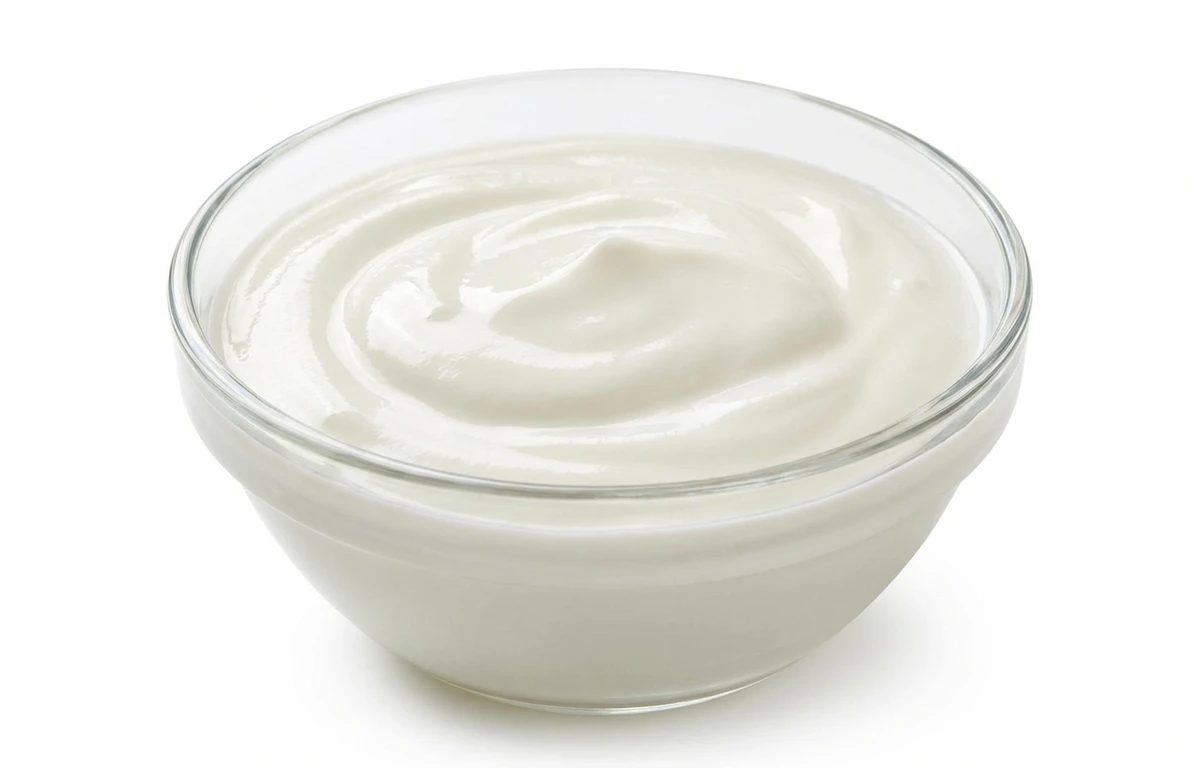
greek yogurt.
VegetarianVeganGluten-freeDairy-freeNut-freePeanut-freeSoy-freeEgg-freeShellfish-freeHoney-freeAlcohol-freeFermented
ALSO KNOWN AS
dahicurdstrained yogurtgreek-style yogurtstrained yoghurtgreek yoghurt
SERVING
CALORIES
97
PROTEIN
9.0g
CARBS
4.0g
FAT
5.0g
FIBER
0g
NUTRITION PROFILE · per 100 g
Everything in this ingredient.
MACRONUTRIENTS
Calories97kcal—
Protein9.0g18%
Carbohydrates4.0g1%
Fiber0g0%
Sugar3.3g7%
Total fat5.0g6%
Saturated fat3.3g16%
Trans fat0.10g—
Cholesterol13mg4%
Water81g—
MINERALS
Sodium36mg2%
Potassium141mg3%
Calcium110mg8%
Iron0.10mg1%
Magnesium11mg3%
Phosphorus135mg11%
Zinc0.50mg5%
Copper0.01mg1%
Manganese0.01mg0%
Selenium9.7µg18%
VITAMINS
Vitamin A51µg6%
Vitamin C0mg0%
Vitamin D0.10µg1%
Vitamin E0.01mg0%
Vitamin K0.10µg0%
Thiamin (B1)0.02mg2%
Riboflavin (B2)0.23mg18%
Niacin (B3)0.20mg1%
Pantothenic acid (B5)0.60mg12%
Vitamin B60.06mg4%
Folate (B9)7.0µg2%
Vitamin B120.75µg31%
%DV based on a 2,000 cal diet. Source: USDA FoodData Central. A dash in the %DV column means there’s no established Daily Value for that nutrient.
MEASUREMENT CONVERSIONS
How much is what.
1 cup245g
1 tablespoon15.8g
1 teaspoon5.3g
1 oz28.4g
1 lb453.6g
1 ml105g
1 liter1050g
HEALTH BENEFITS
Why eat it.
- ✓High protein content supports muscle maintenance and satiety
- ✓Contains probiotics that promote a healthy gut microbiome
- ✓Excellent source of calcium for bone health
- ✓Rich in Vitamin B12 for nerve function and energy
- ✓Lower lactose content compared to regular yogurt due to straining
COOKING TIPS
In the kitchen.
- 1When adding to hot sauces, stir in at the very end off the heat to prevent curdling
- 2Use as a lower-calorie, high-protein substitute for sour cream or mayonnaise
- 3Whisk thoroughly before using in dressings to ensure a smooth, creamy consistency
STORAGE
Keep it fresh.
- Always keep refrigerated at or below 40°F (4°C)
- Keep the container tightly sealed to prevent absorption of other food odors
- Do not freeze if you intend to eat it plain, as the texture will become grainy
FAQ
Frequently asked questions.
How long does Greek yogurt last after opening?
Once opened, Greek yogurt typically stays fresh for 7 to 10 days if kept refrigerated and sealed.
What is the clear liquid on top of my yogurt?
That liquid is whey. It is naturally occurring and contains protein and minerals; you can either stir it back in or drain it off.
Can Greek yogurt be used as a substitute for sour cream?
Yes, it is an excellent 1:1 substitute for sour cream in dips, baking, and toppings due to its thick consistency and tang.
Is Greek yogurt lactose-free?
No, but it is lower in lactose than regular yogurt because the straining process removes much of the lactose-containing whey.
How do I choose a healthy Greek yogurt?
Look for 'plain' varieties with no added sugars and check the label for 'live and active cultures'.
Can I freeze Greek yogurt?
You can freeze it for up to 2 months, but the texture will change from creamy to grainy. It is best used for smoothies or baking after freezing.
Why is Greek yogurt thicker than regular yogurt?
It is strained multiple times to remove the liquid whey, resulting in a denser, more concentrated product with more protein.
Is Greek yogurt suitable for a keto diet?
Plain Greek yogurt can fit into a keto diet in moderation, as it contains about 4g of carbs per 100g.
Can I use Greek yogurt in marinades?
Yes, the lactic acid in the yogurt helps tenderize meats like chicken and lamb effectively.
RECIPES
Cook with greek yogurt.
10 recipes · sorted by what’s quick