Protein
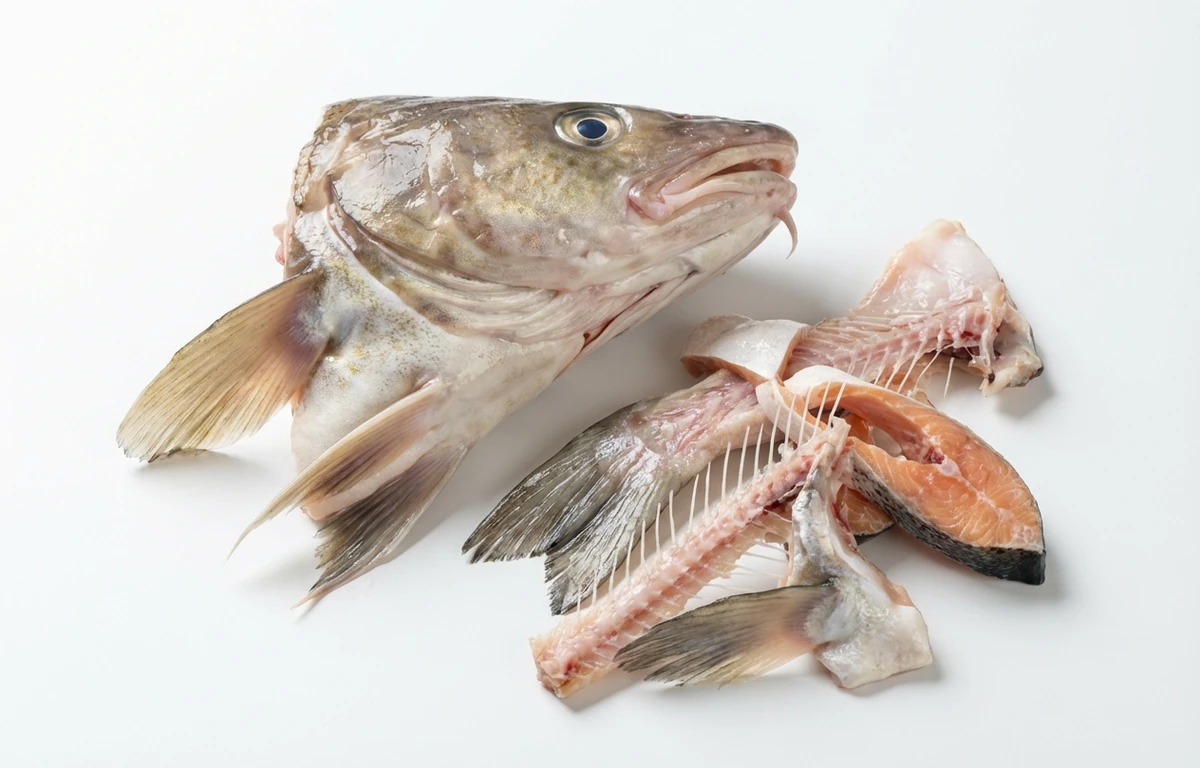
fish bones and heads.
VegetarianVeganGluten-freeDairy-freeNut-freePeanut-freeSoy-freeEgg-freeShellfish-freeHoney-freeAlcohol-free
SERVING
CALORIES
120
PROTEIN
18.5g
CARBS
0g
FAT
4.8g
FIBER
0g
NUTRITION PROFILE · per 100 g
Everything in this ingredient.
MACRONUTRIENTS
Calories120kcal—
Protein18.5g37%
Carbohydrates0g0%
Fiber0g0%
Sugar0g0%
Total fat4.8g6%
Saturated fat1.1g6%
Trans fat0g—
Cholesterol65mg22%
Water72g—
MINERALS
Sodium85mg4%
Potassium260mg6%
Calcium180mg14%
Iron1.2mg7%
Magnesium35mg8%
Phosphorus210mg17%
Zinc1.1mg10%
Copper0.08mg9%
Manganese0.04mg2%
Selenium38µg69%
VITAMINS
Vitamin A45µg5%
Vitamin C0mg0%
Vitamin D2.5µg13%
Vitamin E0.60mg4%
Vitamin K0.10µg0%
Thiamin (B1)0.04mg3%
Riboflavin (B2)0.12mg9%
Niacin (B3)3.2mg20%
Pantothenic acid (B5)0.40mg8%
Vitamin B60.18mg11%
Folate (B9)6.0µg2%
Vitamin B122.8µg117%
%DV based on a 2,000 cal diet. Source: USDA FoodData Central. A dash in the %DV column means there’s no established Daily Value for that nutrient.
MEASUREMENT CONVERSIONS
How much is what.
1 cup130g
1 tablespoon8.1g
1 teaspoon2.7g
1 ml0.5g
1 liter541.7g
1 piece250g
HEALTH BENEFITS
Why eat it.
- ✓Excellent source of calcium, phosphorus, and magnesium, which are crucial for building and maintaining strong bones and teeth.
- ✓Provides a rich natural source of collagen and gelatin when simmered, supporting joint health, skin elasticity, and gut lining integrity.
- ✓Fish heads contain omega-3 fatty acids (DHA and EPA), particularly in the brain and eyes, which are vital for cognitive function and cardiovascular health.
- ✓A good source of trace minerals like iodine and selenium, essential for proper thyroid function and antioxidant defense.
COOKING TIPS
In the kitchen.
- 1Ideal for making nutrient-dense fish stock (fumet). Simmer gently with aromatics; avoid boiling, which can make the stock cloudy and bitter.
- 2Always remove the gills from fish heads before cooking, as they impart a strong bitter flavor to broths and stocks.
- 3For a deeper, more savory flavor, roast the bones and heads in a hot oven (400°F/200°C) until lightly browned before simmering.
- 4Skim any foam or impurities that rise to the surface during the initial cooking phase to achieve a clearer, cleaner-tasting final product.
STORAGE
Keep it fresh.
- For immediate use, refrigerate in a sealed container or bag at or below 40°F (4°C) and use within 24-48 hours due to high perishability.
- For long-term storage, wrap tightly in plastic wrap and place in a freezer-safe bag, removing as much air as possible. Freeze at 0°F (-18°C) for up to 3 months.
FAQ
Frequently asked questions.
Are fish bones and heads healthy?
Yes, fish bones and heads are highly nutritious, especially when used to make broth. They are an excellent source of calcium, phosphorus, and magnesium for bone health, and provide collagen for joints and skin. Fish heads also contain beneficial omega-3 fatty acids.
What are the main nutritional benefits of fish bones and heads?
They are rich in minerals like calcium, phosphorus, and magnesium, crucial for strong bones and teeth. When simmered, they release collagen and gelatin, supporting joint health and skin elasticity. Fish heads specifically offer omega-3 fatty acids (DHA and EPA) vital for brain and heart health.
How much protein and calories are in fish bones and heads?
Per 100g, fish bones and heads contain approximately 18.5g of protein and about 120 calories. They are virtually carb-free and provide around 4.8g of fat, including beneficial omega-3s from the head.
Are fish bones and heads gluten-free?
Yes, fish bones and heads are naturally gluten-free. When preparing broth, ensure no gluten-containing ingredients are added to maintain its gluten-free status.
Are fish bones and heads keto-friendly?
Absolutely. Fish bones and heads are very low in carbohydrates (0g per 100g) and provide protein and healthy fats, making them an excellent ingredient for keto diets, especially when used for nutrient-dense broths.
How do you typically cook or use fish bones and heads?
The most common and beneficial way to use fish bones and heads is to make fish stock or broth. Simmering them slowly extracts collagen, minerals, and flavor, creating a nutrient-rich base for soups, stews, and sauces.
Can you eat fish bones and heads directly?
While small, soft bones in some fish can be eaten, larger fish bones and heads are generally not consumed directly due to their texture and potential choking hazard. Their primary culinary value comes from extracting nutrients and flavor into a broth.
How should you store fish bones and heads?
Fresh fish bones and heads should be stored in the refrigerator and used within 1-2 days. For longer storage, they can be frozen in an airtight bag or container for up to 3-6 months.
How do you know if fish bones and heads are fresh?
Fresh fish bones and heads should have a mild, clean 'ocean' smell, not a strong, fishy odor. The eyes of the head should be clear and plump, not sunken or cloudy, and the gills should be bright red.
Are fish bones and heads a good source of collagen?
Yes, fish bones and heads are an excellent natural source of collagen and gelatin, especially when simmered for an extended period to make broth. This collagen supports joint health, skin elasticity, and gut lining integrity.