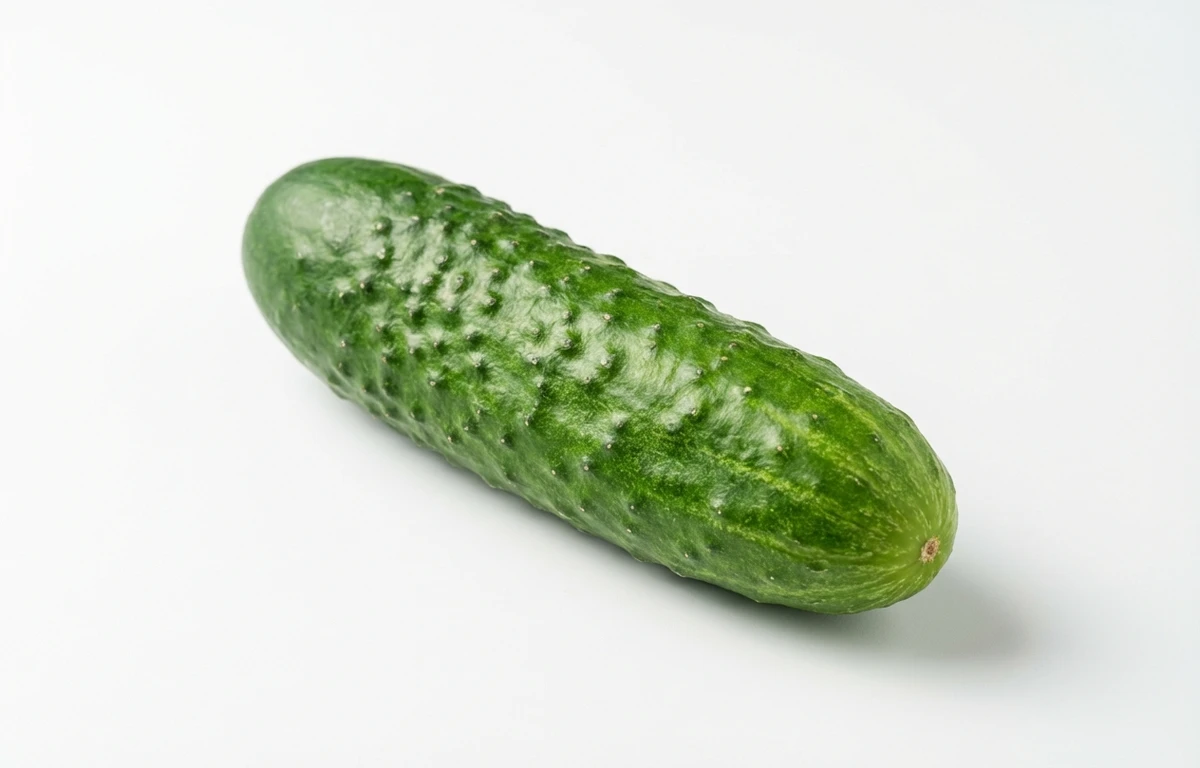
Vegetable
field cucumber.
VegetarianVeganGluten-freeDairy-freeNut-freePeanut-freeSoy-freeEgg-freeShellfish-freeHoney-freeAlcohol-free
SERVING
CALORIES
15
PROTEIN
0.65g
CARBS
3.6g
FAT
0.11g
FIBER
0.50g
NUTRITION PROFILE · per 100 g
Everything in this ingredient.
MACRONUTRIENTS
Calories15kcal—
Protein0.65g1%
Carbohydrates3.6g1%
Fiber0.50g2%
Sugar1.7g3%
Total fat0.11g0%
Saturated fat0.04g0%
Trans fat0g—
Cholesterol0mg0%
Water95.2g—
MINERALS
Sodium2.0mg0%
Potassium147mg3%
Calcium16mg1%
Iron0.28mg2%
Magnesium13mg3%
Phosphorus24mg2%
Zinc0.20mg2%
Copper0.04mg4%
Manganese0.08mg3%
Selenium0.30µg1%
VITAMINS
Vitamin A5.0µg1%
Vitamin C2.8mg3%
Vitamin D0µg0%
Vitamin E0.03mg0%
Vitamin K16.4µg14%
Thiamin (B1)0.03mg3%
Riboflavin (B2)0.03mg2%
Niacin (B3)0.10mg1%
Pantothenic acid (B5)0.26mg5%
Vitamin B60.04mg2%
Folate (B9)7.0µg2%
Vitamin B120µg0%
%DV based on a 2,000 cal diet. Source: USDA FoodData Central. A dash in the %DV column means there’s no established Daily Value for that nutrient.
MEASUREMENT CONVERSIONS
How much is what.
1 cup119g
1 tablespoon7.4g
1 teaspoon2.5g
1 ml0.5g
1 liter495.8g
HEALTH BENEFITS
Why eat it.
- ✓Promotes hydration due to its high water content (about 95%).
- ✓Rich in antioxidants, including flavonoids and tannins, which help combat oxidative stress.
- ✓Good source of Vitamin K, which is essential for blood clotting and bone health.
- ✓Aids in digestion and promotes regularity because of its fiber and water content.
COOKING TIPS
In the kitchen.
- 1For a less watery result in salads or sauces, slice the cucumber, sprinkle with salt, and let it sit for 20-30 minutes to draw out excess moisture, then rinse and pat dry.
- 2The skin of field cucumbers can be thick and waxy; peeling is common for a more tender texture, but the skin is edible and contains nutrients.
- 3To reduce bitterness, which can be concentrated at the ends, trim off both ends before using.
- 4Slice lengthwise and use a spoon to scrape out the seeds for a crunchier texture, especially when making dips like tzatziki.
STORAGE
Keep it fresh.
- Store unwashed in the crisper drawer of the refrigerator for up to one week.
- Keep them dry and away from ethylene-producing fruits like bananas, tomatoes, and melons to prevent them from yellowing and spoiling quickly.
- If cut, wrap the cut end tightly with plastic wrap or store in an airtight container in the fridge for 1-2 days.
FAQ
Frequently asked questions.
Is field cucumber healthy?
Yes, field cucumbers are very healthy. They are exceptionally high in water content (about 95%), promoting hydration, and are low in calories. They also provide beneficial antioxidants and Vitamin K, supporting overall well-being.
What are the nutritional benefits of field cucumber?
Per 100g, field cucumbers contain only 15 calories, 0.65g protein, 3.63g carbs, and 0.11g fat, making them very low in energy. They are rich in water, antioxidants like flavonoids and tannins, and are a good source of Vitamin K, which is vital for blood clotting and bone health.
Is field cucumber good for weight loss?
Absolutely. Field cucumbers are excellent for weight loss due to their very low calorie count and high water content, which helps you feel full without consuming many calories. Their fiber content also aids digestion, further supporting weight management.
Is field cucumber keto-friendly?
Yes, field cucumbers are very keto-friendly. With only 3.63g of carbohydrates per 100g, they are a low-carb vegetable that can be easily incorporated into a ketogenic diet. They add volume and hydration without significantly impacting carb intake.
Is field cucumber vegan and gluten-free?
Yes, field cucumbers are naturally vegan as they are a plant-based vegetable. They are also inherently gluten-free, making them suitable for individuals following vegan or gluten-free diets.
Can diabetics eat field cucumber?
Yes, field cucumbers are a great choice for diabetics. They have a very low glycemic index, are low in carbohydrates and sugar, and high in water and fiber, which can help manage blood sugar levels and promote satiety.
How do you prepare and use field cucumber?
Field cucumbers are versatile and best enjoyed raw. They can be sliced for salads, sandwiches, or as a refreshing snack with dips. They are also commonly used in cold soups like gazpacho, infused water, or pickled for longer preservation.
Do I need to peel field cucumbers?
Peeling field cucumbers is optional. The skin contains fiber and additional nutrients, so it's beneficial to leave it on, especially if the cucumber is organic and well-washed. However, some people prefer to peel them for a smoother texture or to reduce bitterness, particularly with older or larger cucumbers.
How do you store field cucumbers?
Store whole field cucumbers in the crisper drawer of your refrigerator. For best quality, keep them dry and avoid storing them near fruits that produce ethylene gas (like apples or bananas), as this can accelerate spoilage. They typically last about one week.
How do you know if a field cucumber is fresh?
A fresh field cucumber should be firm to the touch, have a vibrant, uniform green color, and be free of soft spots, wrinkles, or yellowing. It should also feel heavy for its size. Avoid any that appear shriveled or have a slimy texture.