Vegetable10 recipes
fenugreek leaves.
VegetarianVeganGluten-freeDairy-freeNut-freePeanut-freeSoy-freeEgg-freeShellfish-freeHoney-freeAlcohol-free
ALSO KNOWN AS
Methi leavesFresh methiTrigonella foenum-graecum leavesFresh Fenugreek Leavesmethimethi saagvendhaya keeraimenthya soppuuluva ilamenthi kurafresh fenugreek
SERVING
CALORIES
49
PROTEIN
4.4g
CARBS
6.0g
FAT
0.90g
FIBER
1.1g
NUTRITION PROFILE · per 100 g
Everything in this ingredient.
MACRONUTRIENTS
Calories49kcal—
Protein4.4g9%
Carbohydrates6.0g2%
Fiber1.1g4%
Sugar0.50g1%
Total fat0.90g1%
Saturated fat0.10g1%
Trans fat0g—
Cholesterol0mg0%
Water86g—
MINERALS
Sodium67mg3%
Potassium310mg7%
Calcium176mg14%
Iron3.7mg21%
Magnesium40mg10%
Phosphorus51mg4%
Zinc0.40mg4%
Copper0.10mg11%
Manganese0.30mg13%
Selenium0.50µg1%
VITAMINS
Vitamin A60µg7%
Vitamin C52mg58%
Vitamin D0µg0%
Vitamin E0.50mg3%
Vitamin K250µg208%
Thiamin (B1)0.04mg3%
Riboflavin (B2)0.10mg8%
Niacin (B3)0.60mg4%
Pantothenic acid (B5)0.20mg4%
Vitamin B60.10mg6%
Biotin (B7)4.8µg16%
Folate (B9)57µg14%
Vitamin B120µg0%
%DV based on a 2,000 cal diet. Source: USDA FoodData Central. A dash in the %DV column means there’s no established Daily Value for that nutrient.
MEASUREMENT CONVERSIONS
How much is what.
1 cup130g
1 tablespoon8g
1 teaspoon3g
1 oz28.4g
1 lb453.6g
HEALTH BENEFITS
Why eat it.
- ✓Helps regulate blood sugar levels
- ✓Rich in iron which helps prevent anemia
- ✓Contains fiber that aids in digestion
- ✓Possesses anti-inflammatory properties
- ✓Supports lactation in breastfeeding mothers
COOKING TIPS
In the kitchen.
- 1To reduce bitterness, sprinkle with salt and let sit for 15 minutes before squeezing out the juice
- 2Sauté with potatoes (Aloo Methi) to balance the bitter flavor with starch
- 3Add to paratha dough for a nutritious and flavorful flatbread
STORAGE
Keep it fresh.
- Wrap unwashed leaves in a dry paper towel and store in an airtight container
- Keep in the refrigerator crisper drawer for up to 5 days
- Do not wash until immediately before use to prevent premature wilting
FAQ
Frequently asked questions.
How long do fresh fenugreek leaves last?
Fresh fenugreek leaves typically last 3 to 5 days in the refrigerator if kept dry and stored in an airtight container.
Can I freeze fenugreek leaves?
Yes, you can blanch the leaves for 30 seconds, shock them in ice water, squeeze out excess moisture, and freeze them in portions for up to 6 months.
How do I pick the best fenugreek leaves?
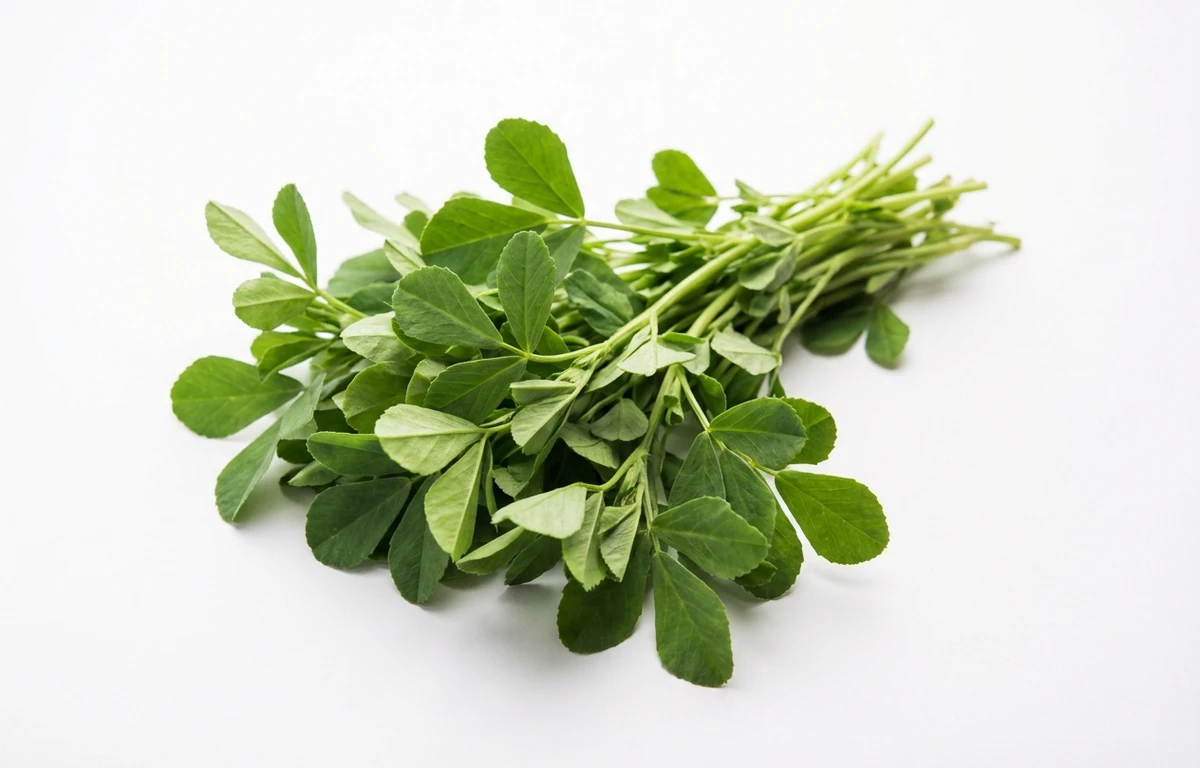
Look for bright green leaves with thin, tender stems. Avoid bunches that are yellowing, wilting, or have slimy spots.
What is a good substitute for fresh fenugreek leaves?
Spinach or kale can be used as a base, but to mimic the flavor, add a small amount of dried fenugreek leaves (kasuri methi) or a pinch of ground fenugreek seeds.
How do I clean fenugreek leaves?
Pluck the leaves from the tough stems, then submerge them in a large bowl of cold water. Lift the leaves out, leaving the grit at the bottom, and repeat until the water is clear.
Are fenugreek leaves bitter?
Yes, they have a distinct bitter profile. This can be mellowed by cooking, pairing with fats like ghee or cream, or pre-treating with salt.
What are the main nutrients in fenugreek leaves?
They are exceptionally high in Vitamin K, Vitamin C, and Iron, while being very low in calories.
Can I eat the stems of fenugreek?
Only the very thin, tender top stems are edible. The thicker, lower stems are fibrous and should be discarded.
Is fresh fenugreek the same as dried fenugreek?
No, dried fenugreek (kasuri methi) is much more concentrated in flavor and is used as a spice/herb, whereas fresh leaves are used as a leafy vegetable.
RECIPES
Cook with fenugreek leaves.
10 recipes · sorted by what’s quick