Grain
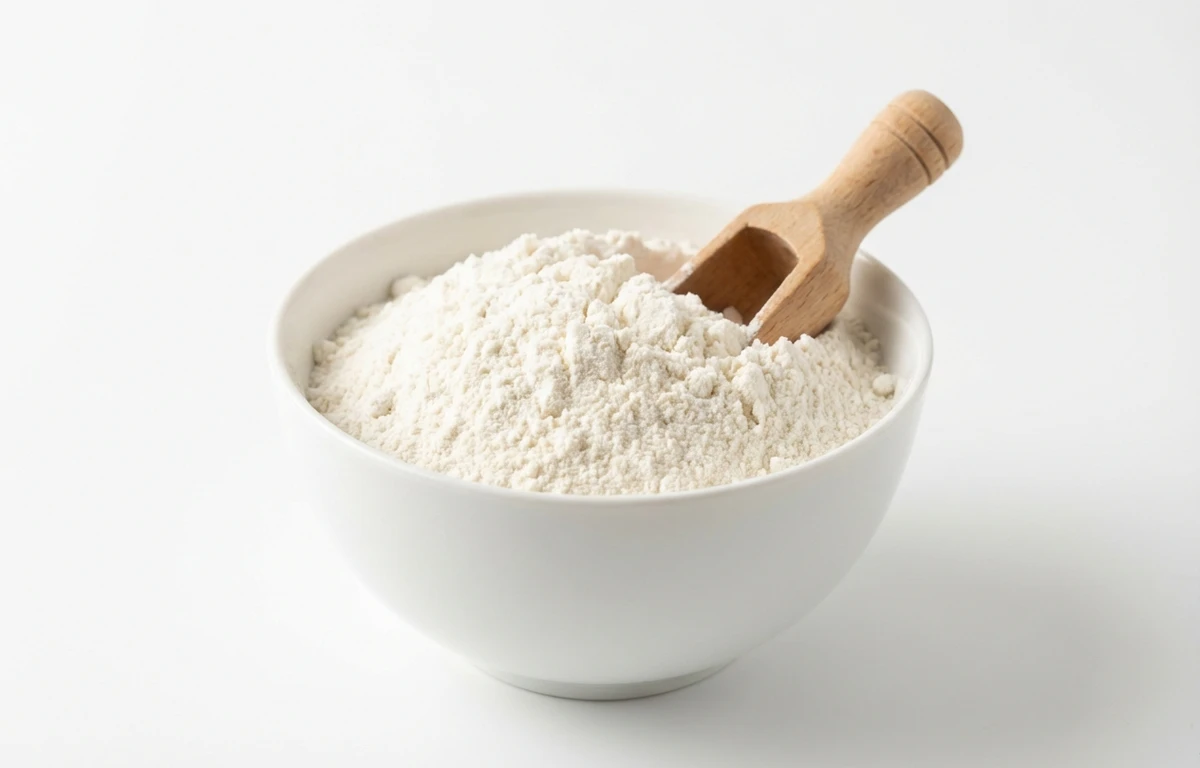
enriched self-rising all-purpose white wheat flour.
VegetarianVeganGluten-freeDairy-freeNut-freePeanut-freeSoy-freeEgg-freeShellfish-freeHoney-freeAlcohol-free
SERVING
CALORIES
354
PROTEIN
9.9g
CARBS
74.2g
FAT
0.97g
FIBER
2.7g
NUTRITION PROFILE · per 100 g
Everything in this ingredient.
MACRONUTRIENTS
Calories354kcal—
Protein9.9g20%
Carbohydrates74.2g27%
Fiber2.7g10%
Sugar0.22g0%
Total fat0.97g1%
Saturated fat0.15g1%
Cholesterol0mg0%
Water10.6g—
MINERALS
Sodium1193mg52%
Potassium124mg3%
Calcium338mg26%
Iron4.7mg26%
Magnesium19mg5%
Phosphorus595mg48%
Zinc0.62mg6%
Copper0.11mg12%
Manganese1.0mg43%
Selenium34.4µg63%
VITAMINS
Vitamin A0µg0%
Vitamin C0mg0%
Vitamin D0µg0%
Vitamin E0.05mg0%
Vitamin K0.30µg0%
Thiamin (B1)0.67mg56%
Riboflavin (B2)0.41mg32%
Niacin (B3)5.8mg36%
Pantothenic acid (B5)0.44mg9%
Vitamin B60.05mg3%
Folate (B9)196µg49%
Vitamin B120µg0%
%DV based on a 2,000 cal diet. Source: USDA FoodData Central. A dash in the %DV column means there’s no established Daily Value for that nutrient.
MEASUREMENT CONVERSIONS
How much is what.
1 cup125g
1 tablespoon7.8g
1 teaspoon2.6g
1 ml0.5g
1 liter520.8g
HEALTH BENEFITS
Why eat it.
- ✓Enriched with iron, which is crucial for red blood cell formation and preventing anemia.
- ✓Fortified with folic acid, an essential B vitamin that helps prevent neural tube defects during pregnancy.
- ✓Provides a quick source of carbohydrates, the body's primary fuel for energy.
- ✓Contains B vitamins like niacin, thiamin, and riboflavin, which are important for metabolism.
COOKING TIPS
In the kitchen.
- 1Do not add extra leavening agents like baking powder or baking soda unless a recipe specifically calls for it, as the flour already contains them.
- 2Ideal for quick breads, biscuits, pancakes, and some cakes where a light, tender texture is desired.
- 3Avoid overmixing batters and doughs to prevent developing too much gluten, which can result in tough baked goods.
- 4To substitute for all-purpose flour in a recipe, for each cup of self-rising flour, omit 1 1/2 teaspoons of baking powder and 1/2 teaspoon of salt.
STORAGE
Keep it fresh.
- Store in a cool, dry, dark place in an airtight container to prevent moisture, pests, and absorption of odors.
- For best results, use within 6 months of opening as the leavening agents (baking powder) can lose their potency over time.
- For longer-term storage, it can be frozen in a sealed, freezer-safe container.
FAQ
Frequently asked questions.
Is enriched self-rising all-purpose white wheat flour healthy?
Enriched self-rising flour provides carbohydrates for energy and is fortified with essential nutrients like iron and folic acid, which are important for preventing deficiencies. However, it is a refined grain, meaning it lacks the fiber and some nutrients found in whole wheat flour. It should be consumed as part of a balanced diet.
What are the nutritional values of enriched self-rising all-purpose white wheat flour?
Per 100g, this flour contains approximately 354 calories, 9.89g of protein, 74.22g of carbohydrates, and 0.97g of fat. It's also enriched with B vitamins (niacin, thiamin, riboflavin) and iron, and fortified with folic acid.
Is enriched self-rising all-purpose white wheat flour good for weight loss?
Due to its high carbohydrate and calorie content, enriched self-rising flour is not typically considered ideal for weight loss when consumed in large quantities. Foods made with it can be energy-dense. For weight management, whole grain flours, which offer more fiber and satiety, are generally preferred.
Is enriched self-rising all-purpose white wheat flour gluten-free?
No, enriched self-rising all-purpose white wheat flour is not gluten-free. It is made from wheat, which naturally contains gluten. Individuals with celiac disease or gluten sensitivity should avoid it.
Can diabetics eat enriched self-rising all-purpose white wheat flour?
Diabetics can consume foods made with this flour in moderation, but they should be mindful of its high carbohydrate content, which can impact blood sugar levels. Pairing it with fiber and protein, and monitoring portion sizes, is crucial. Whole grain alternatives might be a better choice for better blood sugar management.
How is self-rising flour different from regular all-purpose flour?
Self-rising flour is a pre-mixed blend of all-purpose flour, a leavening agent (like baking powder), and salt. This means you don't need to add separate leavening or salt when using it in recipes, making it convenient for certain baked goods. Regular all-purpose flour requires these ingredients to be added separately.
What can I use enriched self-rising all-purpose white wheat flour for?
It's ideal for quick breads, biscuits, pancakes, muffins, and some cakes where a light, fluffy texture is desired and the recipe doesn't call for additional leavening. Its pre-mixed nature simplifies baking for these items.
How should I store enriched self-rising all-purpose white wheat flour?
Store self-rising flour in an airtight container in a cool, dry, dark place, such as a pantry or cupboard. This helps prevent moisture absorption, pest infestation, and preserves the effectiveness of the leavening agents.
How long does enriched self-rising all-purpose white wheat flour last?
Self-rising flour generally lasts for about 6-12 months when stored properly, though its leavening power may diminish over time. Always check the "best by" date on the package. You can test its leavening by mixing a small amount with water; if it bubbles, it's still active.
What does "enriched" mean in enriched self-rising all-purpose white wheat flour?
"Enriched" means that certain nutrients lost during the processing of the wheat grain (like iron, niacin, thiamin, and riboflavin) have been added back into the flour. It is also typically "fortified" with folic acid, an important B vitamin, to help prevent neural tube defects.