Grain
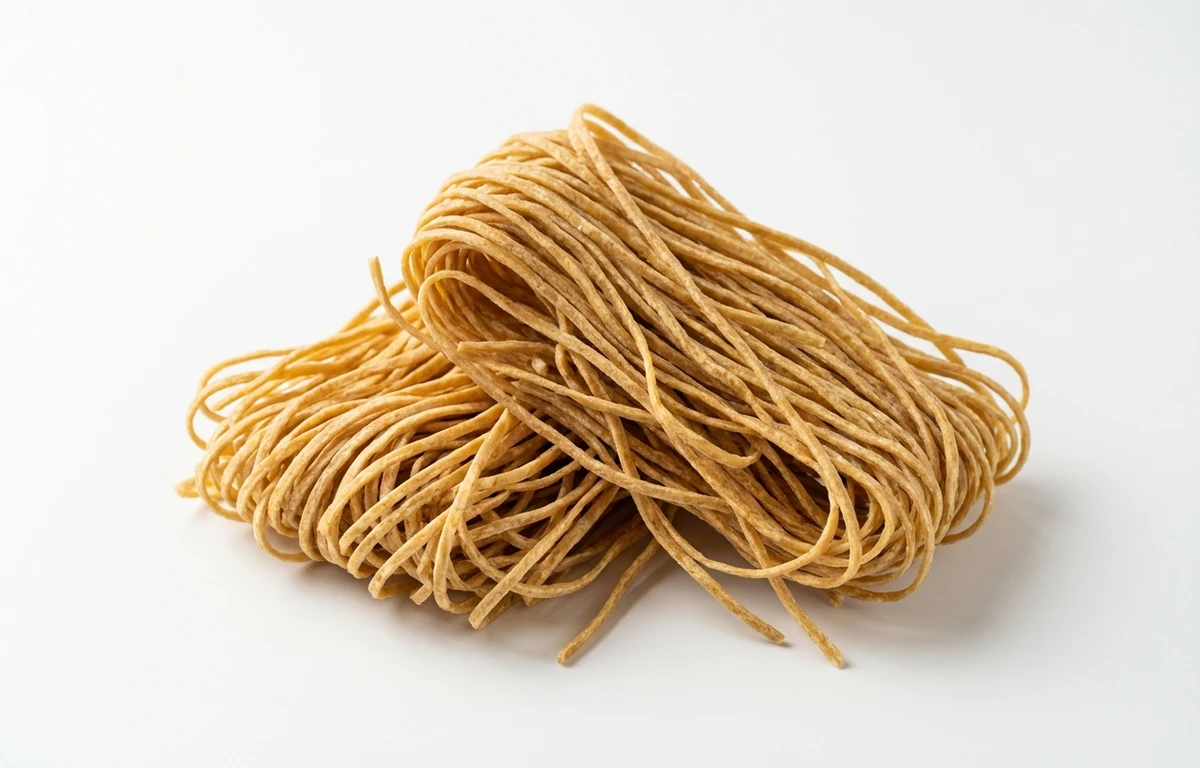
dried wheat noodles.
VegetarianVeganGluten-freeDairy-freeNut-freePeanut-freeSoy-freeEgg-freeShellfish-freeHoney-freeAlcohol-free
ALSO KNOWN AS
wheat noodles
SERVING
CALORIES
384
PROTEIN
13g
CARBS
70.7g
FAT
4.3g
FIBER
2.2g
NUTRITION PROFILE · per 100 g
Everything in this ingredient.
MACRONUTRIENTS
Calories384kcal—
Protein13g26%
Carbohydrates70.7g26%
Fiber2.2g8%
Sugar0g0%
Total fat4.3g6%
Saturated fat1.1g5%
Cholesterol65mg22%
MINERALS
Sodium22mg1%
Potassium141mg3%
Calcium22mg2%
Iron3.9mg22%
Magnesium44mg10%
Phosphorus170mg14%
Zinc0.80mg7%
Copper0.18mg20%
Manganese0.60mg26%
Selenium36.5µg66%
VITAMINS
Thiamin (B1)0.40mg33%
Riboflavin (B2)0.15mg12%
Niacin (B3)5.5mg34%
Pantothenic acid (B5)0.60mg12%
Vitamin B60.15mg9%
Folate (B9)150µg38%
Vitamin B120µg0%
%DV based on a 2,000 cal diet. Source: USDA FoodData Central. A dash in the %DV column means there’s no established Daily Value for that nutrient.
MEASUREMENT CONVERSIONS
How much is what.
1 cup75g
1 tablespoon4.7g
1 teaspoon1.6g
1 ml0.3g
1 liter312.5g
HEALTH BENEFITS
Why eat it.
- ✓Provides a significant source of carbohydrates for quick energy.
- ✓Enriched varieties are a good source of B vitamins, such as niacin and folate, and iron.
- ✓Naturally low in fat and cholesterol-free, making them a good base for heart-healthy meals.
- ✓Whole wheat versions offer dietary fiber, which supports digestive health and can help manage blood sugar levels.
COOKING TIPS
In the kitchen.
- 1Use a large pot with plenty of rapidly boiling, salted water (at least 4 quarts per pound of noodles) to prevent sticking.
- 2Stir the noodles immediately after adding them to the water and occasionally throughout cooking to ensure they cook evenly.
- 3Cook to 'al dente' (firm to the bite), as they will continue to soften when added to hot sauces or broths.
- 4For cold noodle salads, rinse cooked noodles under cold water to stop the cooking process and remove excess surface starch.
STORAGE
Keep it fresh.
- Store in a cool, dry place like a pantry, away from direct sunlight and moisture.
- Keep in an airtight container or their original sealed packaging to prevent pests and maintain freshness for up to 1-2 years.
FAQ
Frequently asked questions.
Are dried wheat noodles healthy?
Dried wheat noodles can be a healthy part of a balanced diet, especially when chosen wisely. They provide a significant source of carbohydrates for energy, and enriched varieties offer B vitamins and iron. Opting for whole wheat versions increases dietary fiber, which aids digestion and can help manage blood sugar.
How many calories and carbs are in dried wheat noodles?
Per 100g of dried wheat noodles, there are approximately 384 calories and 70.65g of carbohydrates. They also contain about 13.04g of protein and 4.35g of fat. These values are for the dried product; cooked noodles will have different nutritional profiles due to water absorption.
Are dried wheat noodles good for weight loss?
While dried wheat noodles are a source of carbohydrates and calories, they can fit into a weight loss plan with proper portion control. Their low fat and cholesterol-free nature makes them a good base for meals. Choosing whole wheat varieties adds fiber, which can promote satiety and help manage appetite.
Are dried wheat noodles gluten-free?
No, dried wheat noodles are not gluten-free. As their name suggests, they are made from wheat, which naturally contains gluten. Individuals with celiac disease or gluten sensitivity should avoid them and opt for gluten-free alternatives made from rice, corn, or legumes.
Can diabetics eat dried wheat noodles?
Diabetics can eat dried wheat noodles in moderation, but portion control is crucial due to their high carbohydrate content, which can impact blood sugar levels. Choosing whole wheat noodles is often recommended as their higher fiber content can help slow down glucose absorption. Pairing them with protein and vegetables can also help manage the glycemic response.
How do you cook dried wheat noodles?
To cook dried wheat noodles, bring a pot of salted water to a rolling boil. Add the noodles and cook according to package directions, usually 3-7 minutes, until al dente. Drain well and rinse with cold water if using in a cold dish, or add directly to hot sauces or stir-fries.
What do dried wheat noodles taste like?
Dried wheat noodles have a mild, neutral flavor, making them highly versatile for various cuisines. They readily absorb the flavors of the sauces and ingredients they are cooked with. Their texture is typically firm and chewy when cooked properly.
How do you store dried wheat noodles?
Dried wheat noodles should be stored in a cool, dry place, away from direct sunlight and moisture. Keep them in their original sealed packaging or transfer them to an airtight container to protect them from pests and humidity.
How long do dried wheat noodles last?
When stored properly, dried wheat noodles can last for up to 2-3 years past their printed 'best by' date. While they don't typically spoil in a way that makes them unsafe, their quality, texture, and flavor may diminish over time. Discard if you notice any signs of mold, off-smell, or insect infestation.
What's the difference between regular and whole wheat dried noodles?
The main difference lies in their nutritional profile and processing. Regular dried wheat noodles are made from refined wheat flour, while whole wheat noodles use the entire wheat kernel, including the bran, germ, and endosperm. This means whole wheat noodles are higher in dietary fiber, B vitamins, and minerals, offering more sustained energy and digestive benefits.