Fruit
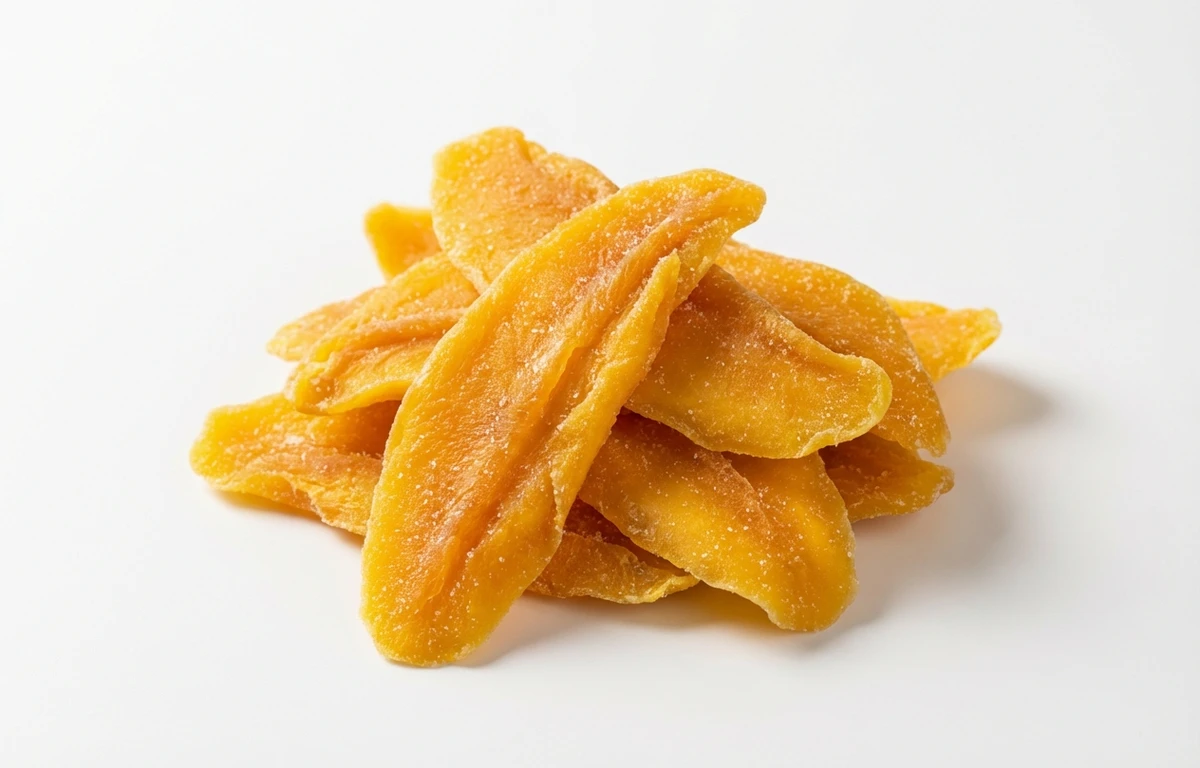
dried sweetened mango.
VegetarianVeganGluten-freeDairy-freeNut-freePeanut-freeSoy-freeEgg-freeShellfish-freeHoney-freeAlcohol-free
SERVING
CALORIES
319
PROTEIN
2.5g
CARBS
78.6g
FAT
1.2g
FIBER
2.4g
NUTRITION PROFILE · per 100 g
Everything in this ingredient.
MACRONUTRIENTS
Calories319kcal—
Protein2.5g5%
Carbohydrates78.6g29%
Fiber2.4g9%
Sugar66.3g133%
Total fat1.2g2%
Saturated fat0.29g1%
Trans fat0g—
Cholesterol0mg0%
Water16.6g—
MINERALS
Sodium162mg7%
Potassium279mg6%
Calcium0mg0%
Iron0.23mg1%
Magnesium20mg5%
Phosphorus50mg4%
Zinc0.30mg3%
Copper0.30mg33%
Manganese10mg435%
Selenium2.1µg4%
VITAMINS
Vitamin A67µg7%
Vitamin C42.3mg47%
Vitamin D0µg0%
Vitamin E4.0mg27%
Vitamin K13.2µg11%
Thiamin (B1)0.06mg5%
Riboflavin (B2)0.09mg7%
Niacin (B3)2.0mg13%
Vitamin B60.33mg19%
Folate (B9)68µg17%
Vitamin B120µg0%
%DV based on a 2,000 cal diet. Source: USDA FoodData Central. A dash in the %DV column means there’s no established Daily Value for that nutrient.
MEASUREMENT CONVERSIONS
How much is what.
1 cup150g
1 tablespoon9.4g
1 teaspoon3.1g
1 oz28.4g
1 lb453.6g
1 ml0.6g
1 liter634g
HEALTH BENEFITS
Why eat it.
- ✓Provides a quick and concentrated source of energy due to high sugar content.
- ✓Contains dietary fiber, which supports digestive health and can help promote satiety.
- ✓A good source of Vitamin A (as beta-carotene), essential for vision health and immune function.
- ✓Offers antioxidants like polyphenols that help protect the body against oxidative stress.
COOKING TIPS
In the kitchen.
- 1Chop into small pieces and add to trail mixes, granola, oatmeal, or yogurt for a chewy, sweet boost.
- 2Soak in warm water or fruit juice for 15-30 minutes to rehydrate and soften before incorporating into baked goods like muffins, scones, or breads.
- 3Use as a flavorful topping for salads, particularly those with a citrus vinaigrette, to add a tropical contrast.
- 4Can be blended into smoothies or pureed after rehydration to create a sweet base for sauces or marinades for chicken or pork.
STORAGE
Keep it fresh.
- Store in an airtight container in a cool, dark, and dry place like a pantry for up to 6-12 months.
- For longer-term storage or in humid climates, place the airtight container in the refrigerator to maintain texture and prevent spoilage.
FAQ
Frequently asked questions.
Is dried sweetened mango healthy?
Dried sweetened mango offers benefits like dietary fiber, Vitamin A (beta-carotene) for vision and immunity, and antioxidants. However, it's high in sugar and calories due to the added sweeteners, so it should be consumed in moderation as part of a balanced diet.
How many calories and carbohydrates are in dried sweetened mango?
Per 100 grams, dried sweetened mango contains approximately 319 calories and 78.58 grams of carbohydrates. A significant portion of these carbohydrates comes from added sugars, contributing to its high energy density.
Is dried sweetened mango good for weight loss?
Due to its high calorie and sugar content, dried sweetened mango is generally not ideal for weight loss when consumed in large quantities. While it provides fiber and nutrients, its energy density means small portions can quickly add up, potentially hindering weight management goals.
Is dried sweetened mango vegan and gluten-free?
Yes, dried sweetened mango is typically vegan as it's made from fruit and sugar, with no animal products. It is also naturally gluten-free. Always check the ingredient label for specific brands to ensure no cross-contamination or non-vegan additives.
Can diabetics eat dried sweetened mango?
Diabetics should consume dried sweetened mango with extreme caution and in very small portions, if at all. Its high sugar content can cause a rapid spike in blood glucose levels. It's best to consult a healthcare professional or registered dietitian for personalized dietary advice.
What are common uses for dried sweetened mango?
Dried sweetened mango is a versatile snack and ingredient. It can be enjoyed on its own, added to trail mixes, granola, oatmeal, or yogurt. It's also great in baked goods like muffins and cookies, or chopped and used in salads for a sweet, chewy texture.
Can I rehydrate dried sweetened mango?
Yes, you can rehydrate dried sweetened mango. Simply soak the pieces in warm water, fruit juice, or even a little rum for about 15-30 minutes until they soften. This can make them plumper and more tender for use in recipes or as a snack.
How should I store dried sweetened mango?
Store dried sweetened mango in an airtight container in a cool, dry, and dark place, such as a pantry or cupboard. Proper storage prevents moisture absorption, keeps pests out, and helps maintain its texture and flavor.
How long does dried sweetened mango last?
When stored properly in an airtight container, dried sweetened mango can last for 6-12 months at room temperature. For longer storage, it can be kept in the refrigerator for up to 18 months or frozen for even longer, though freezing may alter the texture slightly.
What is the difference between dried sweetened mango and unsweetened dried mango?
The primary difference is the addition of sugar. Dried sweetened mango has sugar added during the drying process, making it much sweeter and higher in calories and carbohydrates. Unsweetened dried mango contains only the natural sugars of the fruit, offering a more tart and less calorically dense option.