Seafood
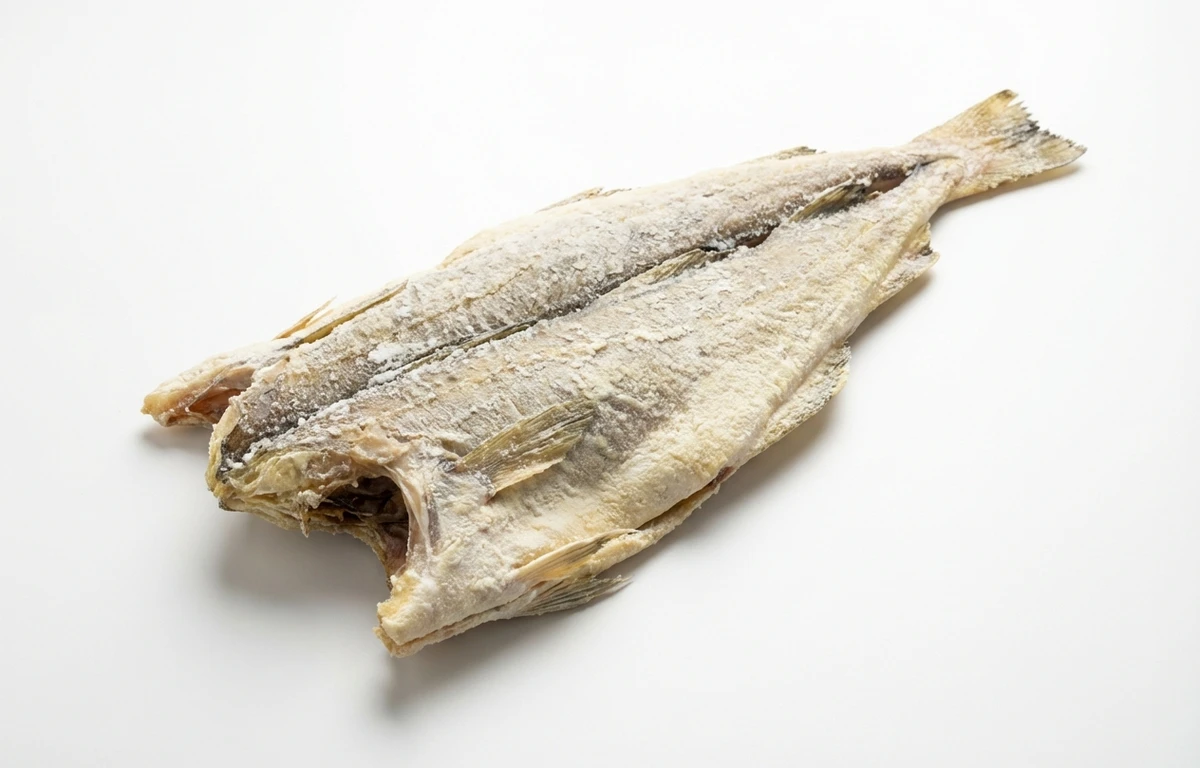
dried salted atlantic cod.
VegetarianVeganGluten-freeDairy-freeNut-freePeanut-freeSoy-freeEgg-freeShellfish-freeHoney-freeAlcohol-free
ALSO KNOWN AS
dried salted cod
SERVING
CALORIES
290
PROTEIN
62.8g
CARBS
0g
FAT
2.4g
FIBER
0g
NUTRITION PROFILE · per 100 g
Everything in this ingredient.
MACRONUTRIENTS
Calories290kcal—
Protein62.8g126%
Carbohydrates0g0%
Fiber0g0%
Sugar0g0%
Total fat2.4g3%
Saturated fat0.46g2%
Cholesterol152mg51%
Water16.1g—
MINERALS
Sodium7027mg306%
Potassium1458mg31%
Calcium160mg12%
Iron2.5mg14%
Magnesium133mg32%
Phosphorus950mg76%
Zinc1.6mg14%
Copper0.18mg20%
Manganese0.05mg2%
Selenium148µg269%
VITAMINS
Vitamin A42µg5%
Vitamin C3.5mg4%
Vitamin D4.0µg20%
Vitamin E2.8mg19%
Vitamin K0.40µg0%
Thiamin (B1)0.27mg23%
Riboflavin (B2)0.24mg18%
Niacin (B3)7.5mg47%
Pantothenic acid (B5)1.7mg34%
Vitamin B60.86mg51%
Folate (B9)25µg6%
Vitamin B1210µg417%
%DV based on a 2,000 cal diet. Source: USDA FoodData Central. A dash in the %DV column means there’s no established Daily Value for that nutrient.
MEASUREMENT CONVERSIONS
How much is what.
1 piece80g
HEALTH BENEFITS
Why eat it.
- ✓Excellent source of high-quality, complete protein, essential for muscle building and repair.
- ✓Rich in omega-3 fatty acids (EPA and DHA), which support cardiovascular health and cognitive function.
- ✓High in B vitamins, particularly B12 and niacin, crucial for energy metabolism and nervous system health.
- ✓Good source of essential minerals like selenium, phosphorus, and iodine.
COOKING TIPS
In the kitchen.
- 1Must be desalted and rehydrated before use by soaking in cold water for 24-48 hours, changing the water 3-4 times a day.
- 2The rehydrated fish has a firm, meaty texture, making it perfect for flaking into stews, casseroles, brandades, and fritters.
- 3After soaking, gently poach the cod in water or milk until it flakes easily before incorporating it into your final dish.
- 4Taste the rehydrated fish before adding salt to your recipe, as it will still retain some saltiness.
STORAGE
Keep it fresh.
- Store in a cool, dry, well-ventilated place away from direct sunlight. A pantry or cellar is ideal, where it can last for many months.
- For longer-term storage, wrap tightly in plastic or vacuum-seal and refrigerate at or below 4°C (40°F).
- Once rehydrated, treat it as fresh fish and store it in an airtight container in the refrigerator for up to 2 days.
FAQ
Frequently asked questions.
Is dried salted Atlantic cod healthy?
Dried salted Atlantic cod is an excellent source of high-quality protein, omega-3 fatty acids, B vitamins, and essential minerals like selenium and iodine. However, it is extremely high in sodium due to the curing process, which needs to be significantly reduced through desalting before consumption to be considered healthy.
What are the main nutritional benefits of dried salted Atlantic cod?
It is an exceptional source of complete protein, vital for muscle repair and growth. It also provides beneficial omega-3 fatty acids (EPA and DHA) for heart and brain health, and is rich in B vitamins (especially B12 and niacin) for energy metabolism, along with minerals like selenium, phosphorus, and iodine.
How much protein and calories are in dried salted Atlantic cod?
Per 100g, dried salted Atlantic cod contains approximately 290 calories and an impressive 62.82g of protein. It is very low in carbohydrates (0g) and has a modest fat content of about 2.37g.
Is dried salted Atlantic cod high in sodium?
Yes, dried salted Atlantic cod is extremely high in sodium. The salting process is a preservation method that infuses the fish with a significant amount of salt. It is crucial to desalt the cod thoroughly by soaking it in water for an extended period, changing the water multiple times, before cooking to reduce its sodium content.
How do you prepare dried salted Atlantic cod for cooking?
The most critical step is desalting. You must soak the cod in cold water for 24 to 48 hours, changing the water every 6-8 hours, or even more frequently. This process rehydrates the fish and removes excess salt, making it palatable and safe for consumption.
What does dried salted Atlantic cod taste like?
After proper desalting, dried salted Atlantic cod has a firm, flaky texture and a distinct, savory, and mildly salty fish flavor. It's less 'fishy' than fresh cod and has a unique depth of flavor developed during the drying and salting process.
Is dried salted Atlantic cod gluten-free?
Yes, dried salted Atlantic cod is naturally gluten-free. It consists solely of Atlantic cod fish and salt, with no added ingredients that contain gluten.
Can people with diabetes eat dried salted Atlantic cod?
Yes, people with diabetes can generally eat dried salted Atlantic cod, provided it is thoroughly desalted. It is very low in carbohydrates and high in protein, which can help manage blood sugar levels. However, due to its initial high sodium content, careful desalting is essential, especially for those managing blood pressure.
How should dried salted Atlantic cod be stored?
Before desalting, store dried salted cod in a cool, dry place away from direct sunlight, or in the refrigerator, where it can last for several months. Once desalted, it should be stored in an airtight container in the refrigerator and consumed within 2-3 days, similar to fresh fish.
How long does dried salted Atlantic cod last?
When properly stored in its dried, salted form in a cool, dry place, it can last for several months to over a year due to the preservation method. After desalting and rehydration, it becomes perishable and should be cooked and consumed within 2-3 days, or frozen for longer storage.