Other
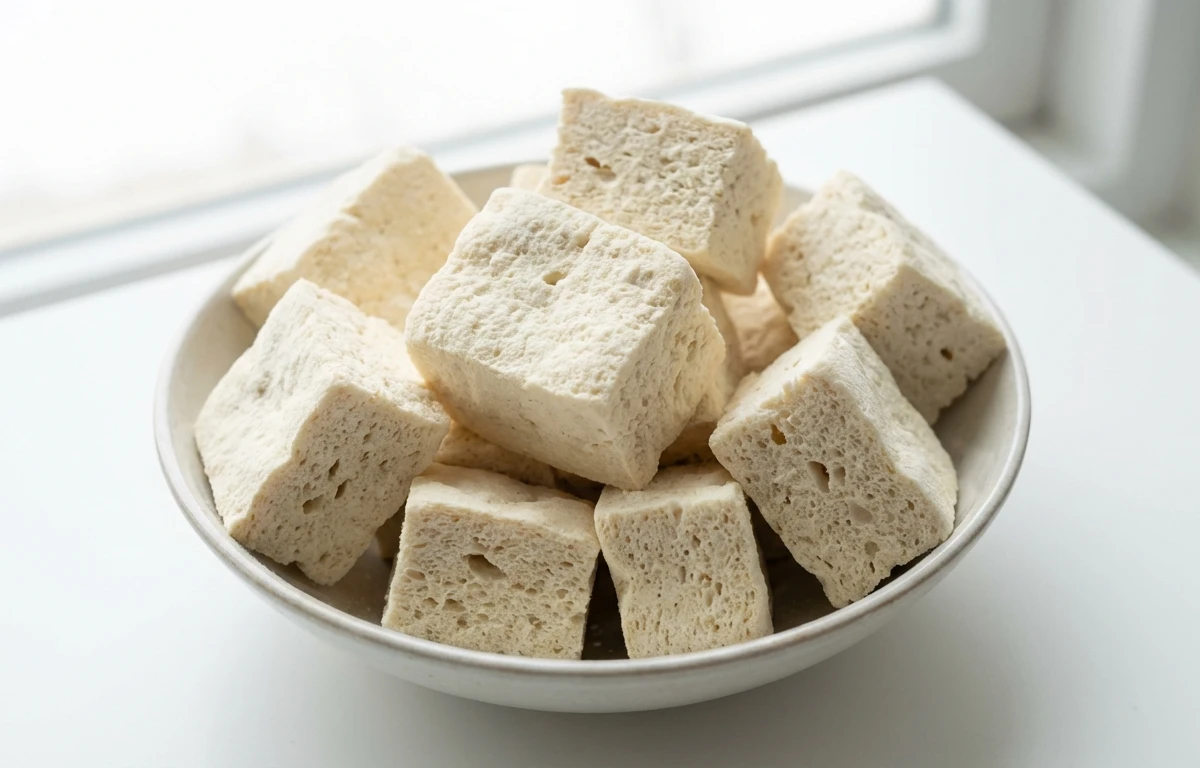
dried-frozen tofu.
VegetarianVeganGluten-freeDairy-freeNut-freePeanut-freeSoy-freeEgg-freeShellfish-freeHoney-freeAlcohol-free
SERVING
CALORIES
529
PROTEIN
50.2g
CARBS
14.3g
FAT
33.2g
FIBER
2.5g
NUTRITION PROFILE · per 100 g
Everything in this ingredient.
MACRONUTRIENTS
Calories529kcal—
Protein50.2g100%
Carbohydrates14.3g5%
Fiber2.5g9%
Sugar1.0g2%
Total fat33.2g43%
Saturated fat5.1g26%
Trans fat0g—
Cholesterol0mg0%
Water5.0g—
MINERALS
Sodium5.0mg0%
Potassium120mg3%
Calcium660mg51%
Iron7.5mg42%
Magnesium150mg36%
Phosphorus550mg44%
Zinc4.0mg36%
Copper0.50mg56%
Manganese1.5mg65%
Selenium15µg27%
VITAMINS
Vitamin A0µg0%
Vitamin C0mg0%
Vitamin D0µg0%
Vitamin E0.50mg3%
Vitamin K5.0µg4%
Thiamin (B1)0.10mg8%
Riboflavin (B2)0.05mg4%
Niacin (B3)0.50mg3%
Pantothenic acid (B5)0.10mg2%
Vitamin B60.10mg6%
Folate (B9)30µg8%
Vitamin B120µg0%
%DV based on a 2,000 cal diet. Source: USDA FoodData Central. A dash in the %DV column means there’s no established Daily Value for that nutrient.
MEASUREMENT CONVERSIONS
How much is what.
1 piece17g
HEALTH BENEFITS
Why eat it.
- ✓Excellent source of concentrated plant-based protein, essential for muscle building and repair.
- ✓Rich in soy isoflavones, which may support heart health by helping to lower LDL cholesterol levels.
- ✓Provides important minerals like manganese, calcium, and iron, contributing to bone health and energy metabolism.
- ✓Low in saturated fat and cholesterol-free, making it a heart-healthy alternative to animal proteins.
COOKING TIPS
In the kitchen.
- 1Must be rehydrated before cooking. Soak in warm water for 15-20 minutes, or until it becomes soft and spongy.
- 2After soaking, gently press out the excess water. This step is crucial for allowing it to absorb the flavors of broths and sauces.
- 3Its porous texture makes it ideal for simmering in soups, stews, and braised dishes as it acts like a sponge for flavor.
- 4Can be crumbled after rehydration to be used as a ground meat substitute in various recipes.
STORAGE
Keep it fresh.
- Store in a cool, dry, dark place like a pantry. It is shelf-stable and does not require refrigeration before opening.
- After opening the package, transfer the remaining dried tofu to an airtight container to protect it from moisture and odors.
FAQ
Frequently asked questions.
Is dried-frozen tofu healthy?
Yes, dried-frozen tofu is highly nutritious. It's an excellent concentrated source of plant-based protein, rich in soy isoflavones that support heart health, and provides essential minerals like manganese, calcium, and iron. Its low saturated fat and cholesterol-free profile make it a heart-healthy protein alternative.
How much protein is in dried-frozen tofu?
Dried-frozen tofu is exceptionally high in protein. Per 100g, it contains approximately 50.2g of protein, making it a very concentrated source for muscle building and repair. This is significantly higher than regular tofu due to the removal of water.
Is dried-frozen tofu good for weight loss?
While dried-frozen tofu is high in protein, which can aid satiety and muscle maintenance during weight loss, it is also calorie-dense (529 calories per 100g) and contains a significant amount of fat (33.2g). It can be part of a weight loss diet when consumed in controlled portions, focusing on its high protein content.
Is dried-frozen tofu vegan?
Yes, dried-frozen tofu is completely vegan. It is made solely from soybeans and water, with no animal products involved in its production or processing.
Is dried-frozen tofu gluten-free?
Pure dried-frozen tofu made from soybeans and water is naturally gluten-free. However, always check the ingredient list on packaged products to ensure no gluten-containing additives or cross-contamination occurred during processing.
Is dried-frozen tofu keto-friendly?
With 14.3g of carbohydrates per 100g, dried-frozen tofu can be incorporated into a keto diet in moderation, depending on individual carb limits. Its high protein and fat content are generally favorable for keto, but portion control is key to stay within daily carb targets.
How do you prepare and cook dried-frozen tofu?
Dried-frozen tofu needs to be rehydrated before use. Soak it in hot water or broth for 10-15 minutes until it softens and expands. Once rehydrated, squeeze out excess liquid, then it can be stir-fried, added to soups, stews, or braised dishes, absorbing flavors wonderfully.
What does dried-frozen tofu taste like and what is its texture?
Dried-frozen tofu itself has a mild, neutral soy flavor, making it excellent for absorbing marinades and sauces. Its unique texture, after rehydration, is spongy and chewy, often described as having a 'meaty' bite, which is distinct from regular tofu.
How do you store dried-frozen tofu?
Dried-frozen tofu should be stored in a cool, dry place, away from direct sunlight, in an airtight container. When properly stored, it has a very long shelf life, often several months to a year, due to its dehydrated state.
What is the difference between dried-frozen tofu and regular tofu?
Dried-frozen tofu undergoes a process of freezing, thawing, and pressing, followed by dehydration, which removes most of its water content. This results in a much denser, chewier texture and a significantly higher concentration of protein and calories per gram compared to regular, water-packed tofu.