Nut Seed
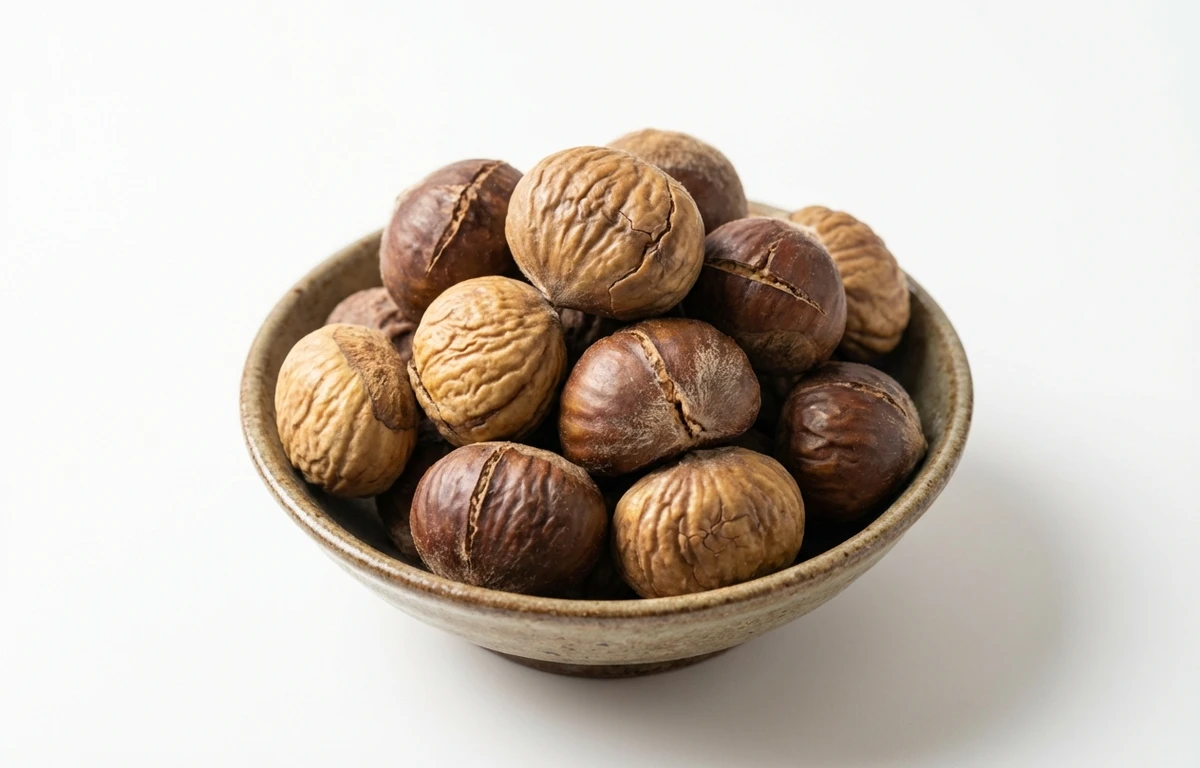
dried chinese chestnuts.
VegetarianVeganGluten-freeDairy-freeNut-freePeanut-freeSoy-freeEgg-freeShellfish-freeHoney-freeAlcohol-free
ALSO KNOWN AS
dried chestnutsdried castanea mollissima
SERVING
CALORIES
369
PROTEIN
5.0g
CARBS
78.4g
FAT
3.4g
FIBER
14.9g
NUTRITION PROFILE · per 100 g
Everything in this ingredient.
MACRONUTRIENTS
Calories369kcal—
Protein5.0g10%
Carbohydrates78.4g29%
Fiber14.9g53%
Sugar23g46%
Total fat3.4g4%
Saturated fat0.60g3%
Trans fat0g—
Cholesterol0mg0%
Water9.0g—
MINERALS
Sodium35mg2%
Potassium990mg21%
Calcium55mg4%
Iron1.7mg9%
Magnesium74mg18%
Phosphorus159mg13%
Zinc0.90mg8%
Copper0.80mg89%
Manganese1.6mg70%
Selenium1.2µg2%
VITAMINS
Vitamin A2.0µg0%
Vitamin C15mg17%
Vitamin D0µg0%
Vitamin E0.50mg3%
Vitamin K0µg0%
Thiamin (B1)0.35mg29%
Riboflavin (B2)0.35mg27%
Niacin (B3)1.3mg8%
Pantothenic acid (B5)1.0mg20%
Vitamin B60.50mg29%
Folate (B9)110µg28%
Vitamin B120µg0%
%DV based on a 2,000 cal diet. Source: USDA FoodData Central. A dash in the %DV column means there’s no established Daily Value for that nutrient.
MEASUREMENT CONVERSIONS
How much is what.
1 cup145g
1 oz28.4g
1 lb453.6g
1 piece5g
HEALTH BENEFITS
Why eat it.
- ✓High in dietary fiber which aids in digestion and satiety
- ✓Rich in complex carbohydrates providing sustained energy release
- ✓Contains significant potassium which helps regulate blood pressure
- ✓Good source of antioxidants including Vitamin C and gallic acid
- ✓Naturally gluten-free, making it a safe energy source for celiacs
COOKING TIPS
In the kitchen.
- 1Always rehydrate by soaking in warm water for 2-4 hours or overnight before use
- 2Remove any remaining bits of inner skin (pellicle) after soaking for a smoother texture
- 3Add to slow-cooked stews or soups as they require long cooking times to become tender
STORAGE
Keep it fresh.
- Store in an airtight container in a cool, dry, and dark pantry for up to 6 months
- For longer storage, keep in the refrigerator to prevent the natural oils from turning rancid
- Ensure the chestnuts remain completely dry to avoid mold development
FAQ
Frequently asked questions.
How long do dried chinese chestnuts last?
When stored in an airtight container in a cool, dry place, they can last for 6 to 9 months. In the refrigerator, they can last up to a year.
Do I need to soak dried chestnuts before cooking?
Yes, soaking is essential. They are very hard and require at least 2-4 hours of soaking in warm water, or overnight in cold water, to soften properly.
What is the best substitute for dried chinese chestnuts?
Fresh chestnuts are the best substitute (use about double the weight). Alternatively, hazelnuts or macadamia nuts can provide a similar crunch, though the flavor and starchiness will differ.
Are dried chestnuts considered a nut allergen?
Yes, chestnuts are tree nuts. While some people allergic to other tree nuts can tolerate them, they are generally classified as a major allergen.
How do I know if dried chestnuts have gone bad?
Look for signs of mold, a dark or shriveled appearance beyond the normal dried state, or a rancid, sour smell.
Can I eat dried chestnuts raw?
No, dried chestnuts are too hard to eat raw and must be rehydrated and cooked to be palatable and digestible.
What are common dishes that use dried chinese chestnuts?
They are frequently used in Chinese red-braised pork, sticky rice dumplings (Zongzi), and various herbal soups and stews.
Are dried chestnuts high in calories?
Yes, because the water has been removed, they are more calorie-dense than fresh chestnuts, containing about 369 calories per 100g.
How do I remove the skin from dried chestnuts?
Most dried chestnuts come pre-peeled, but if any brown skin remains, it usually loosens after soaking and can be picked off with a knife.
Can dried chestnuts be frozen?
Yes, you can freeze them in an airtight bag for up to 2 years without significant loss of quality.