Other10 recipes
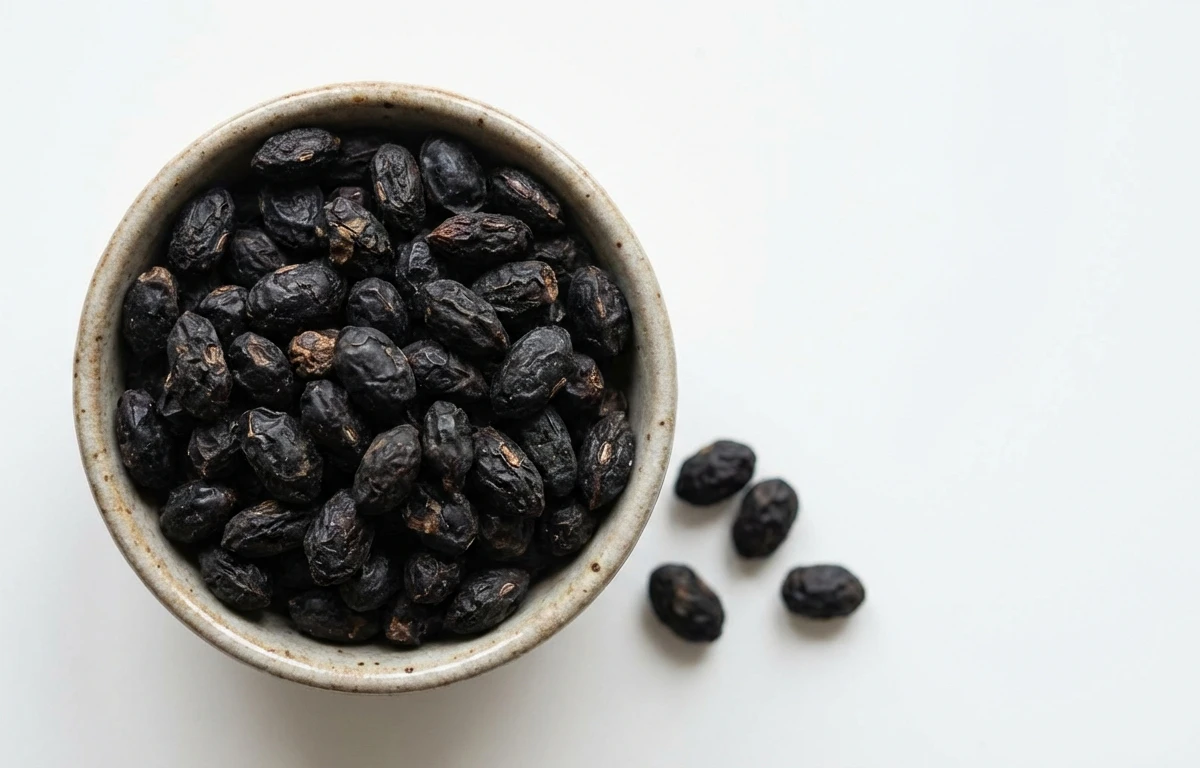
douchi.
VegetarianVeganGluten-freeDairy-freeNut-freePeanut-freeSoy-freeEgg-freeShellfish-freeHoney-freeFermented
ALSO KNOWN AS
fermented black beansChinese black beansdouchisalted black beans
SERVING
CALORIES
245
PROTEIN
24.5g
CARBS
15.8g
FAT
10.5g
FIBER
6.3g
NUTRITION PROFILE · per 100 g
Everything in this ingredient.
MACRONUTRIENTS
Calories245kcal—
Protein24.5g49%
Carbohydrates15.8g6%
Fiber6.3g23%
Sugar0g0%
Total fat10.5g13%
Saturated fat1.5g8%
Cholesterol0mg0%
MINERALS
Sodium4200mg183%
Potassium1000mg21%
Calcium100mg8%
Iron5.0mg28%
Magnesium100mg24%
Phosphorus280mg22%
Zinc1.8mg16%
Copper0.30mg33%
Manganese0.80mg35%
Selenium10.5µg19%
VITAMINS
Vitamin A0µg0%
Vitamin C0mg0%
Vitamin D0µg0%
Vitamin E0mg0%
Vitamin K0µg0%
Thiamin (B1)0.10mg8%
Riboflavin (B2)0.10mg8%
Niacin (B3)1.5mg9%
Pantothenic acid (B5)0.50mg10%
Vitamin B60.20mg12%
Folate (B9)100µg25%
Vitamin B120µg0%
%DV based on a 2,000 cal diet. Source: USDA FoodData Central. A dash in the %DV column means there’s no established Daily Value for that nutrient.
MEASUREMENT CONVERSIONS
How much is what.
1 cup190g
1 tablespoon12g
1 teaspoon4g
1 ml0.8g
1 liter800g
1 piece50g
HEALTH BENEFITS
Why eat it.
- ✓Rich in probiotics from fermentation, which can support gut health.
- ✓Good source of plant-based complete protein, containing all essential amino acids.
- ✓Contains soy isoflavones, which have antioxidant properties and may support bone health.
- ✓The fermentation process breaks down anti-nutrients in soybeans, improving digestibility and nutrient absorption.
COOKING TIPS
In the kitchen.
- 1Douchi is intensely salty and pungent; rinse the beans briefly under water before use to moderate the saltiness.
- 2For maximum flavor release, lightly mash or coarsely chop the beans before adding them to your dish.
- 3Sauté douchi with aromatics like garlic, ginger, and chili at the beginning of cooking to create a savory flavor base for stir-fries and braises.
- 4Use sparingly as a powerful seasoning agent rather than a main component. It pairs exceptionally well with seafood, pork, and tofu.
STORAGE
Keep it fresh.
- Store dried douchi in an airtight container in a cool, dark pantry for up to two years.
- Once opened, especially for oil-packed or sauce varieties, refrigerate in a sealed container to maintain freshness and prevent spoilage.
FAQ
Frequently asked questions.
Is douchi healthy?
Yes, douchi offers several health benefits. It's rich in probiotics from fermentation, which can support gut health, and is a good source of plant-based complete protein. Douchi also contains soy isoflavones, known for their antioxidant properties and potential to support bone health.
What is the nutritional content of douchi?
Per 100g, douchi contains approximately 245 calories, 24.5g of protein, 15.8g of carbohydrates, and 10.5g of fat. It's a nutrient-dense condiment, providing a significant amount of plant-based protein.
Is douchi good for gut health?
Yes, douchi is beneficial for gut health due to its fermentation process. This process produces probiotics, which are live microorganisms that can contribute to a healthy balance of gut flora and aid in digestion.
Is douchi gluten-free?
Douchi, made from fermented black soybeans, is naturally gluten-free. However, it's always best to check the product label for certification or cross-contamination warnings, especially if you have severe gluten sensitivity, as some brands might process it with other ingredients.
Is douchi vegan?
Yes, douchi is typically vegan. It is made solely from fermented black soybeans, salt, and sometimes ginger, without any animal products or by-products. It serves as an excellent umami-rich ingredient in plant-based cooking.
Is douchi low-sodium?
No, douchi is generally high in sodium due to the salt used in its fermentation process, which is crucial for preservation and flavor development. It's primarily used as a seasoning, so a small amount provides intense flavor, but moderation is key for those monitoring sodium intake.
How is douchi used in cooking?
Douchi is a staple in Chinese cuisine, particularly Cantonese and Sichuan dishes. It's often crushed or chopped and used to flavor stir-fries, steamed dishes (like steamed fish or spareribs), marinades, and sauces, imparting a deep, savory, and slightly pungent taste.
What does douchi taste like?
Douchi has a distinctively pungent, salty, and deeply savory (umami) flavor with a slightly bitter undertone. Its complex taste is often described as earthy and fermented, adding a unique depth to dishes that cannot be easily replicated.
How do you store douchi?
Unopened douchi can be stored in a cool, dry place, away from direct sunlight, for an extended period. Once opened, it's best to transfer it to an airtight container and store it in the refrigerator to maintain its freshness and prevent mold growth.
How long does douchi last?
Unopened, douchi can last for up to two years or more, often indicated by a best-by date. Once opened and refrigerated, it typically remains good for several months. Discard if you notice any off-smells, significant discoloration, or visible mold.
RECIPES
Cook with douchi.
10 recipes · sorted by what’s quick