Condiment8 recipes
dill pickle slices.
VegetarianVeganGluten-freeDairy-freeNut-freePeanut-freeSoy-freeEgg-freeShellfish-freeHoney-freeAlcohol-freeHalalKosherFermented
ALSO KNOWN AS
pickle sliceskosher dill pickles
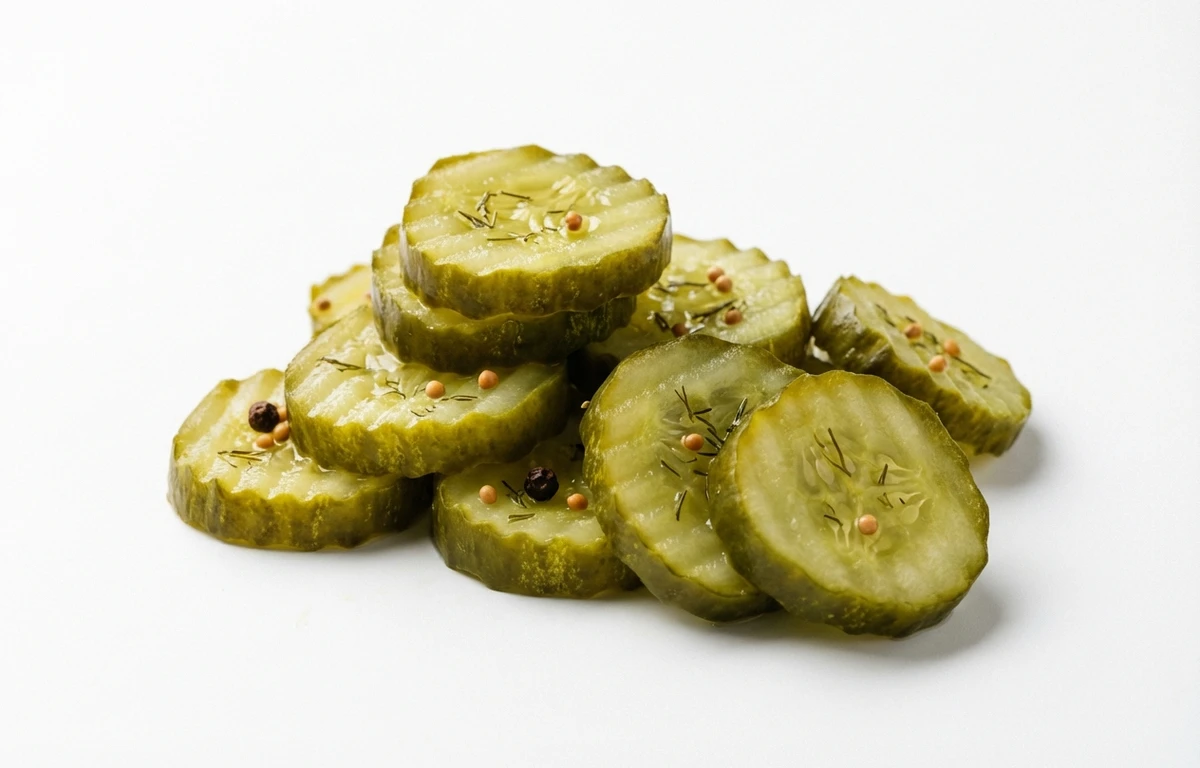
SERVING
CALORIES
11
PROTEIN
0.34g
CARBS
2.3g
FAT
0.15g
FIBER
1.2g
NUTRITION PROFILE · per 100 g
Everything in this ingredient.
MACRONUTRIENTS
Calories11kcal—
Protein0.34g1%
Carbohydrates2.3g1%
Fiber1.2g4%
Sugar1.2g2%
Total fat0.15g0%
Saturated fat0.03g0%
Trans fat0g—
Cholesterol0mg0%
Water95.9g—
MINERALS
Sodium1200mg52%
Potassium128mg3%
Calcium23mg2%
Iron0.33mg2%
Magnesium12mg3%
Phosphorus24mg2%
Zinc0.10mg1%
Copper0.02mg2%
Manganese0.05mg2%
Selenium0.30µg1%
VITAMINS
Vitamin A1.0µg0%
Vitamin C1.3mg1%
Vitamin D0µg0%
Vitamin E0.03mg0%
Vitamin K1.9µg2%
Thiamin (B1)0.01mg1%
Riboflavin (B2)0.02mg2%
Niacin (B3)0.10mg1%
Pantothenic acid (B5)0.07mg1%
Vitamin B60.03mg2%
Folate (B9)4.0µg1%
Vitamin B120µg0%
%DV based on a 2,000 cal diet. Source: USDA FoodData Central. A dash in the %DV column means there’s no established Daily Value for that nutrient.
MEASUREMENT CONVERSIONS
How much is what.
1 cup240g
1 tablespoon15g
1 teaspoon5g
1 ml1g
1 liter1000g
1 piece50g
HEALTH BENEFITS
Why eat it.
- ✓Source of probiotics (if naturally fermented), which support gut health and digestion.
- ✓Contains antioxidants from cucumbers and dill, which help protect cells from damage.
- ✓The vinegar in pickles may help regulate blood sugar levels by improving insulin sensitivity.
- ✓Pickle juice is a source of electrolytes like sodium and potassium, which can help with hydration and prevent muscle cramps.
COOKING TIPS
In the kitchen.
- 1Pat pickle slices dry with a paper towel before adding them to sandwiches or burgers to prevent sogginess.
- 2Chop finely to create a tangy relish for hot dogs, potato salad, or homemade tartar sauce.
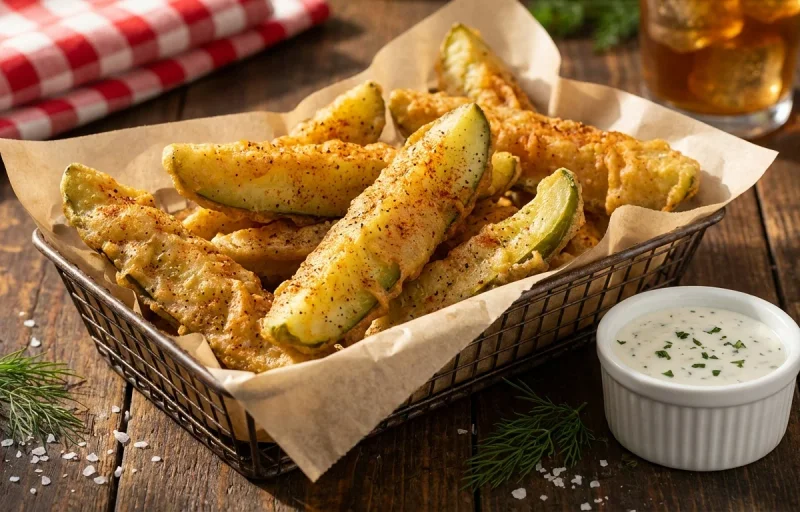
- 3For a popular appetizer, coat slices in a seasoned batter and deep-fry or air-fry until golden and crispy.
- 4Don't discard the brine; use it as a marinade for chicken or pork, or add a splash to vinaigrettes for extra flavor.
STORAGE
Keep it fresh.
- After opening, always store dill pickles in the refrigerator, fully submerged in their brine, to maintain texture and prevent spoilage.
- Use a clean utensil to remove pickles from the jar to avoid introducing bacteria, which can cause them to spoil faster.
- Unopened jars can be stored in a cool, dark pantry for up to one year; check the best-by date on the label.
FAQ
Frequently asked questions.
Are dill pickle slices healthy?
Dill pickle slices can be a healthy addition to your diet in moderation. They are very low in calories and fat, and some naturally fermented varieties offer probiotics for gut health. However, they are typically high in sodium, so individuals watching their salt intake should consume them sparingly.
How many calories and carbohydrates are in dill pickle slices?
Per 100 grams, dill pickle slices contain approximately 11 calories and 2.3 grams of carbohydrates. They are very low in protein (0.34g) and fat (0.15g), making them a low-energy food.
Are dill pickle slices good for weight loss?
Yes, dill pickle slices can be beneficial for weight loss due to their very low calorie and fat content. They can add flavor and crunch to meals without significantly increasing caloric intake. Just be mindful of the high sodium content, which can contribute to water retention.
Are dill pickle slices vegan and gluten-free?
Generally, yes. Most dill pickle slices are made from cucumbers, vinegar, water, salt, and spices, making them suitable for both vegan and gluten-free diets. Always check the ingredient label, especially for flavored varieties, to ensure no animal-derived or gluten-containing additives are present.
Can diabetics eat dill pickle slices?
Yes, dill pickle slices are typically low in carbohydrates and have a minimal impact on blood sugar, making them suitable for diabetics. The vinegar in pickles may even help improve insulin sensitivity. However, always check labels for added sugars, which are rare in dill pickles but can be found in some sweet or bread-and-butter varieties.
Are dill pickle slices keto-friendly?
Absolutely. Dill pickle slices are an excellent keto-friendly food due to their very low carbohydrate content (around 2.3g per 100g). They can add flavor and electrolytes to a ketogenic diet without impacting carb limits.
What do dill pickle slices taste like and how are they commonly used?
Dill pickle slices have a distinct tangy, sour, and salty taste with a prominent herbaceous dill flavor. They are commonly used as a condiment on sandwiches and burgers, as a side dish, or as a crunchy addition to salads and charcuterie boards.
Can I use dill pickle slices in cooking?
Yes, dill pickle slices can be incorporated into various cooked dishes. They add a bright, briny flavor to things like tuna salad, potato salad, deviled eggs, or even fried pickle recipes. The acidity can also help cut through richness in certain dishes.
How should I store dill pickle slices and how long do they last?
Unopened jars of dill pickle slices can be stored in a cool, dark pantry for up to two years. Once opened, they must be refrigerated and kept submerged in their brine to maintain freshness. Properly stored, opened pickles typically last for several weeks to a few months in the refrigerator.
Do dill pickle slices contain probiotics?
Only naturally fermented dill pickle slices, which are made without vinegar and rely on a salt brine for fermentation, contain beneficial probiotics. Most commercially produced dill pickles are made with vinegar and heat-processed, which kills any potential probiotics. Check labels for "fermented" or "live cultures" if seeking probiotic benefits.
RECIPES
Cook with dill pickle slices.
8 recipes · sorted by what’s quick