Other10 recipes
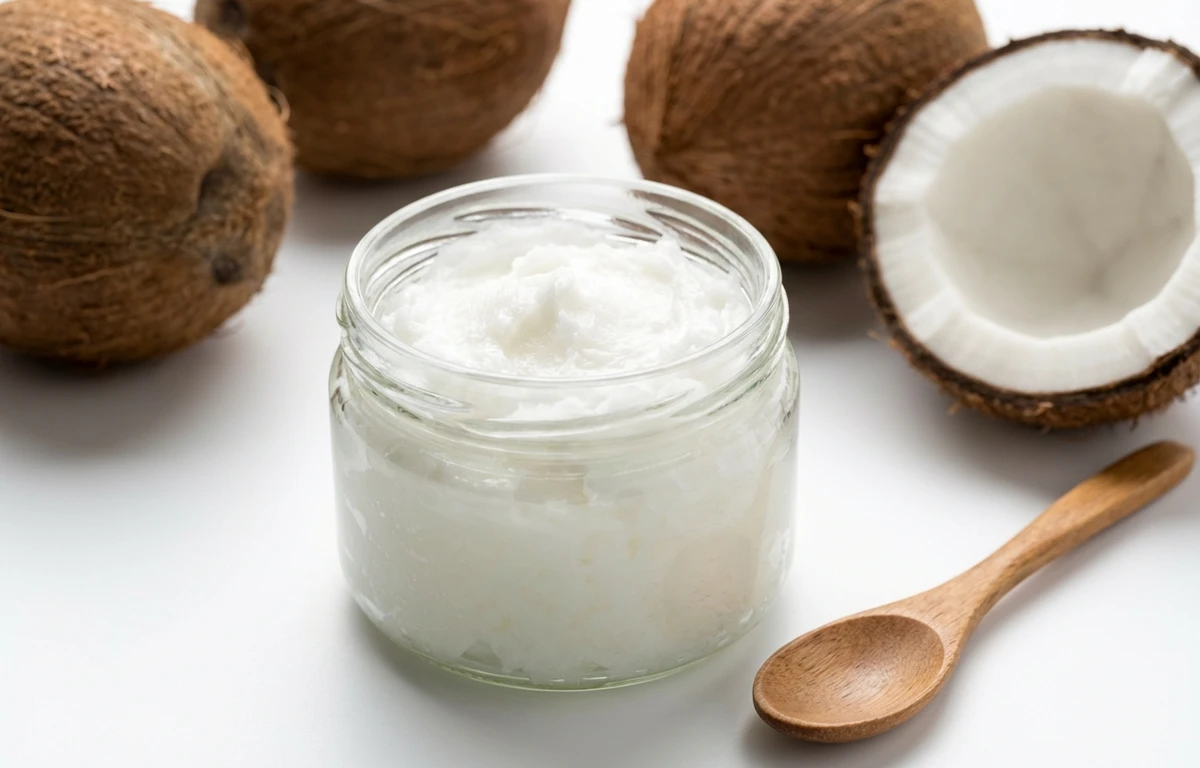
coconut oil.
VegetarianVeganGluten-freeDairy-freeNut-freePeanut-freeSoy-freeEgg-freeShellfish-freeHoney-freeAlcohol-free
ALSO KNOWN AS
coconut fatnariyal tel
SERVING
CALORIES
892
PROTEIN
0g
CARBS
0g
FAT
100g
FIBER
0g
NUTRITION PROFILE · per 100 g
Everything in this ingredient.
MACRONUTRIENTS
Calories892kcal—
Protein0g0%
Carbohydrates0g0%
Fiber0g0%
Sugar0g0%
Total fat100g128%
Saturated fat82.5g413%
Trans fat0g—
Cholesterol0mg0%
Water0g—
MINERALS
Sodium0mg0%
Potassium0mg0%
Calcium0mg0%
Iron0mg0%
Magnesium0mg0%
Phosphorus0mg0%
Zinc0mg0%
Copper0mg0%
Manganese0mg0%
Selenium0µg0%
VITAMINS
Vitamin A0µg0%
Vitamin C0mg0%
Vitamin D0µg0%
Vitamin E0mg0%
Vitamin K0µg0%
Thiamin (B1)0mg0%
Riboflavin (B2)0mg0%
Niacin (B3)0mg0%
Pantothenic acid (B5)0mg0%
Vitamin B60mg0%
Biotin (B7)0µg0%
Folate (B9)0µg0%
Vitamin B120µg0%
%DV based on a 2,000 cal diet. Source: USDA FoodData Central. A dash in the %DV column means there’s no established Daily Value for that nutrient.
MEASUREMENT CONVERSIONS
How much is what.
1 cup224g
1 tablespoon14g
1 teaspoon4.2g
1 ml0.9g
1 liter906.7g
HEALTH BENEFITS
Why eat it.
- ✓Rich in Medium-Chain Triglycerides (MCTs), which are a rapid source of energy for the body and brain.
- ✓Contains lauric acid, which has been shown to have antimicrobial properties against harmful bacteria, viruses, and fungi.
- ✓May help raise levels of HDL ('good') cholesterol, although its high saturated fat content means it should be consumed in moderation.
- ✓Can be used topically as an effective moisturizer for skin and hair.
COOKING TIPS
In the kitchen.
- 1Use refined coconut oil for high-heat cooking like frying and sautéing due to its higher smoke point (around 400°F / 204°C) and neutral flavor.
- 2Use unrefined (virgin) coconut oil for medium-heat cooking or baking where a distinct coconut flavor is desired.
- 3When substituting for butter in baking, use a 1:1 ratio. For flaky pastries, use it in its solid state; for chewy or dense baked goods, use it melted.
STORAGE
Keep it fresh.
- Store in a cool, dark place like a pantry, away from direct sunlight and heat. It does not require refrigeration.
- Coconut oil is solid below 76°F (24°C) and liquid above it. This change in consistency does not affect its quality or shelf life.
FAQ
Frequently asked questions.
Is coconut oil healthy?
Coconut oil is high in saturated fats, so it should be consumed in moderation as part of a balanced diet. However, it contains Medium-Chain Triglycerides (MCTs) which provide quick energy and lauric acid which has antimicrobial properties. It can also help raise HDL (good) cholesterol levels.
What are the health benefits of coconut oil?
It is rich in MCTs, which are easily digested and used by the brain and body for rapid energy. The lauric acid it contains helps fight off harmful bacteria, viruses, and fungi. Additionally, it serves as an excellent natural moisturizer for skin and hair when used topically.
Is coconut oil good for weight loss?
While the MCTs in coconut oil may slightly increase calorie burning compared to other fats, it is very calorie-dense at 892 calories per 100g. To support weight loss, it should be used as a replacement for other fats rather than an addition to your current diet to avoid excessive calorie intake.
Is coconut oil vegan and gluten-free?
Yes, coconut oil is naturally vegan as it is plant-based and contains no animal products. It is also naturally gluten-free, making it a safe fat source for those with celiac disease or gluten sensitivities.
Is coconut oil keto-friendly?
Yes, coconut oil is highly keto-friendly because it contains zero carbohydrates and is 100% fat. The MCTs in coconut oil are particularly valued in ketogenic diets as they are quickly converted into ketones by the liver to be used as fuel.
What is the smoke point of coconut oil and how do I cook with it?
Refined coconut oil has a smoke point of about 400°F (204°C), making it suitable for sautéing and baking. Unrefined or virgin coconut oil has a lower smoke point of around 350°F (177°C) and is better for low-heat cooking or as a butter substitute in baking.
What does coconut oil taste like?
Unrefined or virgin coconut oil has a distinct, sweet, and nutty coconut flavor. Refined coconut oil is neutralized during processing, resulting in a tasteless and odorless oil that is better for savory dishes where you do not want a coconut aroma.
How should I store coconut oil and how long does it last?
Store coconut oil in a cool, dark place like a pantry; refrigeration is not necessary but can extend shelf life. It is very stable due to its high saturated fat content and typically lasts for 18 to 24 months if kept away from direct sunlight and heat.
Why is my coconut oil solid sometimes and liquid other times?
Coconut oil has a melting point of approximately 76°F (24°C). It will be a firm white solid in cooler temperatures and turn into a clear liquid in warmer environments; this transition is completely normal and does not affect the quality or safety of the oil.
Can I use coconut oil on my skin and hair?
Yes, coconut oil is an effective topical moisturizer that helps hydrate skin and strengthen hair. Its antimicrobial properties can also help protect the skin, though those with oily or acne-prone skin should use it cautiously on the face as it can be comedogenic (pore-clogging).
RECIPES
Cook with coconut oil.
10 recipes · sorted by what’s quick