Dairy
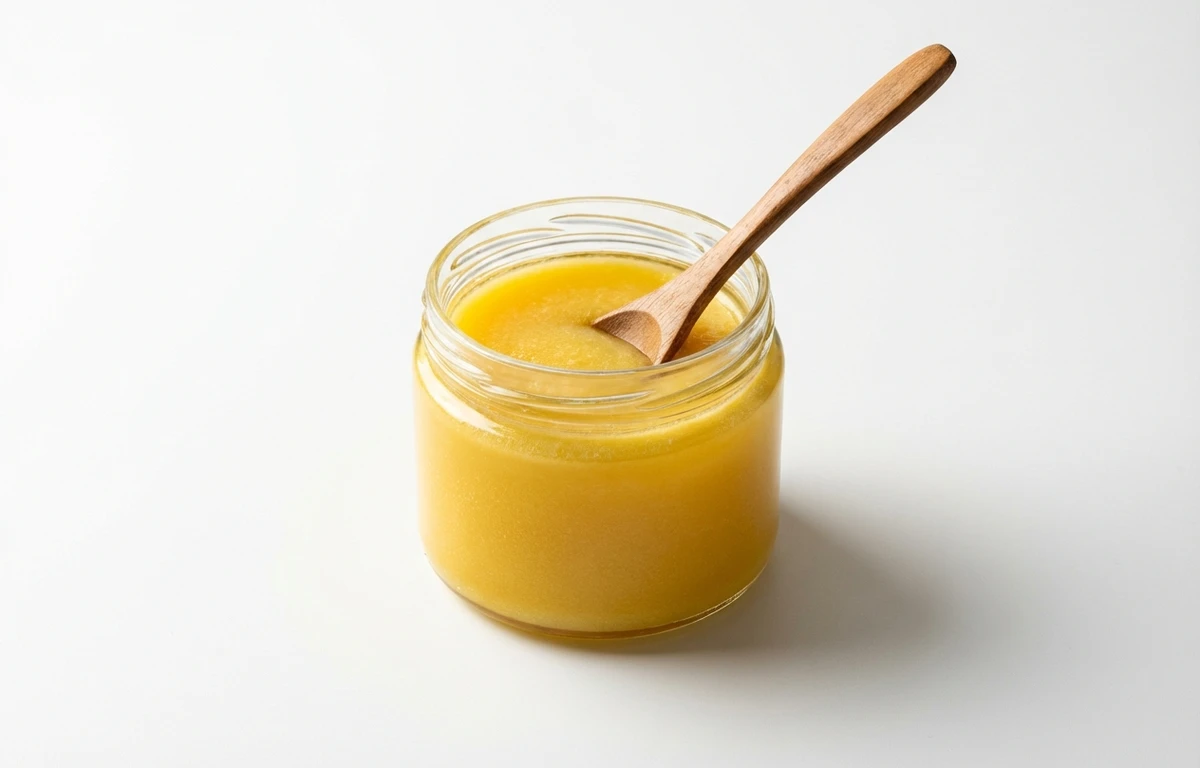
clarified butter (ghee).
VegetarianVeganGluten-freeDairy-freeNut-freePeanut-freeSoy-freeEgg-freeShellfish-freeHoney-freeAlcohol-free
SERVING
CALORIES
883
PROTEIN
0.30g
CARBS
0g
FAT
99.5g
FIBER
0g
NUTRITION PROFILE · per 100 g
Everything in this ingredient.
MACRONUTRIENTS
Calories883kcal—
Protein0.30g1%
Carbohydrates0g0%
Fiber0g0%
Sugar0g0%
Total fat99.5g128%
Saturated fat61.9g310%
Trans fat3.3g—
Cholesterol256mg85%
Water0.20g—
MINERALS
Sodium2.0mg0%
Potassium5.0mg0%
Calcium4.0mg0%
Iron0mg0%
Magnesium0mg0%
Phosphorus3.0mg0%
Zinc0.01mg0%
Copper0mg0%
Manganese0mg0%
Selenium0µg0%
VITAMINS
Vitamin A840µg93%
Vitamin C0mg0%
Vitamin D1.5µg8%
Vitamin E2.8mg19%
Vitamin K8.6µg7%
Thiamin (B1)0mg0%
Riboflavin (B2)0mg0%
Niacin (B3)0mg0%
Pantothenic acid (B5)0mg0%
Vitamin B60mg0%
Folate (B9)0µg0%
Vitamin B120.01µg0%
%DV based on a 2,000 cal diet. Source: USDA FoodData Central. A dash in the %DV column means there’s no established Daily Value for that nutrient.
MEASUREMENT CONVERSIONS
How much is what.
1 cup216g
1 tablespoon13.5g
1 teaspoon4.5g
1 ml0.9g
1 liter900g
HEALTH BENEFITS
Why eat it.
- ✓High smoke point (approx. 485°F/250°C) makes it stable for high-heat cooking, reducing the formation of harmful free radicals.
- ✓Virtually free of lactose and casein, making it a suitable fat source for many individuals with dairy sensitivities.
- ✓Rich source of fat-soluble vitamins, including Vitamin A, E, and K2, which are important for vision, immune function, and bone health.
- ✓Contains butyrate, a short-chain fatty acid that may support gut health and reduce inflammation in the digestive tract.
COOKING TIPS
In the kitchen.
- 1Ideal for searing, frying, and sautéing due to its high smoke point, which prevents it from burning and smoking easily.
- 2Use as a finishing oil by drizzling melted ghee over steamed vegetables, rice, lentils, or popcorn to add a rich, nutty flavor.
- 3Substitute for butter or oil in baking for a tender crumb and a distinct, slightly caramelized flavor in cakes and cookies.
- 4Bloom whole or ground spices in warm ghee before adding them to a dish ('tadka' or 'tempering') to release their aromatic compounds and deepen the flavor.
STORAGE
Keep it fresh.
- Store in an airtight, light-proof container in a cool, dark pantry for up to 3 months. Contamination with water or food particles will shorten its shelf life.
- For long-term storage (up to a year), refrigerate the ghee. It will solidify but can be easily spooned out and will soften at room temperature.
FAQ
Frequently asked questions.
Is ghee healthy?
Ghee is a nutrient-dense fat containing vitamins A, E, and K2, along with butyrate which supports gut health. While healthy in moderation, it is high in saturated fat and calories (883 calories per 100g), so it should be balanced within your overall daily intake.
How many calories and fat are in ghee?
Ghee is almost 100% fat, providing approximately 883 calories and 99.5 grams of fat per 100 grams. It contains negligible amounts of protein (0.3g) and zero carbohydrates, making it a pure energy source.
Is ghee lactose-free and safe for dairy sensitivities?
Yes, the clarification process removes almost all milk solids, including lactose and casein. This makes ghee a suitable fat source for many individuals who are lactose intolerant or sensitive to dairy proteins.
Is ghee keto-friendly?
Ghee is an excellent choice for the ketogenic diet because it is pure fat with zero carbohydrates. Its high fat content helps provide sustained energy and promotes satiety while staying within keto macronutrient goals.
Is ghee vegan?
No, ghee is not vegan. Although the milk solids are removed during production, it is still an animal-derived product made from cow's milk butter.
What is the smoke point of ghee and why does it matter?
Ghee has a very high smoke point of approximately 485°F (250°C). This makes it much more stable than regular butter or many vegetable oils for high-heat cooking like frying and searing, as it won't burn or produce harmful free radicals easily.
What does ghee taste like and how is it used?
Ghee has a rich, nutty, and toasted flavor that is more intense than regular butter. It is commonly used for sautéing, roasting vegetables, drizzling over grains, or as a flavorful fat in traditional Indian and Middle Eastern dishes.
Does ghee need to be refrigerated?
Ghee is shelf-stable and does not require refrigeration if kept in a cool, dark place in an airtight container. It can last for several months at room temperature or up to a year if refrigerated to further extend its freshness.
What is the difference between butter and ghee?
Ghee is butter that has been simmered until the water evaporates and the milk solids are strained out. This process gives ghee a higher smoke point, a longer shelf life, and removes the lactose and casein found in regular butter.
What are the benefits of butyrate found in ghee?
Ghee contains butyrate, a short-chain fatty acid that serves as a primary energy source for the cells lining the colon. It is known to help reduce inflammation in the digestive tract and may support overall gut health and immune function.