Vegetable
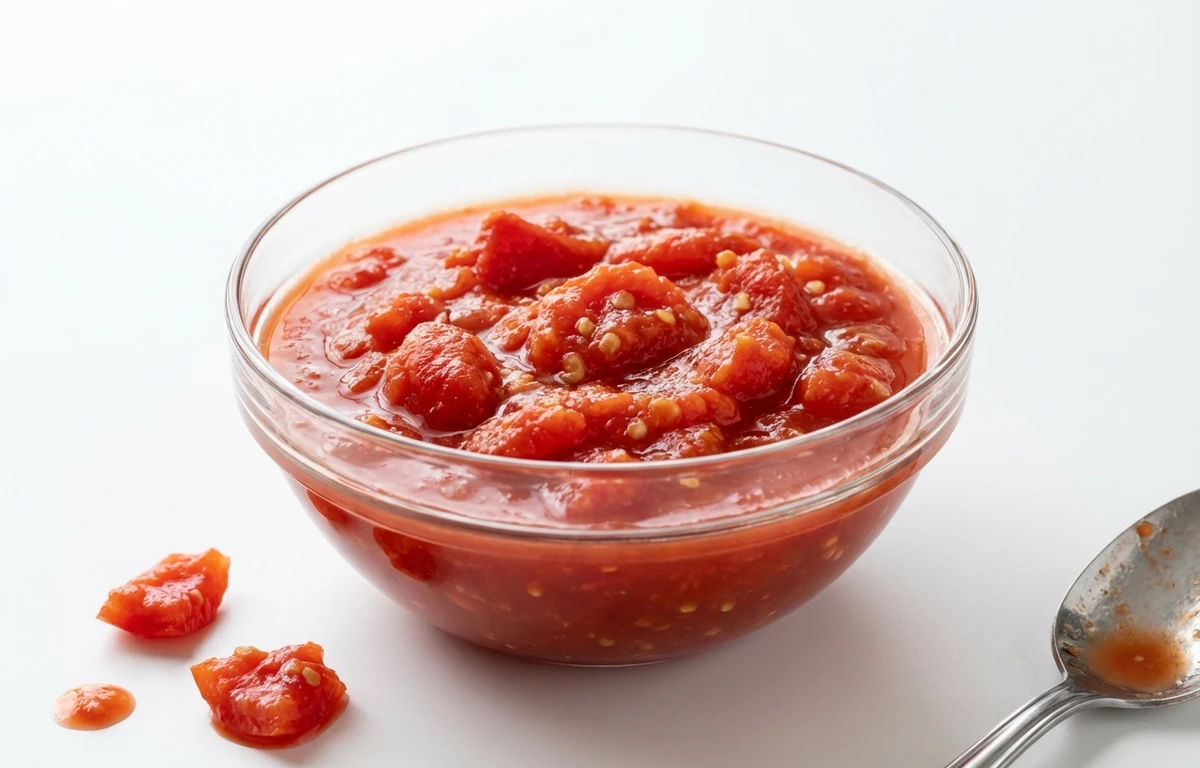
canned unsalted red tomato.
VegetarianVeganGluten-freeDairy-freeNut-freePeanut-freeSoy-freeEgg-freeShellfish-freeHoney-freeAlcohol-free
SERVING
CALORIES
16
PROTEIN
0.79g
CARBS
3.5g
FAT
0.25g
FIBER
1.9g
NUTRITION PROFILE · per 100 g
Everything in this ingredient.
MACRONUTRIENTS
Calories16kcal—
Protein0.79g2%
Carbohydrates3.5g1%
Fiber1.9g7%
Sugar2.5g5%
Total fat0.25g0%
Saturated fat0.03g0%
Trans fat0g—
Cholesterol0mg0%
Water94.8g—
MINERALS
Sodium10mg0%
Potassium191mg4%
Calcium33mg3%
Iron0.57mg3%
Magnesium10mg2%
Phosphorus17mg1%
Zinc0.12mg1%
Copper0.05mg6%
Manganese0.07mg3%
Selenium0.70µg1%
VITAMINS
Vitamin A22µg2%
Vitamin C12.6mg14%
Vitamin D0µg0%
Vitamin E0.59mg4%
Vitamin K2.9µg2%
Thiamin (B1)0.58mg48%
Riboflavin (B2)0.06mg5%
Niacin (B3)0.71mg4%
Pantothenic acid (B5)0.12mg2%
Vitamin B60.11mg6%
Folate (B9)8.0µg2%
Vitamin B120µg0%
%DV based on a 2,000 cal diet. Source: USDA FoodData Central. A dash in the %DV column means there’s no established Daily Value for that nutrient.
MEASUREMENT CONVERSIONS
How much is what.
1 cup120g
1 tablespoon15g
1 teaspoon5g
1 ml1g
1 liter1000g
HEALTH BENEFITS
Why eat it.
- ✓Rich source of lycopene, a powerful antioxidant linked to reduced risk of heart disease and certain cancers. The cooking process in canning makes lycopene more bioavailable.
- ✓Excellent source of Vitamin C, which supports immune function, and potassium, which helps regulate blood pressure.
- ✓Low in calories and, being unsalted, is a great ingredient for managing sodium intake and supporting weight management goals.
- ✓Provides a convenient and year-round source of key nutrients like Vitamin A and antioxidants, contributing to overall health and skin vitality.
COOKING TIPS
In the kitchen.
- 1Use as a versatile base for pasta sauces, soups, stews, and chilis. The canning process breaks down the tomatoes, allowing them to meld into dishes easily.
- 2Since they are unsalted, you have complete control over the seasoning. Add salt, herbs like basil and oregano, and spices to taste.
- 3For a deeper, more concentrated flavor, drain the tomatoes and roast them in the oven with a little olive oil and garlic before adding to your recipe.
- 4Don't discard the liquid in the can (unless the recipe specifies). It's full of tomato flavor and can be used to thin sauces or add moisture to dishes.
STORAGE
Keep it fresh.
- Store unopened cans in a cool, dark, dry place such as a pantry for up to 18-24 months. Avoid exposure to extreme temperatures.
- After opening, transfer unused tomatoes from the metal can to a glass or plastic airtight container and refrigerate. Consume within 5-7 days for best quality and safety.
FAQ
Frequently asked questions.
Are canned unsalted tomatoes healthy?
Yes, they are highly nutritious and low in calories, providing only 16 calories per 100g. They are a rich source of lycopene, Vitamin C, and potassium, and because they are unsalted, they are an excellent choice for heart-healthy and low-sodium diets.
What are the health benefits of lycopene in canned tomatoes?
Lycopene is a powerful antioxidant linked to a reduced risk of heart disease and certain cancers. The heat used during the canning process actually makes lycopene more bioavailable, meaning your body can absorb it more easily from canned tomatoes than from raw ones.
Are canned unsalted tomatoes keto-friendly?
Yes, they are keto-friendly and suitable for low-carb diets. With only 3.47g of carbohydrates per 100g, they can be used in various recipes without significantly impacting daily carb limits.
Are canned tomatoes vegan and gluten-free?
Yes, canned unsalted tomatoes are naturally vegan and gluten-free. They typically contain only tomatoes and sometimes tomato juice or citric acid, making them safe for individuals with celiac disease or those following a plant-based lifestyle.
How do canned tomatoes compare to fresh tomatoes nutritionally?
While fresh tomatoes may have slightly more Vitamin C, canned tomatoes contain higher levels of the antioxidant lycopene due to the cooking process. Canned tomatoes offer a convenient, shelf-stable way to consume Vitamin A and potassium throughout the year.
How should I store leftover canned tomatoes?
Once the can is opened, transfer any remaining tomatoes into an airtight glass or plastic container rather than storing them in the original metal can. Keep them refrigerated and use them within 5 to 7 days for optimal freshness.
Can I eat canned tomatoes raw or do they need to be cooked?
Canned tomatoes are pre-cooked during the canning process and are perfectly safe to eat straight from the can. They can be used in cold salsas or gazpacho, though they are most frequently used as a base for cooked sauces and stews.
What is the best way to use canned unsalted tomatoes in cooking?
They are incredibly versatile and serve as a base for pasta sauces, chilis, soups, and curries. Because they are unsalted, you have total control over the seasoning, allowing you to add herbs and spices to build flavor without increasing sodium.
Can I freeze canned tomatoes?
Yes, you can freeze leftover canned tomatoes in a freezer-safe container or bag for up to 6 months. While the texture may become softer upon thawing, they remain perfect for use in cooked dishes like sauces or soups.
How can I tell if canned tomatoes have gone bad?
Check for signs of spoilage such as a bulging or leaking can, or a foul odor and visible mold once opened. If the tomatoes have an unusually sharp or metallic taste, or if the interior of the can is heavily rusted, it is best to discard them.