Spice10 recipes
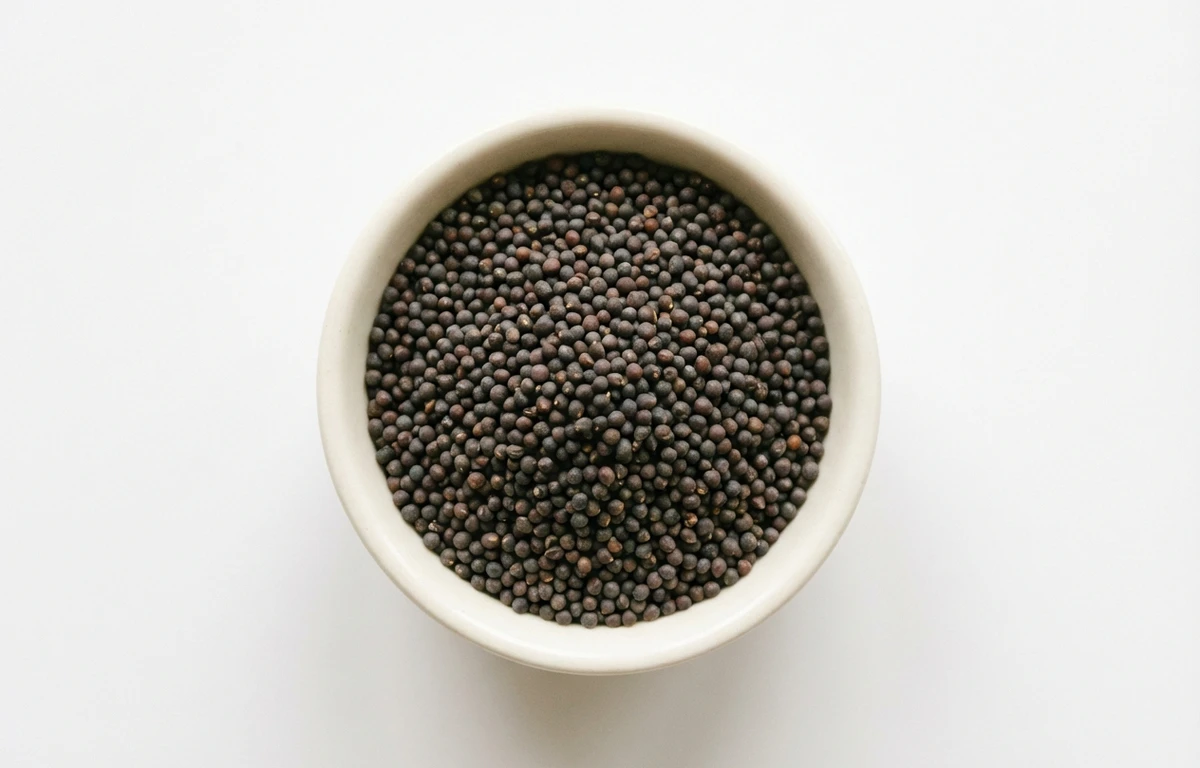
black mustard seeds.
VegetarianVeganGluten-freeDairy-freeNut-freePeanut-freeSoy-freeEgg-freeShellfish-freeHoney-freeAlcohol-free
ALSO KNOWN AS
raikali sarsonkadugumohariavalbrassica nigrablack rai
SERVING
CALORIES
508
PROTEIN
26.1g
CARBS
28.1g
FAT
36.2g
FIBER
12.2g
NUTRITION PROFILE · per 100 g
Everything in this ingredient.
MACRONUTRIENTS
Calories508kcal—
Protein26.1g52%
Carbohydrates28.1g10%
Fiber12.2g44%
Sugar6.7g13%
Total fat36.2g46%
Saturated fat2.0g10%
Trans fat0g—
Cholesterol0mg0%
Water5.3g—
MINERALS
Sodium13mg1%
Potassium738mg16%
Calcium266mg20%
Iron9.2mg51%
Magnesium370mg88%
Phosphorus828mg66%
Zinc6.1mg55%
Copper0.60mg67%
Manganese2.4mg104%
Selenium208µg378%
VITAMINS
Vitamin A3.0µg0%
Vitamin C7.1mg8%
Vitamin D0µg0%
Vitamin E5.1mg34%
Vitamin K5.4µg5%
Thiamin (B1)0.80mg67%
Riboflavin (B2)0.20mg15%
Niacin (B3)4.7mg29%
Pantothenic acid (B5)0.80mg16%
Vitamin B60.40mg24%
Folate (B9)162µg41%
Vitamin B120µg0%
%DV based on a 2,000 cal diet. Source: USDA FoodData Central. A dash in the %DV column means there’s no established Daily Value for that nutrient.
MEASUREMENT CONVERSIONS
How much is what.
1 cup180g
1 tablespoon11g
1 teaspoon3g
1 oz28.4g
1 lb453.6g
1 ml0.8g
1 liter750g
HEALTH BENEFITS
Why eat it.
- ✓Rich in selenium and magnesium which provide anti-inflammatory benefits
- ✓Contains glucosinolates that may help inhibit the growth of cancer cells
- ✓High in dietary fiber which aids in digestion and metabolism
- ✓Good source of omega-3 fatty acids and antioxidants
- ✓May help in relieving symptoms of asthma and rheumatoid arthritis
COOKING TIPS
In the kitchen.
- 1Always add to hot oil (tempering) until they pop to release their nutty flavor
- 2Cover the pan when popping seeds as they tend to jump out
- 3Grind into a paste with water or vinegar for a sharp, pungent condiment
STORAGE
Keep it fresh.
- Store in an airtight container in a cool, dark, and dry place
- Keep away from direct sunlight to preserve the essential oils and pungency
- Can be stored for up to 1 year if kept moisture-free
FAQ
Frequently asked questions.
How long do black mustard seeds last?
When stored in an airtight container in a cool, dry place, they can last for 1 to 2 years without losing significant flavor.
Can I freeze black mustard seeds?
Yes, you can freeze them to extend shelf life, though it is rarely necessary if kept dry. Ensure the container is moisture-proof.
How do I pick high-quality mustard seeds?
Look for seeds that are uniform in color (dark brown to black), clean, and free from dust, stones, or shriveled skins.
What is a good substitute for black mustard seeds?
Brown mustard seeds are the closest substitute. Yellow mustard seeds can be used but are much milder and less pungent.
Do I need to wash mustard seeds before use?
Generally, no. They are used dry in tempering. If making a paste, you may rinse them quickly, but ensure they are dried if frying.
Are black mustard seeds high in calories?
They are calorie-dense (about 508 kcal per 100g), but since they are used in very small quantities (1-2 tsp), the caloric contribution to a dish is negligible.
What are the most common dishes using black mustard seeds?
They are essential in Indian 'Tadka' (tempering) for dals, curries, and chutneys, and are also used in pickling and making mustard pastes.
Why do mustard seeds need to pop in oil?
Popping the seeds in hot oil breaks the outer shell and releases the essential oils, transforming the flavor from bitter to nutty and savory.
What is the difference between black and yellow mustard seeds?
Black mustard seeds are smaller and significantly more pungent and spicy than the larger, milder yellow variety.
RECIPES
Cook with black mustard seeds.
10 recipes · sorted by what’s quick