Vegetable
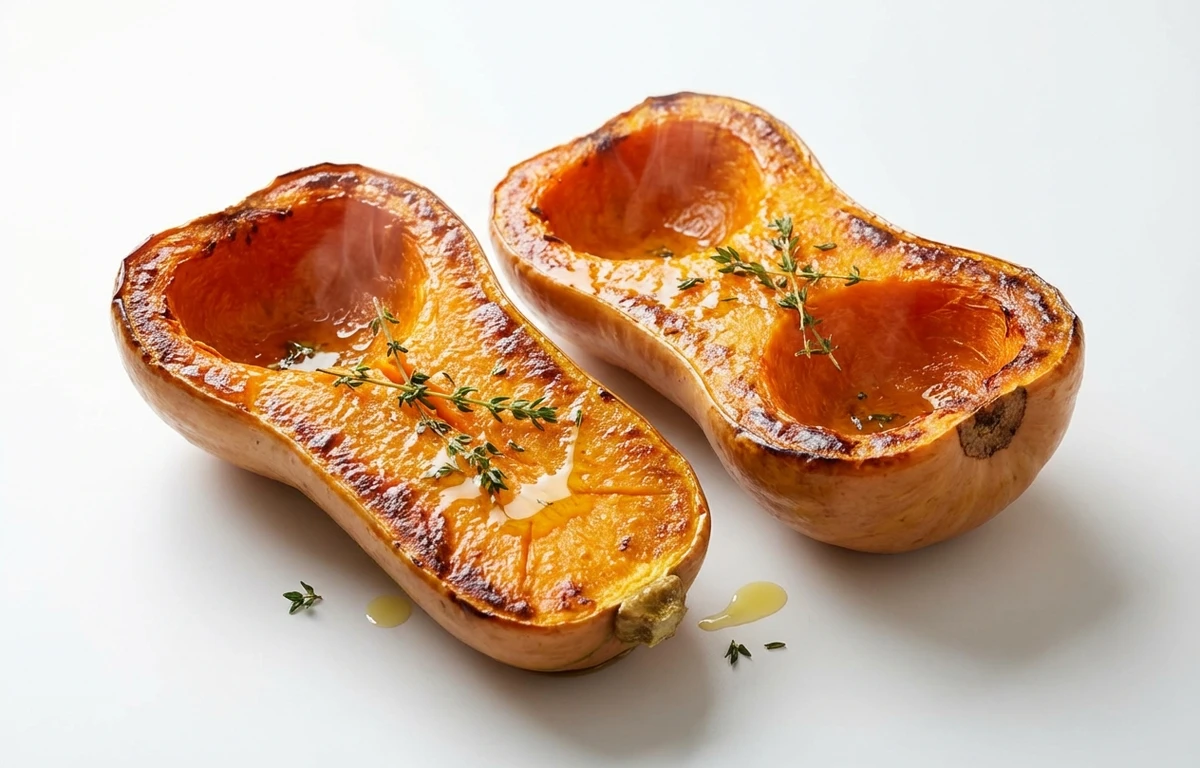
baked unsalted butternut squash.
VegetarianVeganGluten-freeDairy-freeNut-freePeanut-freeSoy-freeEgg-freeShellfish-freeHoney-freeAlcohol-free
SERVING
CALORIES
40
PROTEIN
0.90g
CARBS
10.5g
FAT
0.09g
FIBER
3.2g
NUTRITION PROFILE · per 100 g
Everything in this ingredient.
MACRONUTRIENTS
Calories40kcal—
Protein0.90g2%
Carbohydrates10.5g4%
Fiber3.2g11%
Sugar2.0g4%
Total fat0.09g0%
Saturated fat0.02g0%
Trans fat0g—
Cholesterol0mg0%
Water87.8g—
MINERALS
Sodium4.0mg0%
Potassium284mg6%
Calcium41mg3%
Iron0.60mg3%
Magnesium29mg7%
Phosphorus27mg2%
Zinc0.13mg1%
Copper0.07mg8%
Manganese0.17mg7%
Selenium0.50µg1%
VITAMINS
Vitamin A558µg62%
Vitamin C15.1mg17%
Vitamin D0µg0%
Vitamin E1.3mg9%
Vitamin K1.0µg1%
Thiamin (B1)0.07mg6%
Riboflavin (B2)0.02mg2%
Niacin (B3)0.97mg6%
Pantothenic acid (B5)0.36mg7%
Vitamin B60.12mg7%
Folate (B9)19µg5%
Vitamin B120µg0%
%DV based on a 2,000 cal diet. Source: USDA FoodData Central. A dash in the %DV column means there’s no established Daily Value for that nutrient.
MEASUREMENT CONVERSIONS
How much is what.
1 cup205g
1 tablespoon12.8g
1 teaspoon4.3g
1 ml0.9g
1 liter854.2g
HEALTH BENEFITS
Why eat it.
- ✓Excellent source of Vitamin A (from beta-carotene), crucial for vision health, immune function, and cell growth.
- ✓Rich in antioxidants like Vitamin C and E, which help protect cells from damage caused by free radicals.
- ✓High in dietary fiber, which supports digestive health, promotes satiety, and helps regulate blood sugar levels.
- ✓Good source of potassium, an essential mineral for maintaining healthy blood pressure and heart function.
COOKING TIPS
In the kitchen.
- 1For a deeper, caramelized flavor, toss squash with a little olive oil before baking and roast at a high temperature (400°F / 200°C).
- 2Baked butternut squash can be easily pureed to create a creamy, dairy-free base for soups, sauces, or risottos.
- 3The sweet, nutty flavor pairs well with savory herbs like sage and thyme, and warm spices such as cinnamon, nutmeg, and ginger.
- 4Save the seeds! They can be cleaned, tossed with oil and spices, and roasted for a nutritious and crunchy snack.
STORAGE
Keep it fresh.
- Store leftover baked butternut squash in an airtight container in the refrigerator for up to 5 days.
- For long-term storage, freeze the baked squash puree or cubes in freezer-safe bags or containers for up to 12 months.
FAQ
Frequently asked questions.
Is baked butternut squash healthy?
Yes, it is highly nutritious. It is an excellent source of Vitamin A for vision and immune health, and provides antioxidants like Vitamins C and E to protect cells from damage. Its high fiber content also supports digestive health.
How many calories and carbs are in baked butternut squash?
A 100g serving of baked butternut squash contains approximately 40 calories and 10.49g of carbohydrates. It is very low in fat (0.09g) and provides about 0.9g of protein.
Is baked butternut squash good for weight loss?
Yes, it is an excellent food for weight management. It is low in calories but high in dietary fiber, which promotes satiety and helps you feel full for longer periods, reducing the likelihood of overeating.
Is baked butternut squash keto-friendly?
With roughly 10.5g of carbs per 100g, butternut squash is considered a higher-carb vegetable. While it can be included in a keto diet in moderation, those on a strict low-carb regimen should monitor their portion sizes carefully.
Is baked butternut squash vegan and gluten-free?
Yes, plain baked butternut squash is naturally both vegan and gluten-free. As long as no butter or wheat-based seasonings are added during the cooking process, it is safe for both diets.
How do you bake butternut squash without salt?
You can roast halves face-down or bake cubes at 400°F (200°C) until tender. To add flavor without salt, try seasoning with warm spices like cinnamon, nutmeg, or ginger, or savory herbs like rosemary and thyme.
What does baked butternut squash taste like?
It has a sweet, nutty flavor similar to a sweet potato or pumpkin. When baked, its natural sugars caramelize, resulting in a creamy, buttery texture and a mild, earthy sweetness.
How long does cooked butternut squash last in the fridge?
Once baked, butternut squash should be stored in an airtight container in the refrigerator. It will typically stay fresh and maintain its quality for 4 to 5 days.
Can you freeze baked butternut squash?
Yes, baked butternut squash freezes exceptionally well. You can freeze it in cubes or as a puree in airtight containers or freezer bags for up to 10 to 12 months.
Do I need to peel butternut squash before baking?
It depends on your preference. If roasting halves, you can leave the skin on and scoop the flesh out after cooking; if you prefer roasted cubes, it is best to peel the tough outer skin with a vegetable peeler before baking.
Is baked unsalted butternut squash safe for babies?
Yes, it is an ideal first food for infants. Its soft texture when mashed is easy to swallow, and the high Vitamin A and potassium content support healthy growth and development.