
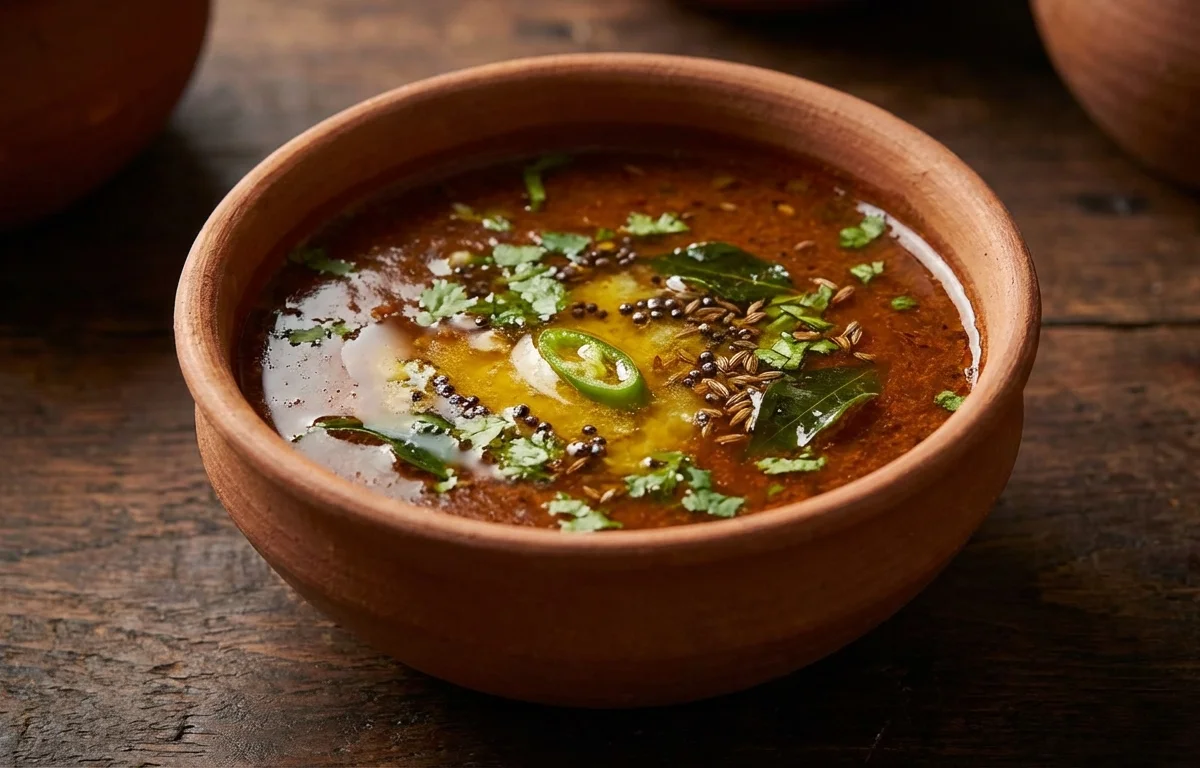
Kulith Saar
A rustic and hearty soup from Maharashtra made with horse gram. This tangy, sweet, and spicy broth is flavored with kokum, jaggery, and goda masala, making it a perfect comfort food with rice.
For 4 servings
Cook the Horse Gram
- Rinse the horse gram thoroughly under running water. Soak it in 3-4 cups of water for at least 8 hours or overnight.
- Drain the soaking water. Transfer the soaked horse gram to a pressure cooker.
- Add 4 cups of fresh water and pressure cook on medium heat for 6-7 whistles, or for about 25-30 minutes, until the grains are very soft and mushy.
Extract the Broth (Saar)
- Allow the pressure cooker to cool down and release pressure naturally. Open the lid.
- Lightly mash the cooked horse gram with the back of a spoon to release more flavor.
- Place a fine-mesh sieve over a large pot and strain the entire contents of the cooker. The liquid collected in the pot is the 'saar' or broth. Reserve the solid pulp left in the sieve for another dish like Kulith Pithla.
Simmer and Flavor the Saar
- Place the pot with the saar on the stove over medium heat. Bring it to a gentle simmer.
- Meanwhile, make a coarse paste of green chilies, ginger, and garlic using a mortar and pestle or a small grinder.
- Add this ginger-garlic-chili paste to the simmering saar. Also add the kokum pieces, grated jaggery, goda masala, turmeric powder, and salt.
- Stir well to combine all the ingredients. Reduce the heat to low and let the saar simmer for 10-12 minutes. This allows all the flavors to meld together beautifully.
Prepare the Tempering (Tadka)
- While the saar is simmering, heat ghee in a small tempering pan (tadka pan) over medium heat.
- Once the ghee is hot, add the mustard seeds and let them splutter completely.
- Add the cumin seeds, asafoetida, and curry leaves. Sauté for about 30 seconds until the curry leaves turn crisp and aromatic.
Combine and Serve
- Carefully pour the hot tempering over the simmering saar. Stand back as it will sizzle.
- Stir the saar gently, turn off the heat, and garnish with freshly chopped coriander leaves.
- Serve the hot Kulith Saar with steamed rice or traditional Maharashtrian bhakri (millet flatbread).
What to keep in mind.
5 tips from the recipe — small details that make a real difference to the final dish.
- 1Soaking the horse gram overnight is a non-negotiable step. It softens the tough grains and makes them easier to cook and digest.
- 2Do not discard the leftover cooked dal pulp. It's highly nutritious and can be used to make 'Kulith Pithla', a delicious dry side dish.
- 3Goda masala is the soul of this dish. Using it ensures an authentic Maharashtrian flavor profile that's hard to replicate with other masalas.
- 4The balance of tangy (from kokum) and sweet (from jaggery) is key. Feel free to adjust the quantities to suit your palate.
- 5For a slightly thicker and creamier saar, you can blend a couple of tablespoons of the cooked dal pulp with a little water and add it back to the broth before simmering.
Adapt it for your goals.
Vegan Version
To make this recipe vegan, simply replace the ghee with a neutral vegetable oil or coconut oil for the tempering.
Spicier SaarSpicier Saar
If you prefer more heat, increase the number of green chilies or add 1/4 teaspoon of red chili powder along with the other spices.
No KokumNo Kokum
If kokum is unavailable, use 1 tablespoon of tamarind pulp (from a small lime-sized ball of tamarind soaked in warm water) for a similar tangy taste.
With VegetablesWith Vegetables
You can add a few pieces of drumstick (moringa) to the saar while it simmers for extra flavor and nutrition.
Why this is on our healthy list.
Rich in Protein and Fiber
Horse gram is an excellent source of plant-based protein and dietary fiber, which promotes satiety, aids in weight management, and supports a healthy digestive system.
Packed with Iron
This lentil is a great source of iron, which is essential for forming hemoglobin, preventing anemia, and boosting overall energy levels.
Supports Kidney Health
Traditionally, horse gram is believed to have diuretic properties and is often recommended in Ayurvedic practices to help prevent the formation of kidney stones.
Low Glycemic Index
Kulith has a low glycemic index, making it a suitable choice for individuals managing blood sugar levels, as it causes a slower, more gradual rise in glucose after a meal.
Frequently asked questions
Yes, Kulith Saar is exceptionally healthy. Horse gram is a powerhouse of protein, fiber, and iron. It's low in fat and calories, aids in digestion, and is traditionally believed to help with kidney stones and weight management.