
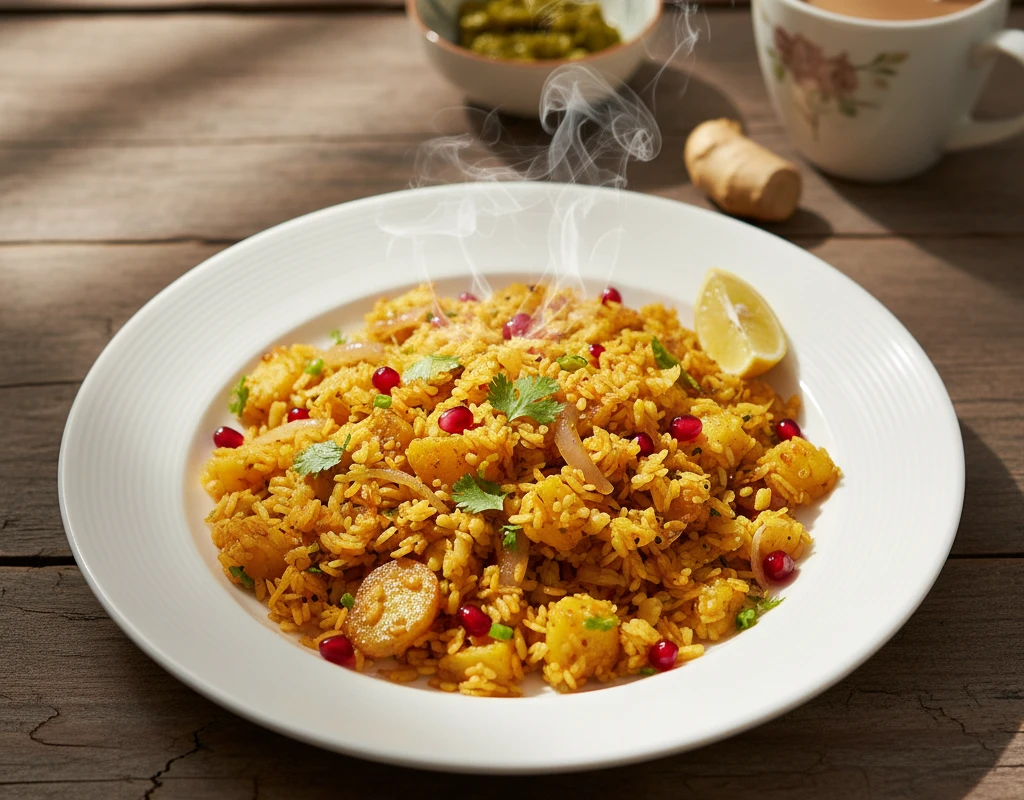
Kanda Batata Poha
A quintessential Maharashtrian breakfast, this dish combines fluffy flattened rice with soft potatoes, sweet onions, and crunchy peanuts. It's a quick, wholesome, and savory meal, perfect for starting your day.
For 4 servings
6 steps. 15 minutes total.
- 1
Rinse and Drain Poha: Place the thick poha in a large sieve or colander
- a.Rinse under cold running water for 30-40 seconds, tossing gently with your fingers until it softens. Do not over-rinse or soak. A good test is to press a flake; it should crush easily. Set aside in the colander to drain completely for at least 10 minutes.
- 2
Step 2
- a.Prepare the Tempering (Tadka): Heat oil in a wide, heavy-bottomed pan (kadai) over medium heat. Add the mustard seeds and allow them to splutter completely. Immediately add the cumin seeds, hing, and raw peanuts. Sauté for 1-2 minutes until the peanuts turn golden and crunchy. Add the slit green chilies and curry leaves, and cook for another 30 seconds until fragrant.
- 3
Step 3
- a.Cook the Vegetables: Add the finely chopped onions to the pan and sauté for 3-4 minutes until they become soft and translucent. Add the diced potatoes, turmeric powder, and about 1/2 tsp of the salt. Mix well. Sprinkle 2-3 tablespoons of water, cover the pan, and cook on low-medium heat for 6-8 minutes, stirring occasionally, until the potatoes are fork-tender.
- 4
Step 4
- a.Combine and Steam: While the potatoes are cooking, add the remaining salt (3/4 tsp) and sugar to the drained poha. Gently fluff with a fork to mix and separate the flakes. Once the potatoes are cooked, add the seasoned poha to the pan. Gently toss everything together until well combined, being careful not to mash the poha flakes.
- 5
Step 5
- a.Final Steaming and Garnish: Cover the pan and let the poha steam on the lowest heat for 2-3 minutes. This crucial step makes the poha soft and allows it to absorb all the flavors. Turn off the heat. Drizzle the fresh lemon juice over the poha and add the chopped coriander leaves. Give it one final gentle mix.
- 6
Serve: Garnish with fresh grated coconut (if using) and serve immediately
- a.It can be enjoyed on its own or with a side of plain yogurt.
What to keep in mind.
6 tips from the recipe — small details that make a real difference to the final dish.
- 1Use Thick Poha (Jad Poha) only. Thin or nylon poha will turn into a mushy paste when rinsed.
- 2The key to perfect poha is rinsing it just until soft. Test by pressing a flake between your thumb and finger; it should crush easily without being watery.
- 3Cut the potatoes into small, uniform 1/4-inch cubes so they cook quickly and evenly along with the onions.
- 4Don't skip the sugar. The small amount is a hallmark of Maharashtrian poha, perfectly balancing the savory, tangy, and spicy flavors.
- 5Use a fork to fluff the poha after rinsing and when mixing it in the pan. A spoon can easily mash the delicate flakes.
- 6Garnish generously. Fresh coriander, lemon juice, and grated coconut added at the end elevate the dish with fresh, bright flavors.
Adapt it for your goals.
Protein-Rich
Add 1/2 cup of sprouted moth beans (matki) or green gram (moong) along with the potatoes for a protein boost.
Vegetable LoadedVegetable-Loaded
Incorporate 1/2 cup of green peas, finely chopped carrots, or bell peppers. Add them along with the potatoes to increase the nutritional value.
Jain VersionJain Version
Omit the onions and potatoes. You can add green peas, chopped capsicum, or raw banana cubes instead.
Indori Poha StyleIndori Poha Style
For a taste of Indore, garnish with a generous amount of fine sev, pomegranate arils, and a sprinkle of jeeravan masala before serving.
Why this is on our healthy list.
Good Source of Healthy Carbohydrates
Poha is made from flattened rice, which is a good source of complex carbohydrates that provide sustained energy, making it an excellent breakfast choice.
Light and Easy to Digest
Poha is light on the stomach and easy to digest. It's also considered a probiotic food as it's made by parboiling paddy and then drying it, which involves a fermentation process.
Rich in Iron
The traditional process of making poha involves passing it through iron rollers, which can fortify it with iron. Squeezing lemon juice on top provides Vitamin C, which helps in the absorption of this iron.
Naturally Gluten-Free
Since it is made from rice, poha is naturally gluten-free, making it a suitable and safe option for individuals with celiac disease or gluten intolerance.
Frequently asked questions
Yes, it's a relatively healthy and balanced breakfast. Poha is a good source of carbohydrates and is light on the stomach. The addition of potatoes provides energy, while peanuts offer protein and healthy fats. To make it healthier, you can increase the vegetables and reduce the amount of oil used.