
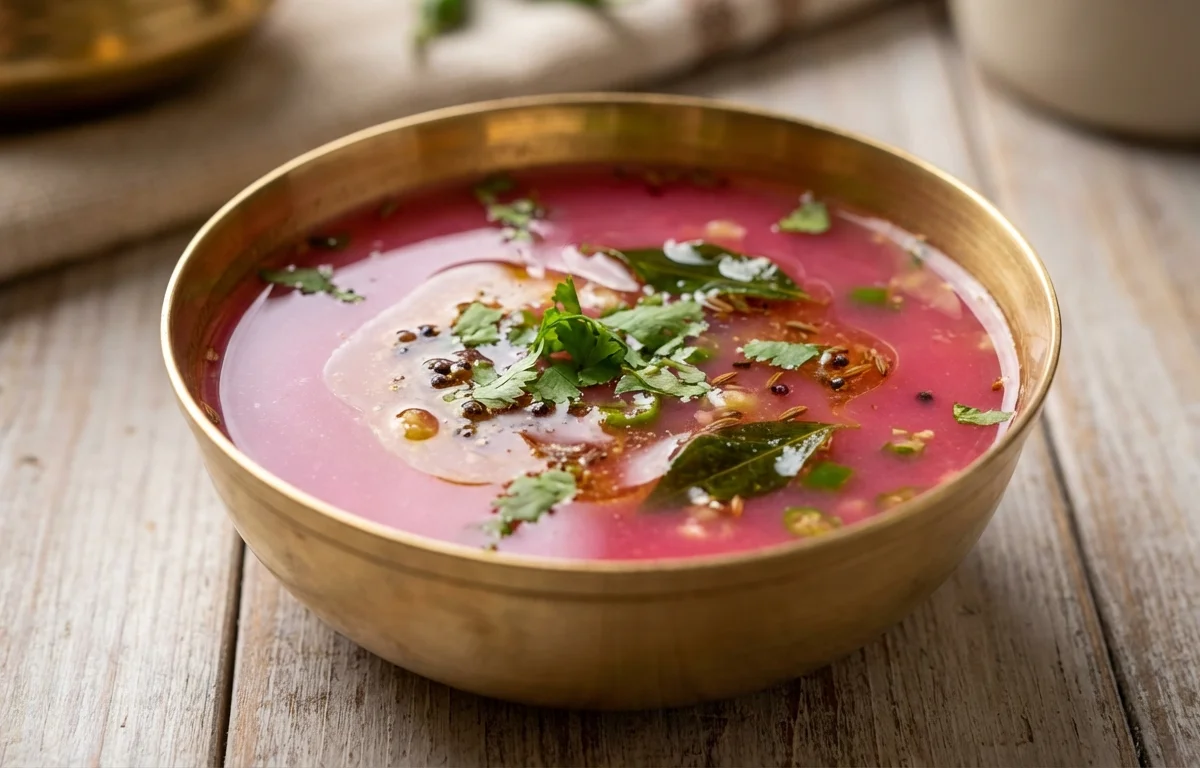
Kokum Saar
A tangy and refreshing Maharashtrian soup made from dried kokum fruit. This light digestif, with a perfect balance of sweet, sour, and spice, is often served with steamed rice or simply sipped on its own.
For 4 servings
4 steps. 10 minutes total.
- 1
Step 1
- a.Extract Kokum Juice
- b.Place the dried kokum pieces in a bowl and pour 4 cups of hot water over them.
- c.Let them soak for at least 20-30 minutes. This will soften the fruit and allow it to release its flavor and color.
- d.After soaking, use clean hands to squeeze and mash the kokum pieces in the water to extract as much pulp as possible. The water should turn a deep pinkish-purple.
- 2
Step 2
- a.Simmer the Saar
- b.Strain the kokum water through a fine-mesh sieve into a saucepan, pressing the solids to release all the liquid. Discard the leftover kokum pieces.
- c.Add the grated jaggery, slit green chilies, grated ginger, and salt to the saucepan.
- d.Place the pan over medium-low heat and bring the mixture to a gentle simmer. Cook for 5-7 minutes, allowing the flavors to meld. Do not let it come to a rolling boil, as this can make the saar bitter.
- 3
Step 3
- a.Prepare the Tempering (Tadka)
- b.While the saar is simmering, heat the ghee in a small pan (tadka pan) over medium heat.
- c.Once the ghee is hot, add the mustard seeds and wait for them to pop and splutter completely, which takes about 30-40 seconds.
- d.Immediately add the cumin seeds, hing, and curry leaves. Sauté for another 30 seconds until the curry leaves are crisp and the spices are fragrant.
- 4
Step 4
- a.Combine and Serve
- b.Carefully pour the hot tempering into the simmering kokum saar. Stand back as it will sizzle vigorously.
- c.Stir well to incorporate the tempering.
- d.Turn off the heat, garnish with freshly chopped coriander leaves, and serve hot as a soup or with steamed rice.
What to keep in mind.
5 tips from the recipe — small details that make a real difference to the final dish.
- 1Use soft, pliable dried kokum for the best flavor and a vibrant pink color. Brittle, old kokum may lack flavor.
- 2The perfect Kokum Saar has a delicate balance of tangy, sweet, and spicy. Taste the saar before tempering and adjust jaggery, salt, or chili as needed.
- 3Avoid boiling the saar vigorously. A gentle simmer is enough to meld the flavors without turning it bitter.
- 4The flavor of Kokum Saar deepens as it rests. It can be made a day in advance and stored in the refrigerator. Reheat gently before serving.
- 5For a vegan version, simply replace the ghee with coconut oil or any neutral vegetable oil.
Adapt it for your goals.
Garlic Flavor
Add 1-2 cloves of lightly crushed garlic to the tempering along with the curry leaves for a pungent aroma and flavor.
Spicier VersionSpicier Version
Increase the number of green chilies or add a pinch of red chili powder to the saar while it simmers for extra heat.
Konkani Style (Solkadhi like)Konkani Style (Solkadhi-like)
For a creamier saar, add 1/4 cup of thin coconut milk at the very end, after turning off the heat. Do not boil after adding coconut milk as it may curdle.
Why this is on our healthy list.
Aids Digestion
Kokum is renowned for its digestive properties. It helps combat acidity, indigestion, and flatulence, making this saar an excellent post-meal digestif.
Natural Coolant
Kokum has a natural cooling effect on the body, making this soup particularly beneficial during hot weather to prevent dehydration and heatstroke.
Rich in Antioxidants
The main ingredient, kokum, is packed with antioxidants like garcinol, which help fight free radical damage and reduce oxidative stress in the body.
Anti-Inflammatory Properties
Both kokum and ginger possess anti-inflammatory compounds that can help reduce inflammation throughout the body and may provide relief from joint pain.
Frequently asked questions
Kokum (Garcinia indica) is a fruit native to the Western Ghats of India, used in its dried form as a souring agent. You can find dried kokum, also called 'amsul', at most Indian grocery stores or online.