
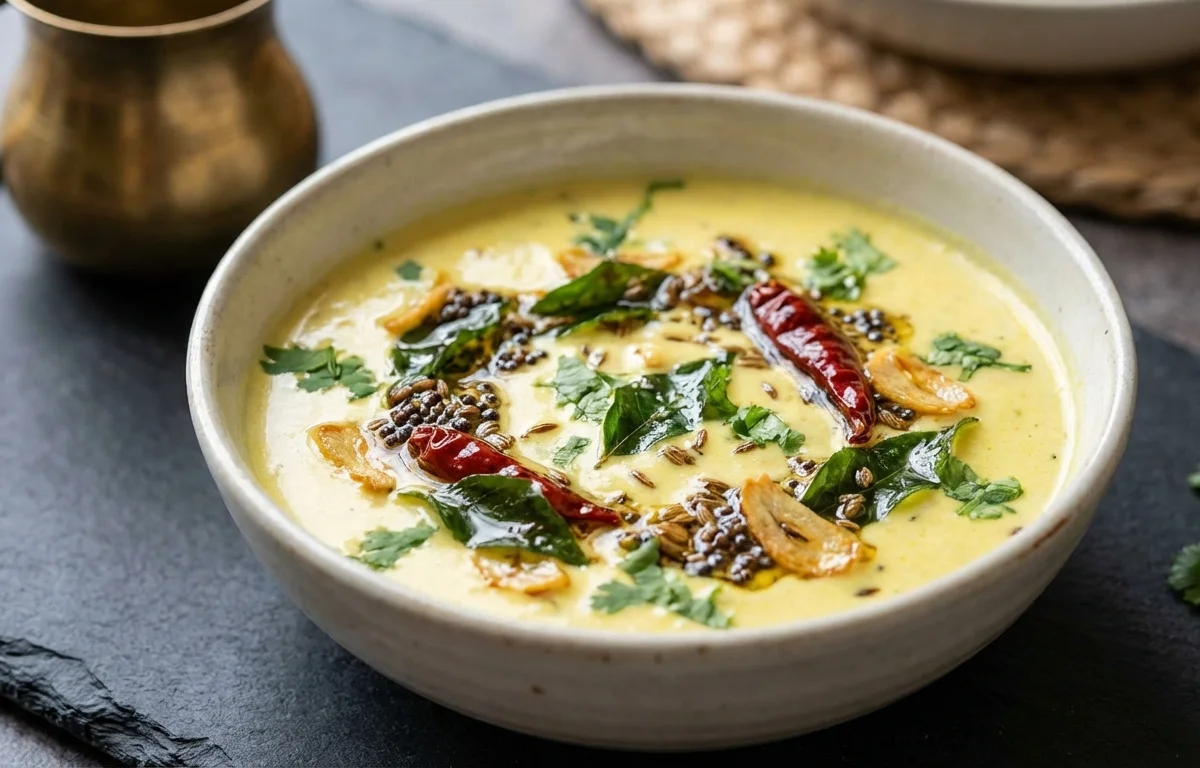
Hyderabadi Dahi ki Kadi
A tangy and savory yogurt-based curry from Hyderabad, simmered to perfection with aromatic spices. This light yet flavorful kadi, often served with fluffy chickpea flour fritters, is a comforting classic best enjoyed with steamed rice.
For 4 servings
Prepare the Pakora Batter
- In a mixing bowl, combine 1 cup of besan, 1 finely chopped onion, 1 chopped green chili, 2 tbsp coriander leaves, 0.25 tsp turmeric powder, 0.5 tsp salt, and the baking soda.
- Gradually add about 0.5 cup of water, whisking vigorously to form a thick, smooth, and airy batter. The consistency should be like a thick pancake batter.
- Let the batter rest for 10-15 minutes. This helps in making the pakoras fluffy.
Fry the Pakoras
- Heat 1.5 cups of oil in a kadai or deep pan over medium-high heat. To test if the oil is ready, drop a tiny bit of batter; it should sizzle and rise to the surface immediately.
- Carefully drop spoonfuls of the batter into the hot oil, ensuring not to overcrowd the pan.
- Fry for 4-5 minutes, turning occasionally, until the pakoras are golden brown, crisp, and cooked through.
- Remove with a slotted spoon and drain on a plate lined with paper towels. Set aside.
Make the Kadi Base
- In a large bowl, whisk the 2 cups of curd until it is completely smooth and creamy.
- Add the remaining 0.25 cup of besan and whisk again, ensuring there are absolutely no lumps.
- Gradually pour in 3 cups of water, whisking continuously to form a thin, uniform mixture.
- Stir in 0.5 tsp turmeric powder, 1 tsp red chili powder, and 1.5 tsp salt. Mix well.
Cook the Kadi
- In a large, heavy-bottomed pot, heat 1 tbsp of oil (you can use some from frying) over medium heat.
- Add the thinly sliced onion and sauté for 3-4 minutes until soft and translucent.
- Add the ginger-garlic paste and the 2 slit green chilies. Sauté for another minute until the raw aroma disappears.
- Lower the heat and slowly pour the besan-yogurt mixture into the pot, stirring continuously and vigorously to prevent the curd from splitting.
- Increase the heat to medium and bring the mixture to a gentle boil, still stirring constantly. This will take about 5-7 minutes.
- Once it boils, reduce the heat to low and let it simmer for 12-15 minutes, stirring occasionally. The kadi will thicken slightly and the raw taste of besan will cook off.
Add Pakoras and Prepare Tempering (Tadka)
- Gently slide the fried pakoras into the simmering kadi. Let them cook in the kadi for 2-3 minutes to soften and absorb the flavors.
- Meanwhile, prepare the tempering. Heat 2 tbsp of ghee in a small tadka pan over medium heat.
- Once the ghee is hot, add the mustard seeds and let them splutter. Then add the cumin seeds, broken dried red chilies, and curry leaves. Sauté for 30-40 seconds until fragrant.
- Turn off the heat and immediately stir in the asafoetida.
Finish and Serve
- Pour the hot tempering over the kadi. You will hear a satisfying sizzle.
- Garnish with the remaining 2 tbsp of freshly chopped coriander leaves.
- Stir gently and serve hot with steamed basmati rice or jeera rice.
What to keep in mind.
5 tips from the recipe — small details that make a real difference to the final dish.
- 1Use slightly sour yogurt for the authentic tangy flavor. If your yogurt is fresh, leave it at room temperature for a few hours before using.
- 2Continuous stirring while bringing the kadi to a boil is the most crucial step to prevent it from curdling or splitting.
- 3Do not add the pakoras to the kadi too early, as they can become mushy and disintegrate. Add them just a few minutes before serving.
- 4The kadi thickens as it cools. Adjust the consistency with a little warm water when reheating if needed.
- 5For extra soft pakoras, you can soak them in warm salted water for 5 minutes before adding them to the kadi. Squeeze out the excess water gently.
Adapt it for your goals.
Healthier Option
Make the pakoras in an air fryer or a paniyaram/appe pan with minimal oil instead of deep-frying to reduce the fat content.
Vegetable AdditionVegetable Addition
Add finely chopped spinach (palak) or fenugreek leaves (methi) to the pakora batter for added nutrition and flavor.
No Pakora VersionNo Pakora Version
You can make the kadi without any pakoras. This version is known as 'Sadi Kadi' and is lighter and quicker to prepare.
Spice LevelSpice Level
Increase or decrease the amount of green chilies and red chili powder to suit your preference for heat.
Why this is on our healthy list.
Promotes Gut Health
The use of curd (yogurt) makes this dish rich in probiotics, which are beneficial bacteria that support a healthy digestive system and improve gut flora.
Good Source of Protein
Both besan (chickpea flour) and yogurt are excellent sources of protein, which is essential for muscle repair, cell growth, and overall body function.
Naturally Gluten-Free
This recipe is made with besan, which is naturally gluten-free, making it a suitable and delicious option for individuals with gluten intolerance or celiac disease.
Aids in Digestion
The tempering includes spices like asafoetida (hing) and cumin seeds, which are traditionally known in Ayurveda to aid digestion, reduce bloating, and prevent flatulence.
Frequently asked questions
Kadi usually curdles for two main reasons: either the yogurt mixture was added to a very hot pan, or it was not stirred continuously while bringing it to a boil. Always add the yogurt mixture on low heat and stir constantly until it comes to a gentle boil.