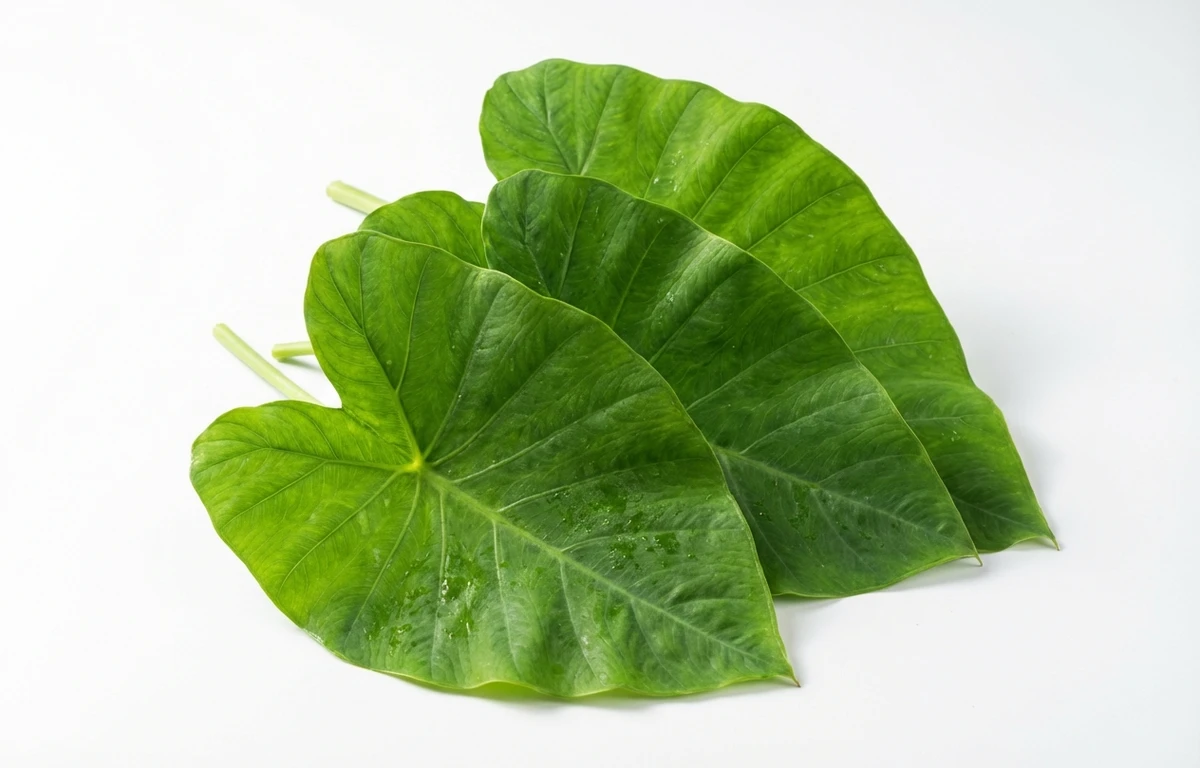
vegetable
alu leaves.
VegetarianVeganGluten-freeDairy-freeNut-freePeanut-freeSoy-freeEgg-freeShellfish-freeHoney-freeAlcohol-freeHalalKosher
SERVING
CALORIES
53
PROTEIN
5.0g
CARBS
6.7g
FAT
0.74g
FIBER
3.7g
NUTRITION PROFILE · per 100 g
Everything in this ingredient.
MACRONUTRIENTS
Calories53.4kcal—
Protein5.0g10%
Carbohydrates6.7g2%
Fiber3.7g13%
Sugar3.0g6%
Total fat0.74g1%
Saturated fat0.15g1%
Trans fat0g—
Cholesterol0mg0%
Water85.7g—
MINERALS
Sodium3.0mg0%
Potassium648mg14%
Calcium107mg8%
Iron2.3mg13%
Magnesium45mg11%
Phosphorus60mg5%
Zinc0.27mg2%
Copper0.15mg17%
Manganese0.45mg20%
Selenium0.90µg2%
VITAMINS
Vitamin A241µg27%
Vitamin C52mg58%
Vitamin D0µg0%
Vitamin E2.9mg20%
Vitamin K109µg90%
Thiamin (B1)0.21mg18%
Riboflavin (B2)0.46mg35%
Niacin (B3)1.5mg9%
Pantothenic acid (B5)0.08mg2%
Vitamin B60.15mg9%
Folate (B9)126µg32%
Vitamin B120µg0%
%DV based on a 2,000 cal diet. Source: USDA FoodData Central. A dash in the %DV column means there’s no established Daily Value for that nutrient.
MEASUREMENT CONVERSIONS
How much is what.
1 cup40g
1 piece15g
HEALTH BENEFITS
Why eat it.
- ✓Rich in Vitamin C, which supports immune function and skin health.
- ✓Excellent source of Vitamin A and beta-carotene, crucial for maintaining good vision.
- ✓High in dietary fiber, which aids digestion, promotes gut health, and helps regulate blood sugar levels.
- ✓Contains potassium, an essential mineral for maintaining healthy blood pressure and heart function.
COOKING TIPS
In the kitchen.
- 1Crucially, always cook alu (colocasia/taro) leaves thoroughly by steaming, boiling, or frying to break down calcium oxalate crystals, which cause severe throat irritation if eaten raw.
- 2Add a souring agent like tamarind paste, kokum, or lemon juice during cooking. This helps neutralize any remaining irritants and balances the earthy flavor of the leaves.
- 3The large, sturdy leaves are ideal for making steamed rolls like 'Patra' or 'Alu Vadi' by smearing them with a spiced gram flour paste before rolling and cooking.
- 4When preparing, remove the thick central vein from larger leaves as it can be tough and fibrous even after cooking.
STORAGE
Keep it fresh.
- Wrap fresh, unwashed leaves in a damp paper towel, place in a perforated plastic bag, and store in the refrigerator's crisper drawer for up to 3-4 days.
- For longer storage, blanch the leaves for 2 minutes, plunge into ice water, pat dry, and freeze in an airtight container for several months.
FAQ
Frequently asked questions.
Are alu leaves healthy?
Yes, alu leaves are highly nutritious. They are an excellent source of Vitamin A for vision and Vitamin C for immune support, while providing significant dietary fiber and potassium for heart and digestive health.
How many calories and protein are in alu leaves?
Per 100g, alu leaves contain approximately 42 calories and 4.98g of protein. This makes them a low-calorie, nutrient-dense vegetable that is relatively high in protein compared to other leafy greens.
Can you eat alu leaves raw?
No, alu leaves should never be eaten raw. They contain calcium oxalate crystals which can cause severe irritation and itching in the mouth and throat; these crystals are only neutralized through proper cooking.
Are alu leaves keto-friendly?
Yes, alu leaves are keto-friendly as they contain only 6.7g of carbohydrates per 100g. Their high fiber content further reduces the net carb count, making them suitable for low-carb diets.
Why do alu leaves sometimes cause an itchy throat?
The itching is caused by calcium oxalate crystals. To prevent this, alu leaves are traditionally cooked with an acidic ingredient like tamarind, lemon, or kokum, which helps break down the crystals and eliminate the irritation.
Are alu leaves vegan and gluten-free?
Yes, alu leaves are a natural plant-based vegetable and are both vegan and gluten-free. They are a staple in many vegetarian diets, particularly in South Asian cuisine.
How do you prepare alu leaves for cooking?
First, wash the leaves thoroughly. Use a knife to carefully trim away the thick central vein and any large side ribs from the back of the leaf, as these can be tough and contain higher concentrations of irritants.
What do alu leaves taste like?
Alu leaves have a mild, earthy, and slightly nutty flavor, similar to spinach but with a more robust texture. They are excellent at absorbing the flavors of spices, ginger, and garlic used during cooking.
How should fresh alu leaves be stored?
Store fresh leaves by wrapping them in a damp paper towel and placing them in a sealed plastic bag in the refrigerator's crisper drawer. They are delicate and should be used within 2 to 3 days for best quality.
Are alu leaves good for weight loss?
Yes, they are very beneficial for weight loss. With only 42 calories per 100g and a high fiber content, they help promote satiety and fullness while providing essential vitamins and minerals.