
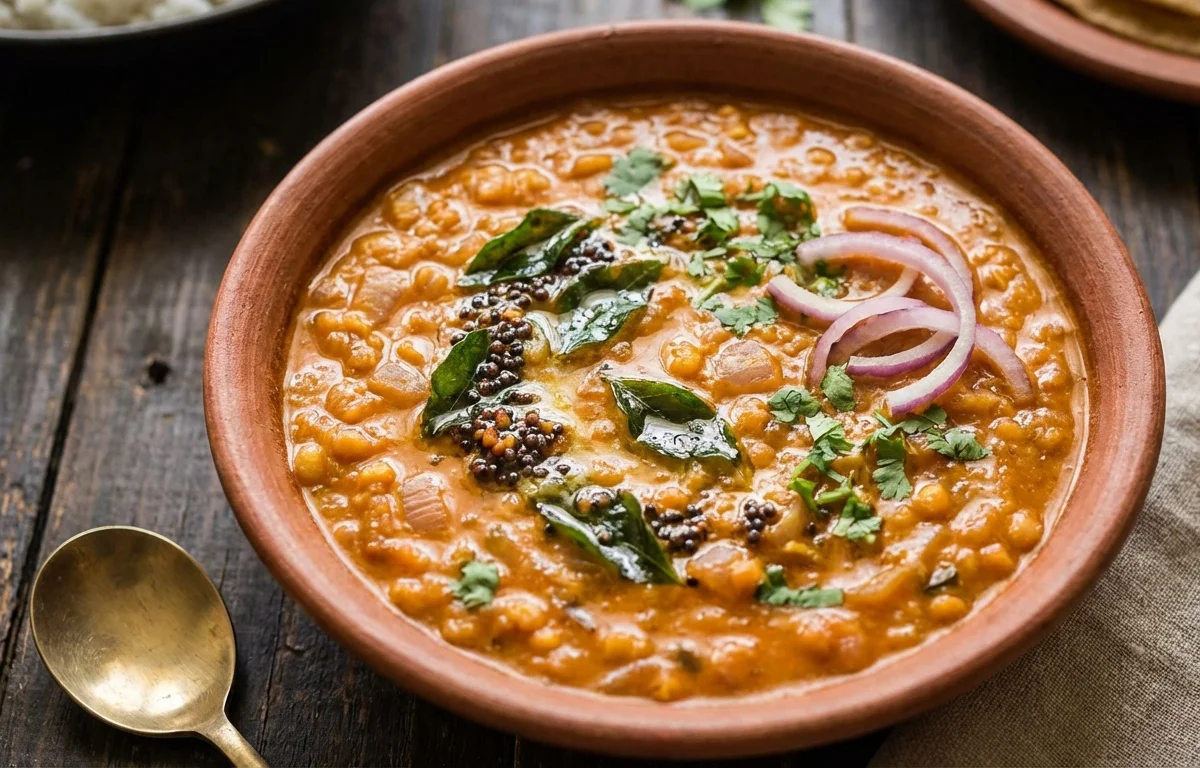
Moong Dal Gassi
A creamy and aromatic lentil curry from Mangalore, made with yellow moong dal, roasted spices, and a rich coconut paste. This comforting South Indian dish is perfect with steamed rice.
For 4 servings
Cook the Moong Dal
- Wash the moong dal thoroughly under running water. Soaking for 30 minutes is optional but recommended for faster cooking.
- In a pressure cooker, combine the rinsed dal, 2 cups of water, and 1/4 tsp of turmeric powder.
- Secure the lid and pressure cook on medium heat for 3-4 whistles, or for about 10 minutes. The dal should be soft but still hold its shape, not completely mushy.
- Allow the pressure to release naturally. Once safe, open the cooker and gently mash the dal with the back of a spoon. Set aside.
Prepare the Gassi Masala Paste
- Heat a small, dry pan over low heat. Add the dried red chilies, coriander seeds, cumin seeds, and fenugreek seeds.
- Dry roast for 2-3 minutes, stirring continuously, until they become fragrant and slightly darker. Be careful not to burn them.
- Remove the spices from the pan and let them cool completely.
- In a blender jar, combine the cooled roasted spices, fresh grated coconut, garlic cloves, tamarind, and the remaining 1/4 tsp of turmeric powder.
- Add 1/2 cup of water and blend to a very smooth, fine paste. Add a little more water if needed to facilitate grinding. Set this masala paste aside.
Cook the Gassi
- Heat 2 tbsp of coconut oil in a heavy-bottomed pot or kadai over medium heat.
- Add the finely chopped onion and sauté for 4-5 minutes until it turns soft and translucent.
- Add the chopped tomato and cook for another 5-6 minutes, stirring occasionally, until it breaks down and becomes pulpy.
- Add the prepared gassi masala paste to the pot. Sauté for 6-8 minutes, stirring frequently, until the raw aroma disappears and you see oil separating from the edges of the masala.
- Pour in the cooked moong dal and mix everything well to combine.
- Add 1 cup of water (or more, depending on your desired consistency), and salt to taste. Stir thoroughly.
- Bring the curry to a gentle boil, then reduce the heat to low, cover, and let it simmer for 8-10 minutes. This allows all the flavors to meld together beautifully.
Prepare and Add Tempering (Tadka)
- While the gassi is simmering, prepare the tempering. Heat 1 tbsp of ghee in a small pan (tadka pan) over medium-high heat.
- Once the ghee is hot, add the mustard seeds. Wait for them to splutter, which should take about 30 seconds.
- Immediately add the curry leaves (be careful, they will splutter) and the hing. Sauté for another 10-15 seconds until the leaves are crisp.
- Pour this sizzling tempering directly over the simmering moong dal gassi. Stir gently to incorporate.
Garnish and Serve
- Turn off the heat. Garnish the gassi with freshly chopped coriander leaves.
- Let it rest for 5 minutes before serving. Serve hot with steamed rice, neer dosa, or chapati.
What to keep in mind.
5 tips from the recipe — small details that make a real difference to the final dish.
- 1For the most authentic flavor, use fresh grated coconut. If unavailable, you can use frozen grated coconut after thawing it completely.
- 2Roast the spices on a low flame to draw out their essential oils without burning them, which would result in a bitter taste.
- 3The consistency of the gassi is a personal preference. Add more or less water during the simmering stage to make it thicker or thinner.
- 4Byadgi chilies are traditionally used for their vibrant red color and mild heat. If you prefer a spicier curry, add a few spicier chili varieties like Guntur.
- 5Don't skip the final tempering (tadka) as it adds a crucial layer of aroma and flavor to the dish.
Adapt it for your goals.
Vegan Version
To make this recipe completely vegan, simply substitute the ghee in the tempering with coconut oil or another vegetable oil.
Add VegetablesAdd Vegetables
You can add vegetables like cubed pumpkin, drumsticks, or Mangalorean cucumber. Add them along with the onions and tomatoes and cook until tender before adding the masala paste.
Different LentilsDifferent Lentils
While moong dal is traditional, you can also make this gassi with toor dal (split pigeon peas) or a mix of moong and toor dal. Adjust cooking times accordingly.
Creamier TextureCreamier Texture
For an even richer and creamier gassi, you can use 1/4 cup of thick coconut milk, added at the end of the simmering process. Do not boil after adding coconut milk.
Why this is on our healthy list.
Rich in Plant-Based Protein
Moong dal is one of the best plant-based sources of protein, which is essential for muscle repair, cell generation, and overall body function.
Promotes Digestive Health
The high fiber content in moong dal aids in digestion and promotes regular bowel movements. Spices like cumin and hing (asafoetida) are known to reduce bloating and improve gut health.
Provides Healthy Fats
The use of fresh coconut and coconut oil provides medium-chain triglycerides (MCTs), a type of healthy fat that can provide energy and support metabolism.
Anti-inflammatory Properties
Turmeric, a key spice in this dish, contains curcumin, a powerful compound with potent anti-inflammatory and antioxidant effects that help combat cellular damage.
Frequently asked questions
Yes, Moong Dal Gassi is a very healthy dish. Moong dal is an excellent source of plant-based protein and dietary fiber. The spices used, like turmeric and cumin, have anti-inflammatory and digestive benefits. Using coconut oil and fresh coconut provides healthy fats.