
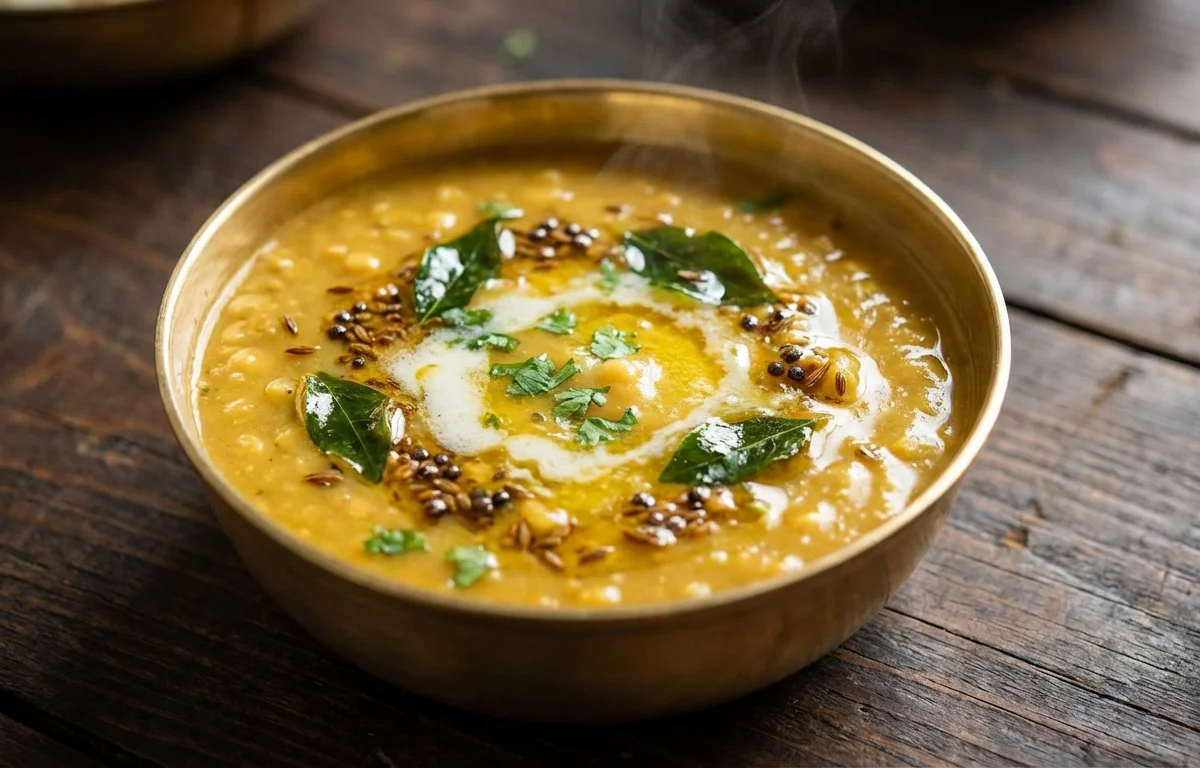
Dal Varaan
A simple and comforting Maharashtrian lentil soup made with split pigeon peas. This mild, soulful dal is seasoned with turmeric and hing, perfect for a light meal with steamed rice and a dollop of ghee.
For 4 servings
7 steps. 30 minutes total.
- 1
Step 1
- a.Rinse the toor dal under cool running water 3-4 times until the water runs clear. Soak the dal in 2 cups of water for at least 30 minutes. This step is crucial for a creamy texture and faster cooking.
- 2
Drain the soaking water
- a.Transfer the dal to a pressure cooker. Add 3 cups of fresh water, turmeric powder, and hing. Secure the lid and pressure cook on medium heat for 4-5 whistles, or for about 15-20 minutes until the dal is completely soft and mushy.
- 3
Allow the pressure to release naturally
- a.Open the cooker and whisk the dal vigorously with a wire whisk or use an immersion blender until it reaches a smooth, lump-free, and creamy consistency.
- 4
Place the cooker back on the stove over low heat
- a.Add salt and the optional jaggery. Pour in about 1 cup of hot water, or more, to adjust the consistency. Varaan should be thin and soupy. Stir well and let it simmer gently for 5-7 minutes, allowing the flavors to meld.
- 5
While the dal simmers, prepare the tempering (tadka)
- a.Heat ghee in a small pan (tadka pan) over medium heat. Once the ghee is hot, add the mustard seeds and wait for them to splutter completely.
- 6
Add the cumin seeds and curry leaves to the pan
- a.Be careful as the leaves may splutter. Sauté for about 20-30 seconds until the cumin seeds are fragrant and slightly browned.
- 7
Immediately pour the hot tempering over the simmering dal
- a.Mix well to incorporate the flavors. Garnish with freshly chopped coriander leaves and serve hot with steamed rice.
What to keep in mind.
6 tips from the recipe — small details that make a real difference to the final dish.
- 1Soaking the dal is key for a creamy texture and faster cooking time. Don't skip it.
- 2For an extra smooth dal, you can strain it through a fine-mesh sieve after mashing.
- 3The consistency of Dal Varaan is traditionally thinner than other dals, almost like a thick soup.
- 4Always use hot water to adjust the consistency of the dal, as cold water can alter the taste and texture.
- 5This dal thickens as it cools. Add a splash of hot water when reheating to restore its original consistency.
- 6Serve immediately with hot steamed rice and a spoonful of ghee for the classic 'Varan Bhaat' experience.
Adapt it for your goals.
Spicy
Add 1-2 slit green chilies along with the dal while pressure cooking for a mild heat.
TangyTangy
Add 1-2 pieces of dried kokum while simmering the dal, or squeeze a teaspoon of fresh lemon juice just before serving for a tangy flavor.
AromaticAromatic
For a festive version, add a pinch of Maharashtrian goda masala to the dal while it simmers.
With VegetablesWith Vegetables
Add a small chopped tomato or a handful of chopped spinach to the dal before pressure cooking for added nutrition.
Why this is on our healthy list.
Rich in Plant-Based Protein
Toor dal is an excellent source of vegetarian protein, which is essential for muscle repair, building tissues, and overall body function.
Aids Digestion
The combination of high fiber from lentils and the carminative properties of hing (asafoetida) and cumin seeds helps improve digestion and prevent bloating.
Good for Heart Health
This dal is low in saturated fat and cholesterol. The fiber in lentils can help lower blood cholesterol levels, contributing to better cardiovascular health.
Provides Sustained Energy
As a good source of complex carbohydrates and fiber, Dal Varaan provides a steady release of energy, keeping you full and energetic for longer.
Frequently asked questions
Yes, Dal Varaan is very healthy. It is rich in plant-based protein and dietary fiber from the lentils, which aids in digestion and promotes satiety. It is minimally spiced and cooked with healthy fats like ghee, making it a light, nutritious, and easily digestible meal.