
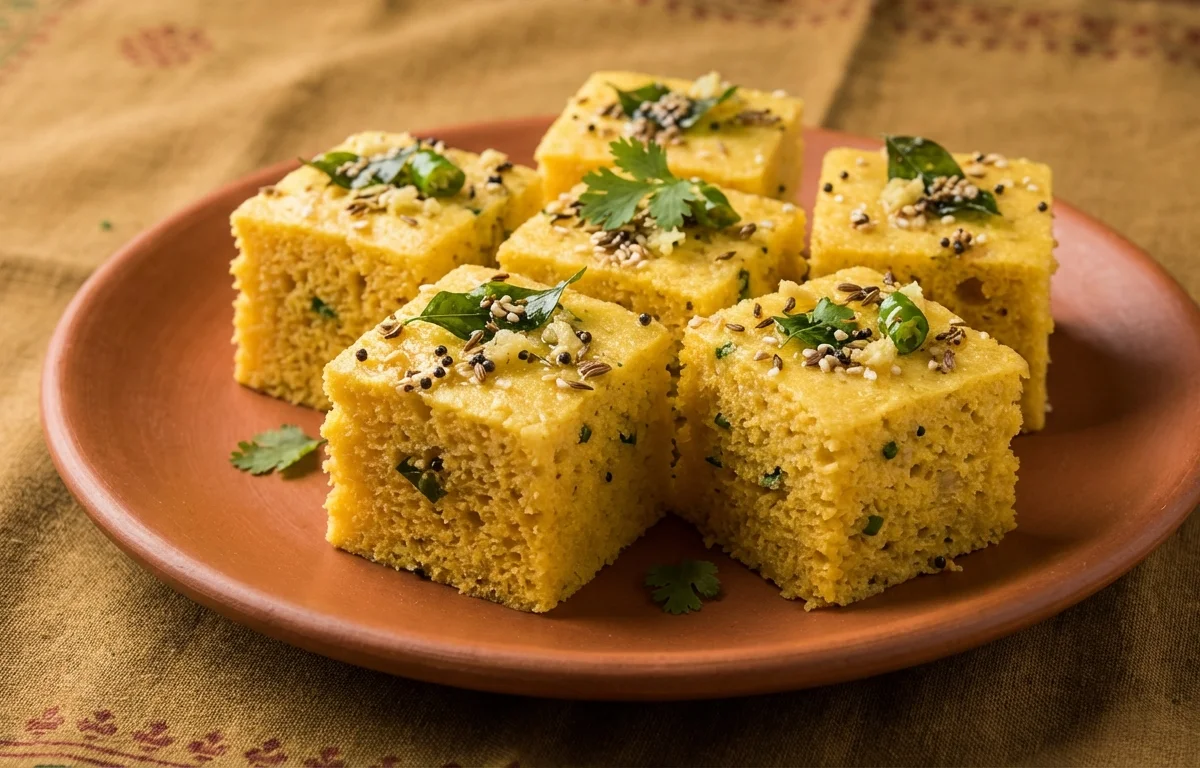
Makki ka Dhokla
A savory steamed cake from Rajasthan made with cornmeal and fresh fenugreek leaves. It's soft, spongy, and perfectly spiced, making for a delightful and healthy breakfast or snack.
For 4 servings
In a large mixing bowl, combine the coarse cornmeal, curd, chopped fenugreek leaves, grated ginger, green chili, turmeric powder, red chili powder, coriander powder, asafoetida, carom seeds, salt, sugar, and 2 tablespoons of oil. Mix everything well.
Gradually add water while mixing to form a thick, lump-free batter. The consistency should be similar to that of a thick pancake batter. Cover the bowl and let the batter rest for 20-30 minutes. This allows the cornmeal to absorb moisture and soften.
While the batter rests, prepare your steamer. Fill a large pot or steamer with 2 inches of water and place a stand inside. Bring the water to a rolling boil over medium-high heat. Meanwhile, grease a 7 or 8-inch round pan (thali) with oil.
Once the water is boiling, add the baking soda to the rested batter. Gently mix in one direction for about 30 seconds until the batter becomes light and frothy. Do not overmix. Immediately pour the batter into the greased pan.
Carefully place the pan on the stand in the steamer. Cover with a lid (wrap the lid in a kitchen towel to prevent condensation from dripping onto the dhokla) and steam on medium heat for 15-20 minutes. Insert a toothpick or knife into the center; if it comes out clean, the dhokla is cooked.
Turn off the heat and carefully remove the pan from the steamer. Let it cool for 5-10 minutes before cutting it into diamond or square-shaped pieces.
Prepare the tempering. Heat the remaining 2 tablespoons of oil in a small pan over medium heat. Add the mustard seeds and allow them to crackle. Then, add the cumin seeds, sesame seeds, and curry leaves. Sauté for 30 seconds until fragrant.
Immediately pour the hot tempering evenly over the cut dhokla pieces. Garnish with freshly chopped coriander leaves. Serve warm with green chutney or a cup of tea.
What to keep in mind.
6 tips from the recipe — small details that make a real difference to the final dish.
- 1Ensure the curd is slightly sour for the best tangy flavor in the dhokla.
- 2Do not overmix the batter after adding baking soda, as it will cause the dhokla to become dense instead of spongy.
- 3Steam on a consistent medium heat. Steaming on very high heat can make the dhokla hard.
- 4Let the dhokla cool for a few minutes before cutting. This helps in getting clean, neat pieces.
- 5If fresh methi is not available, you can substitute it with 3 tablespoons of kasuri methi (dried fenugreek leaves).
- 6The batter consistency is key. It should be thick enough to coat a spoon but still pourable. Adjust water accordingly.
Adapt it for your goals.
Ingredient Addition
For added nutrition and texture, mix in 1/4 cup of grated bottle gourd (lauki) or sweet corn kernels into the batter.
Flavor EnhancementFlavor Enhancement
Add a pinch of garam masala to the batter for extra warmth and aroma, or a tablespoon of lemon juice for more tanginess.
Serving SuggestionServing Suggestion
Serve with a side of Rajasthani garlic chutney (lehsun ki chutney) or sweet tamarind chutney for an authentic flavor combination.
Why this is on our healthy list.
Rich in Fiber
Cornmeal (makki ka atta) is a whole grain that provides a good amount of dietary fiber, which aids digestion, promotes a feeling of fullness, and helps maintain stable blood sugar levels.
Good for Bone Health
Fenugreek leaves (methi) are a source of Vitamin K and calcium, both of which are essential for maintaining strong and healthy bones.
Probiotic Benefits
The use of curd (yogurt) in the batter introduces beneficial probiotics, which support a healthy gut microbiome, improve digestion, and boost immunity.
Frequently asked questions
Yes, it's a healthy dish. It is steamed, not fried, making it low in oil. Cornmeal provides dietary fiber, and fenugreek leaves are rich in vitamins and minerals. The use of curd also adds probiotics, which are beneficial for gut health.