
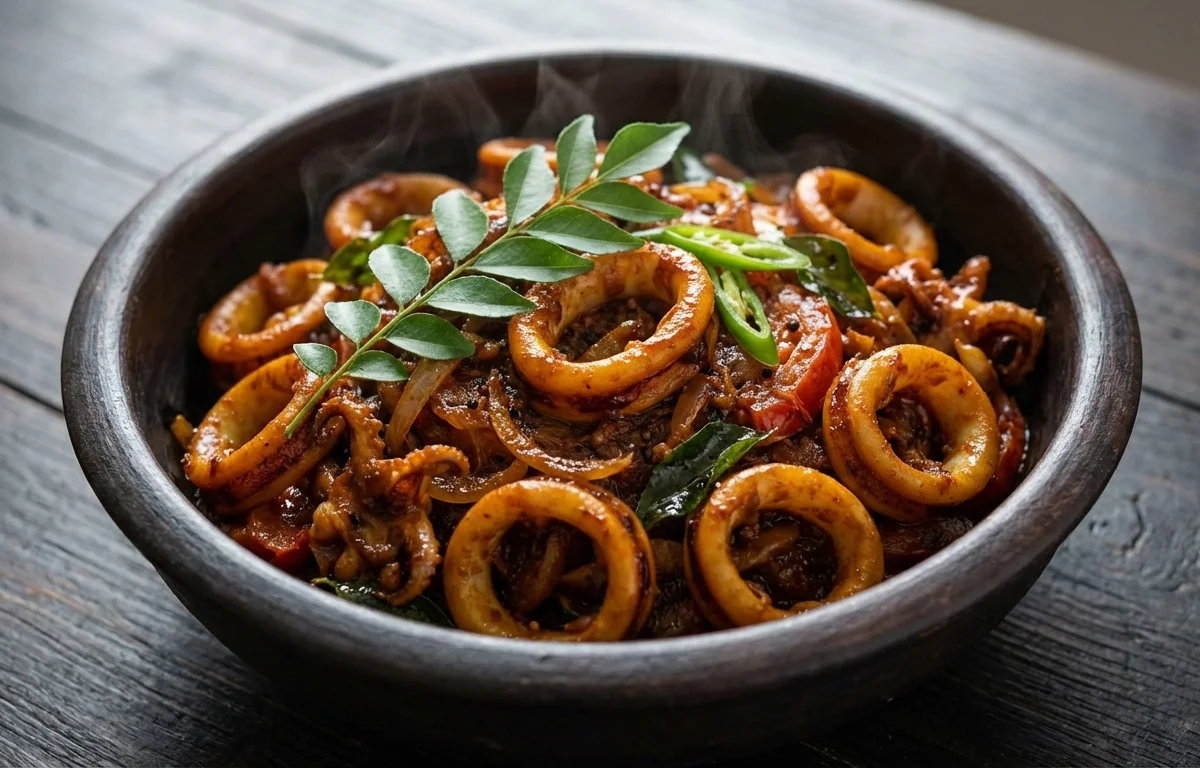
Koonthal Roast
Tender squid rings cooked in a fiery, aromatic blend of classic Kerala spices. This semi-dry roast, with its caramelized onions and rich masala, is a seafood lover's dream come true.
For 4 servings
Pressure Cook the Squid
- In a pressure cooker, combine the cleaned squid rings, 1/2 tsp of the turmeric powder, 1 tsp red chili powder, and 1/2 tsp of the salt.
- Add 1/4 cup of water. Secure the lid and pressure cook on high heat for 1 whistle (about 8-10 minutes).
- Turn off the heat and allow the pressure to release naturally. Do not overcook, as the squid will cook further. Set aside, reserving the cooked squid and any liquid.
Prepare the Masala Base
- Heat coconut oil in a wide, heavy-bottomed pan (kadai) over medium heat. Once hot, add the mustard seeds and let them splutter.
- Add the sliced onions, slit green chilies, and one sprig of curry leaves. Sauté, stirring occasionally, for 12-15 minutes until the onions are deeply golden brown and caramelized. This step is crucial for the rich color and flavor of the roast.
- Add the ginger-garlic paste and sauté for 2 minutes until the raw aroma disappears.
- Add the chopped tomatoes and cook for 4-5 minutes, mashing them with the back of the spoon, until they turn soft and oil begins to separate.
Roast the Spices and Squid
- Reduce the heat to low. Add the Kashmiri red chili powder, coriander powder, the remaining 1/2 tsp turmeric powder, garam masala, and black pepper powder.
- Stir continuously for 1 minute until the spices are fragrant. Be careful not to burn them.
- Add the cooked squid along with its reserved cooking liquid and the remaining 1 tsp of salt. Mix thoroughly to coat the squid with the masala.
- Increase the heat to medium-low and cook uncovered for 10-15 minutes, stirring every few minutes.
Final Roasting and Garnish
- Continue to roast until all the liquid has evaporated and the masala becomes a thick, dark paste that clings tightly to the squid rings.
- The roast is done when you see oil glistening and separating from the sides of the masala.
- Garnish with the remaining sprig of fresh curry leaves. Serve hot with Kerala parotta, appam, or steamed rice.
What to keep in mind.
6 tips from the recipe — small details that make a real difference to the final dish.
- 1Do not overcook the squid initially; it cooks very fast and will become tough. It will continue to cook and tenderize in the masala.
- 2The secret to a perfect Kerala roast is patiently sautéing the onions until they are deep golden brown. This develops a rich, sweet flavor base.
- 3Using coconut oil is highly recommended for the authentic taste and aroma of Kerala cuisine.
- 4For a deeper flavor, you can marinate the cleaned squid with the turmeric, chili powder, and salt for 15-20 minutes before pressure cooking.
- 5To clean squid easily, pull the head and tentacles away from the body, remove the clear inner quill (cartilage), and peel off the spotty outer skin under running water.
- 6If using frozen squid, ensure it is completely thawed before cooking for even texture.
Adapt it for your goals.
With Coconut Slivers
Add 1/4 cup of thin coconut slivers (thenga kothu) along with the onions for a delightful crunch and sweetness.
Creamier VersionCreamier Version
For a slightly richer, less dry finish, add 2-3 tablespoons of thick coconut milk at the very end of cooking and stir for a minute before turning off the heat.
With PotatoesWith Potatoes
Add one small potato, peeled and diced, along with the squid in the pressure cooker to make the dish more substantial.
Why this is on our healthy list.
Rich in Lean Protein
Squid is an excellent source of high-quality protein, which is essential for building and repairing tissues, making enzymes and hormones, and supporting muscle mass.
Boosts Immunity
The blend of spices like turmeric (curcumin), black pepper, and ginger contains powerful anti-inflammatory and antioxidant compounds that help strengthen the immune system and fight cellular damage.
Source of Essential Minerals
This dish provides key minerals like selenium, a potent antioxidant that protects cells from damage, and copper, which is vital for iron metabolism and energy production.
Frequently asked questions
One serving of Koonthal Roast contains approximately 250-280 calories, depending on the amount of oil used and the size of the squid.