
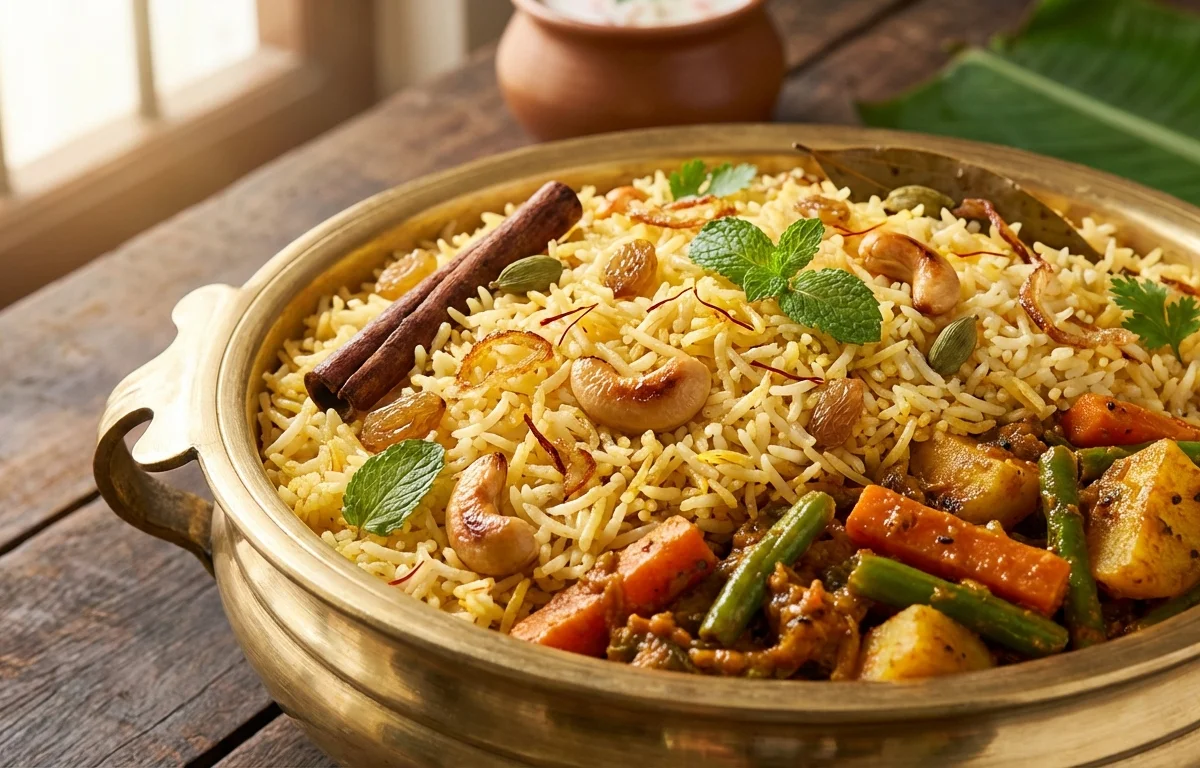
Kerala Vegetable Biryani
A fragrant one-pot meal from the Malabar coast, this biryani features short-grain Kaima rice, mixed vegetables, and a unique blend of spices cooked with coconut milk. A true taste of Kerala.
For 4 servings
5 steps. 45 minutes total.
- 1
Step 1
- a.Prepare Rice and Garnishes
- b.Rinse the Kaima rice under cold water until the water runs clear. Soak it in fresh water for 30 minutes, then drain completely and set aside.
- c.Heat 1 cup of vegetable oil in a wide pan over medium heat. Add the thinly sliced large onion and fry for 10-12 minutes, stirring occasionally, until deep golden brown and crisp. Remove with a slotted spoon and drain on paper towels. This is the 'bista'.
- d.In the same oil, fry the cashew nuts until golden, then remove. Next, fry the raisins until they puff up, which takes only a few seconds. Remove and set aside with the fried onions.
- 2
Step 2
- a.Parboil the Rice
- b.In a large pot, bring 4 cups of water to a rolling boil. Add the whole spices (cinnamon, cloves, cardamom, star anise) and 1 tsp of salt.
- c.Carefully add the drained rice to the boiling water. Cook for 5-7 minutes until the rice is 80% cooked. The grain should be firm and have a slight bite.
- d.Immediately drain the rice in a colander to stop the cooking process. Gently spread it on a large plate or tray to cool slightly.
- 3
Step 3
- a.Cook the Vegetable Masala
- b.In a heavy-bottomed pot (biryani handi), heat 3 tbsp of coconut oil and 1 tbsp of ghee over medium heat.
- c.Add the fennel seeds and let them sizzle. Add the 2 sliced medium onions and sauté for 6-8 minutes until they are soft and translucent.
- d.Add the ginger-garlic paste and slit green chilies. Sauté for 2 minutes until the raw aroma disappears.
- e.Lower the heat and add the spice powders: turmeric, red chili, coriander, and garam masala. Stir for 30 seconds until fragrant.
- f.Add the chopped tomatoes and cook for 4-5 minutes until they break down and become mushy.
- g.Add the mixed vegetables, green peas, and 1 tsp of salt. Stir well to coat everything in the masala.
- h.Pour in the thick coconut milk and 1/2 cup of water. Bring to a simmer, then cover and cook for 8-10 minutes until the vegetables are tender but still hold their shape.
- 4
Step 4
- a.Layer and 'Dum' Cook the Biryani
- b.Turn the heat to the lowest possible setting. Ensure there is a thin layer of gravy at the bottom of the pot with the vegetables.
- c.Spread half of the parboiled rice evenly over the vegetable masala. Sprinkle with half of the chopped mint, coriander leaves, and fried onions (bista).
- d.Layer the remaining rice on top. Garnish with the rest of the mint, coriander, bista, fried cashews, and raisins.
- e.Drizzle the remaining 1 tbsp of ghee and the lemon juice over the top layer.
- f.Cover the pot with a tight-fitting lid. To create a perfect seal, you can place a clean kitchen towel under the lid or seal the edge with atta dough.
- g.Cook on the lowest heat for 15 minutes. This process is called 'dum'. Alternatively, place the pot on a hot tawa (griddle) over low heat to prevent the bottom from scorching.
- h.Turn off the heat and let the biryani rest, still covered, for at least 15 minutes. This allows the flavors to meld.
- 5
Step 5
- a.Serve
- b.Open the lid and enjoy the aroma. Gently fluff the biryani from the sides using a fork or a flat spatula, mixing the layers slightly as you serve.
- c.Serve hot with a side of cooling raita, crispy papad, and a tangy pickle.
What to keep in mind.
5 tips from the recipe — small details that make a real difference to the final dish.
- 1Using Kaima or Jeerakasala rice is crucial for the authentic Malabar taste and aroma.
- 2Do not overcook the rice during the parboiling stage; it will finish cooking during the 'dum' process.
- 3Fry the onions for the 'bista' on medium-low heat to ensure they brown evenly without burning.
- 4A heavy-bottomed pot is essential for dum cooking. Placing it on a tawa (flat griddle) provides extra protection against burning.
- 5Letting the biryani rest for 15-20 minutes after cooking is a critical step for the flavors to settle and intensify.
Adapt it for your goals.
Protein Addition
Add 200g of cubed paneer or mushrooms along with the vegetables for a richer biryani. Sauté them lightly before adding to the masala.
Vegan VersionVegan Version
To make this biryani vegan, simply replace the 2 tbsp of ghee with an equal amount of coconut oil or other vegetable oil.
Rice VariationRice Variation
If Kaima rice is unavailable, you can use Basmati rice. Adjust the soaking and cooking time as Basmati cooks faster.
Spicier VersionSpicier Version
Increase the number of green chilies to 5-6 or add an extra 1/2 tsp of red chili powder for a more fiery biryani.
Why this is on our healthy list.
Rich in Fiber
Loaded with a variety of vegetables like carrots, beans, and peas, this biryani is a good source of dietary fiber, which aids digestion and promotes gut health.
Anti-inflammatory Properties
The spices used, such as turmeric (containing curcumin), ginger, and cloves, are known for their powerful anti-inflammatory and antioxidant effects.
Source of Plant-Based Energy
The combination of rice and vegetables provides complex carbohydrates, offering a sustained release of energy to keep you active throughout the day.
Contains Healthy Fats
Coconut milk and cashew nuts provide medium-chain triglycerides (MCTs) and monounsaturated fats, which are beneficial for heart health and brain function when consumed in moderation.
Frequently asked questions
Yes, it can be a balanced meal. It's packed with vegetables, providing fiber and vitamins. The spices used, like turmeric and fennel, have anti-inflammatory properties. However, it contains ghee and coconut milk, so it should be consumed in moderation as part of a balanced diet.