
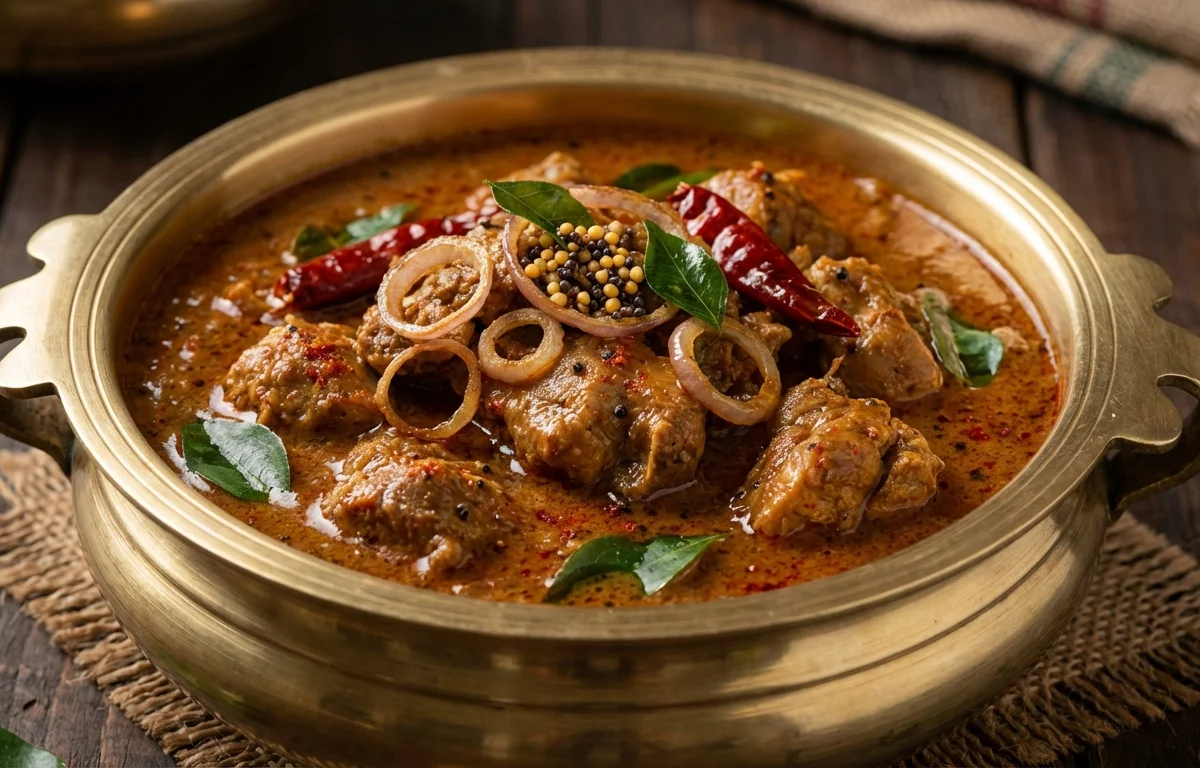
Kerala Rabbit Curry
Tender rabbit pieces simmered in a fragrant, spicy coconut milk gravy. This traditional Kerala delicacy, known as Muyal Curry, is rich with the flavors of black pepper, curry leaves, and aromatic spices, perfect with appam or rice.
For 4 servings
7 steps. 50 minutes total.
- 1
Step 1
- a.Marinate the Rabbit
- b.In a large bowl, combine the rabbit pieces with 1/2 tsp turmeric powder, 1 tsp red chili powder, 1 tsp black pepper powder, 1 tsp salt, and 1 tbsp white vinegar.
- c.Mix thoroughly to ensure all pieces are evenly coated.
- d.Cover and set aside to marinate for at least 20 minutes at room temperature.
- 2
Step 2
- a.Sauté Aromatics
- b.Heat 3 tbsp of coconut oil in a pressure cooker or a heavy-bottomed pan over medium heat.
- c.Add the sliced onions and sauté for 8-10 minutes until they turn soft and golden brown.
- d.Add the ginger-garlic paste, slit green chilies, and 2 sprigs of curry leaves. Sauté for another 2 minutes until the raw aroma disappears.
- 3
Step 3
- a.Cook the Masala
- b.Add the chopped tomatoes and cook for 5-6 minutes until they become soft and mushy.
- c.Reduce the heat to low. Add the remaining 1/2 tsp turmeric powder, Kashmiri red chili powder, coriander powder, garam masala, and the remaining 1/2 tsp black pepper powder.
- d.Stir continuously for 2 minutes until the spices are fragrant and oil begins to separate from the masala.
- 4
Step 4
- a.Pressure Cook the Rabbit
- b.Add the marinated rabbit pieces to the cooker. Increase the heat to high and sauté for 4-5 minutes, searing the meat on all sides to lock in the juices.
- c.Pour in the thin coconut milk and add the remaining 1/2 tsp salt. Stir well, scraping any bits from the bottom of the cooker.
- d.Secure the lid and pressure cook on medium heat for 4-5 whistles (approximately 15-20 minutes) until the rabbit is tender.
- 5
Step 5
- a.Finish the Curry
- b.Allow the pressure to release naturally. Open the cooker and check the rabbit for tenderness.
- c.Place the cooker back on low heat. Gently stir in the thick coconut milk.
- d.Simmer for 2-3 minutes, just until heated through. Do not allow it to boil, as the thick coconut milk may curdle. Turn off the heat.
- 6
Step 6
- a.Prepare the Tempering (Tadka)
- b.In a small separate pan, heat the remaining 1 tbsp of coconut oil over medium heat.
- c.Add the mustard seeds and wait for them to splutter.
- d.Add the sliced shallots and fry until they are golden brown and crisp.
- e.Finally, add the broken dry red chilies and the last sprig of curry leaves. Sauté for 30 seconds until fragrant, then remove from heat.
- 7
Step 7
- a.Combine and Serve
- b.Pour the hot tempering over the prepared rabbit curry.
- c.Stir gently to combine. Cover and let the curry rest for at least 15 minutes to allow the flavors to meld.
- d.Serve hot with appam, idiyappam, porotta, or steamed rice.
What to keep in mind.
6 tips from the recipe — small details that make a real difference to the final dish.
- 1Using fresh, virgin coconut oil is crucial for achieving the authentic taste of Kerala cuisine.
- 2Never boil the curry after adding the thick coconut milk; it can split and ruin the gravy's texture. Gentle simmering is key.
- 3Searing the rabbit before pressure cooking creates a flavorful crust and keeps the meat juicy.
- 4The final tempering (tadka) is not optional; it adds a significant layer of aroma and flavor that defines the dish.
- 5For a deeper red color without excessive heat, rely solely on Kashmiri red chili powder.
- 6This curry tastes even better the next day as the flavors fully mature and deepen overnight.
Adapt it for your goals.
Protein Swap
This curry base works wonderfully with chicken (adjust cooking time to 3 whistles) or mutton (adjust cooking time to 6-7 whistles).
Vegetarian VersionVegetarian Version
Replace rabbit with 500g of firm mushrooms or 400g of canned green jackfruit. Sauté them with the masala before adding coconut milk and simmer until cooked, skipping the pressure cooking step.
Creamier GravyCreamier Gravy
For a richer, thicker gravy, add a paste of 10-12 soaked and ground cashews along with the thick coconut milk in the final step.
Why this is on our healthy list.
Excellent Source of Lean Protein
Rabbit meat is a high-quality lean protein, which is essential for muscle repair, growth, and overall body function. It's also lower in fat and cholesterol than many other popular meats.
Rich in Anti-inflammatory Spices
The curry is loaded with spices like turmeric (containing curcumin), ginger, and black pepper, which are known for their potent anti-inflammatory and antioxidant properties, helping to combat oxidative stress.
Contains Healthy Fats
Coconut oil and coconut milk are sources of Medium-Chain Triglycerides (MCTs), a type of fat that is more easily digested and converted into energy by the body compared to long-chain fatty acids.
Frequently asked questions
Yes, it can be part of a healthy diet. Rabbit meat is a very lean source of protein, low in fat and cholesterol compared to other meats. The use of spices like turmeric and black pepper offers anti-inflammatory benefits. However, it is rich due to coconut milk, so moderation is key.