
Dapate
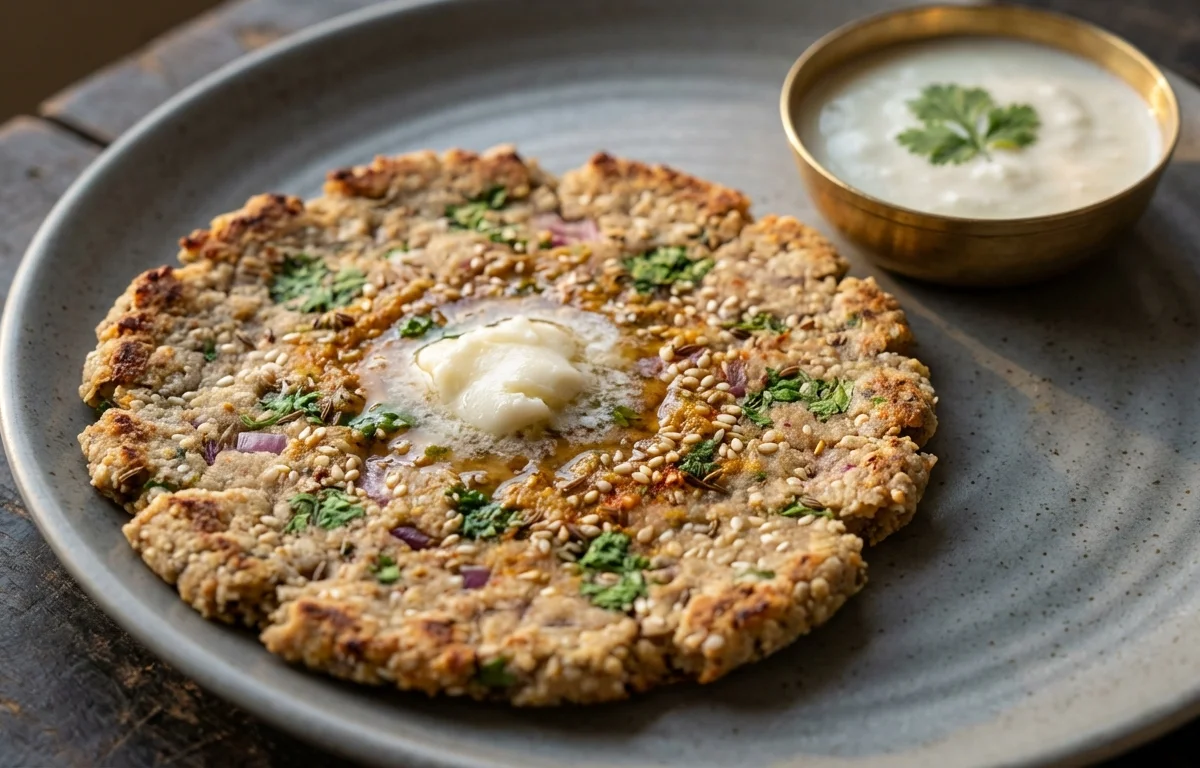
A wholesome and savory multigrain flatbread from Maharashtra, spiced with onions, cilantro, and traditional spices. Patting the dough by hand gives it a unique rustic texture, perfect with a dollop of butter or yogurt.
For 4 servings
Prepare the Flour Mix
- In a large mixing bowl, combine the jowar flour, bajra flour, besan, and atta.
- Add the turmeric powder, red chili powder, cumin seeds, ajwain, and salt. Whisk everything together to ensure the flours and spices are evenly distributed.
Make and Rest the Dough
- To the flour mixture, add the finely chopped onion, coriander leaves, green chilies, and ginger-garlic paste. Mix well.
- Gradually add warm water, a little at a time, and knead to form a soft, pliable dough. The dough should be softer than chapati dough but not sticky.
- Cover the dough with a damp cloth and let it rest for 15 minutes. This allows the flours to hydrate properly.
Shape the Dapate
- Divide the rested dough into 8 equal-sized balls. Keep a small bowl of water nearby.
- Place a piece of parchment paper, a plastic sheet, or a clean, damp cotton cloth on a flat surface.
- Take one dough ball, place it in the center of the sheet, and flatten it slightly. Dip your fingers in water to prevent sticking.
- Gently pat the dough outwards with your fingertips, moving in a circular motion to form a thin disc about 5-6 inches in diameter.
- Make a small hole in the center of the dapate with your finger. This helps it cook evenly from the inside.
Cook the Dapate
- Heat a tawa (griddle) over medium heat. Once hot, carefully lift the sheet with the dapate and place it dough-side down onto the tawa.
- Gently peel back the sheet. Drizzle about 1/2 teaspoon of oil around the edges and in the center hole.
- Cook for 2-3 minutes on the first side, until the base is firm and has golden-brown spots.
- Flip the dapate using a spatula. Drizzle another 1/2 teaspoon of oil and cook for an additional 2-3 minutes until the other side is also cooked and has brown spots.
- Press gently with the spatula to ensure even cooking.
Serve
- Remove the cooked dapate from the tawa and repeat the process for the remaining dough balls.
- Serve the Dapate immediately while hot with a dollop of white butter (loni), thick yogurt, or your favorite pickle.
What to keep in mind.
5 tips from the recipe — small details that make a real difference to the final dish.
- 1Using warm water is crucial for a soft dough, as it helps hydrate the gluten-free flours like jowar and bajra.
- 2Do not let the dough rest for too long, as the onions will release water and make it sticky and difficult to handle.
- 3Patting on a damp cloth is a traditional method that makes it easier to transfer the dapate to the tawa.
- 4Keep your fingers consistently wet while patting to achieve a thin, even circle without the dough sticking.
- 5The hole in the center is a classic technique that allows steam to escape and oil to penetrate, ensuring the dapate cooks through.
Adapt it for your goals.
Add Vegetables
Incorporate finely grated vegetables like cucumber (squeeze out excess water), carrots, or bottle gourd (dudhi) into the dough for added nutrition and moisture.
Add GreensAdd Greens
Mix in finely chopped fenugreek leaves (methi) or spinach (palak) for a different flavor profile and extra vitamins.
Add SeedsAdd Seeds
Add 1-2 tablespoons of white sesame seeds (til) to the dough for a nutty flavor and a pleasant crunch.
Flour VariationsFlour Variations
You can experiment with other flours like ragi (finger millet) flour or rice flour in small quantities to alter the texture and nutritional value.
Why this is on our healthy list.
Rich in Dietary Fiber
The combination of jowar, bajra, and whole wheat flour makes this flatbread high in dietary fiber, which aids digestion, prevents constipation, and promotes a feeling of fullness.
Provides Sustained Energy
Made from complex carbohydrates, Dapate provides a slow and steady release of energy, making it an excellent meal to keep you energized for longer periods without causing sharp spikes in blood sugar.
Packed with Nutrients
This multigrain flatbread is a good source of essential minerals like magnesium, iron, and phosphorus, as well as B-vitamins, which are vital for energy metabolism and overall health.
Naturally Gluten-Conscious
With jowar and bajra as primary flours, Dapate is lower in gluten than traditional wheat rotis. This can be beneficial for those looking to reduce their gluten intake.
Frequently asked questions
One serving of two Dapate contains approximately 400-420 calories, primarily from the multigrain flours and the oil used for cooking. The exact count can vary based on the size and thickness.