
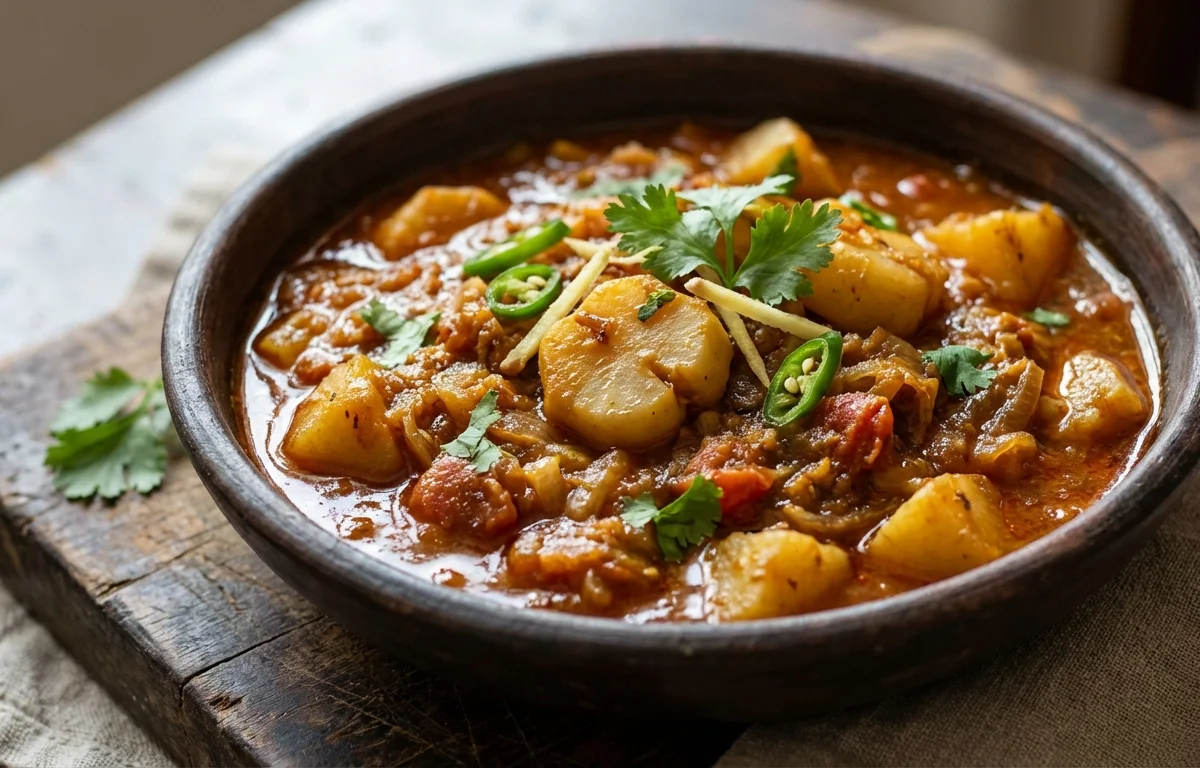
Singhare Ji Bhaji
A classic Sindhi curry featuring the unique crunch of water chestnuts and tender potatoes in a tangy tomato-based gravy. This flavorful dish is a delightful change from everyday vegetable curries and pairs perfectly with hot rotis.
For 4 servings
Prepare the Vegetables
- Wash the fresh water chestnuts thoroughly. Use a small sharp knife to peel the tough outer skin, then cut them into halves or quarters.
- Peel the potatoes and dice them into uniform 1-inch cubes. Keep the prepared vegetables aside.
Create the Masala Base
- Heat oil in a pressure cooker over medium heat. Once hot, add the cumin seeds and allow them to splutter for about 30 seconds.
- Add the finely chopped onions and sauté for 6-7 minutes, until they turn soft and golden brown.
- Stir in the ginger-garlic paste and slit green chilies. Sauté for another minute until the raw aroma disappears.
- Pour in the tomato puree. Cook for 5-6 minutes, stirring occasionally, until the masala thickens and you see oil separating from the edges.
Add Spices and Vegetables
- Add the turmeric powder, red chili powder, coriander powder, and salt to the cooker. Mix well and cook the spices for 1 minute.
- Add the prepared water chestnuts and potato cubes. Stir gently to coat them evenly with the masala and sauté for 2-3 minutes.
- Pour in 1.5 cups of water and give everything a final stir to combine.
Pressure Cook the Curry
- Secure the lid of the pressure cooker. Cook on medium-high heat for 3-4 whistles, which should take about 10-12 minutes.
- Turn off the heat and let the pressure release naturally. This will take about 10-15 minutes and helps the flavors meld.
Finish and Serve
- Once the pressure has settled, carefully open the cooker. Check if the potatoes are tender.
- If the gravy is too thin for your liking, simmer the curry without the lid for a few more minutes to thicken it.
- Stir in the garam masala and amchur powder for a final burst of flavor and tang.
- Garnish with freshly chopped coriander leaves and serve hot with roti, puri, or steamed rice.
What to keep in mind.
5 tips from the recipe — small details that make a real difference to the final dish.
- 1For the best texture, use fresh, firm water chestnuts. Avoid any that are soft or shriveled.
- 2The key to a flavorful gravy is to sauté the onion-tomato masala until oil separates from it. Don't rush this step.
- 3Be careful not to overcook the curry, as water chestnuts can lose their signature crunch.
- 4If you don't have a pressure cooker, simmer the curry in a covered heavy-bottomed pot for 25-30 minutes until the potatoes are cooked through.
- 5Adjust the amount of water to achieve your desired gravy consistency. Add less for a thicker curry and more for a thinner one.
Adapt it for your goals.
Creamier Gravy
For a richer, creamier texture, add 2 tablespoons of cashew paste or fresh cream along with the garam masala at the end.
No Onion/Garlic VersionNo Onion/Garlic Version
To make a Satvik version, omit the onions and ginger-garlic paste. Start by tempering cumin seeds and a pinch of asafoetida (hing) in oil, then proceed with the tomato puree.
Add More VegetablesAdd More Vegetables
Incorporate 1/2 cup of green peas or diced carrots along with the potatoes for added nutrition and color.
Spicier KickSpicier Kick
Increase the number of green chilies or add 1/4 teaspoon of black pepper powder along with the other spices for extra heat.
Why this is on our healthy list.
Rich in Potassium
Both water chestnuts and potatoes are excellent sources of potassium, an essential mineral that helps regulate blood pressure and fluid balance in the body.
Good Source of Dietary Fiber
The vegetables in this curry provide a good amount of dietary fiber, which aids in digestion, promotes gut health, and helps you feel full and satisfied.
Contains Antioxidants
This dish is rich in antioxidants from tomatoes (lycopene), onions, ginger, garlic, and spices like turmeric, which help combat oxidative stress in the body.
Naturally Gluten-Free and Vegan
This recipe is inherently gluten-free and vegan, making it a suitable and delicious option for individuals with these dietary preferences.
Frequently asked questions
One serving of Singhare Ji Bhaji contains approximately 320-340 calories, making it a moderately caloric dish suitable for a main meal. The calories primarily come from potatoes, water chestnuts, and oil.