
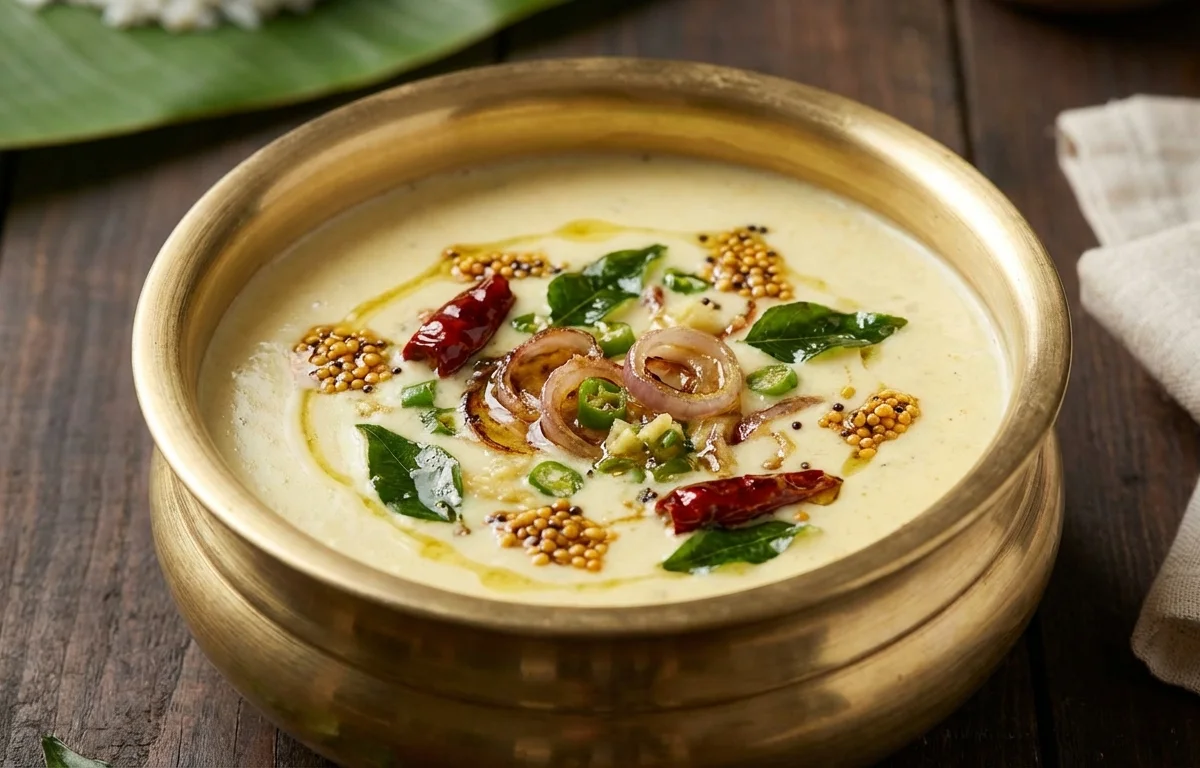
Moru Curry
A light and tangy yogurt-based curry from Kerala, delicately spiced with a coconut-cumin paste. This comforting South Indian classic is quick to make and pairs perfectly with steamed rice.
For 4 servings
6 steps. 10 minutes total.
- 1
Prepare the coconut paste
- a.In a small blender, combine the grated coconut, green chilies, chopped ginger, and cumin seeds. Add 3-4 tablespoons of water and grind to a very smooth, fine paste. Set aside.
- 2
Prepare the yogurt base
- a.In a mixing bowl, add the curd, turmeric powder, and salt. Whisk thoroughly until it is completely smooth and free of lumps. Stir in 1 cup of water to achieve a thin, buttermilk-like consistency.
- 3
Cook the coconut paste
- a.Transfer the ground coconut paste to a medium saucepan or a traditional 'manchatti' (earthen pot). Cook on low-medium heat for 2-3 minutes, stirring constantly, until the raw aroma of the coconut and spices disappears.
- 4
Combine and heat the curry
- a.Reduce the heat to the absolute lowest setting. Pour the whisked yogurt mixture into the saucepan with the cooked paste. Stir continuously and gently heat for 3-4 minutes. The curry should become warm and start to steam, but it must NOT boil. Boiling will cause the yogurt to curdle. Once warm, remove from heat.
- 5
Prepare the tempering (tadka)
- a.In a small pan, heat the coconut oil over medium heat. Add the mustard seeds and wait for them to splutter completely. Add the fenugreek seeds and broken dried red chilies, and sauté for 20-30 seconds until fragrant. Add the sliced shallots and cook until they turn a light golden brown. Finally, add the curry leaves and let them crisp up for a few seconds.
- 6
Finish and serve
- a.Immediately pour the hot tempering over the prepared moru curry. Mix gently. Let it rest for 5 minutes for the flavors to meld. Serve warm with steamed rice.
What to keep in mind.
5 tips from the recipe — small details that make a real difference to the final dish.
- 1The most crucial step is to never boil the curry after adding yogurt. Keep the heat on the lowest setting and stir constantly to prevent curdling.
- 2Using slightly sour, full-fat yogurt provides the best authentic tangy flavor and creamy texture.
- 3For the most authentic Kerala taste, do not substitute coconut oil for the tempering; its flavor is key to the dish.
- 4Ensure the coconut paste is ground very finely for a smooth, non-gritty curry.
- 5If your yogurt is not sour, you can leave it out at room temperature for a couple of hours before using.
Adapt it for your goals.
Vegetable Moru Curry
Add cooked vegetables like ash gourd (kumbalanga), winter melon, taro root (chembu), or pumpkin to the curry before adding the yogurt. This makes it a more substantial dish.
Moru KachiyathuMoru Kachiyathu
For a quicker, no-grind version, skip the coconut paste. Whisk turmeric powder, chili powder, and salt with the yogurt and heat gently. Prepare the tempering as usual. This is a simpler but equally delicious variant.
Garlic FlavoredGarlic Flavored
Add 2-3 cloves of garlic along with the ginger while grinding the coconut paste for a pungent and aromatic twist.
Why this is on our healthy list.
Promotes Gut Health
The primary ingredient, yogurt (curd), is a natural probiotic that introduces beneficial bacteria to the gut, aiding digestion and improving overall gut health.
Natural Body Coolant
Yogurt-based dishes like Moru Curry are known for their cooling properties, making them an excellent choice for meals in hot weather to help regulate body temperature.
Anti-Inflammatory Properties
Spices like turmeric (containing curcumin) and ginger are powerful natural anti-inflammatory agents that can help reduce inflammation in the body.
Source of Healthy Fats
The use of coconut and coconut oil provides medium-chain triglycerides (MCTs), a type of healthy fat that is easily digested and serves as a quick source of energy.
Frequently asked questions
One serving of Moru Curry (approximately 1 cup or 190g) contains an estimated 215-230 calories, primarily from the coconut, yogurt, and coconut oil.