
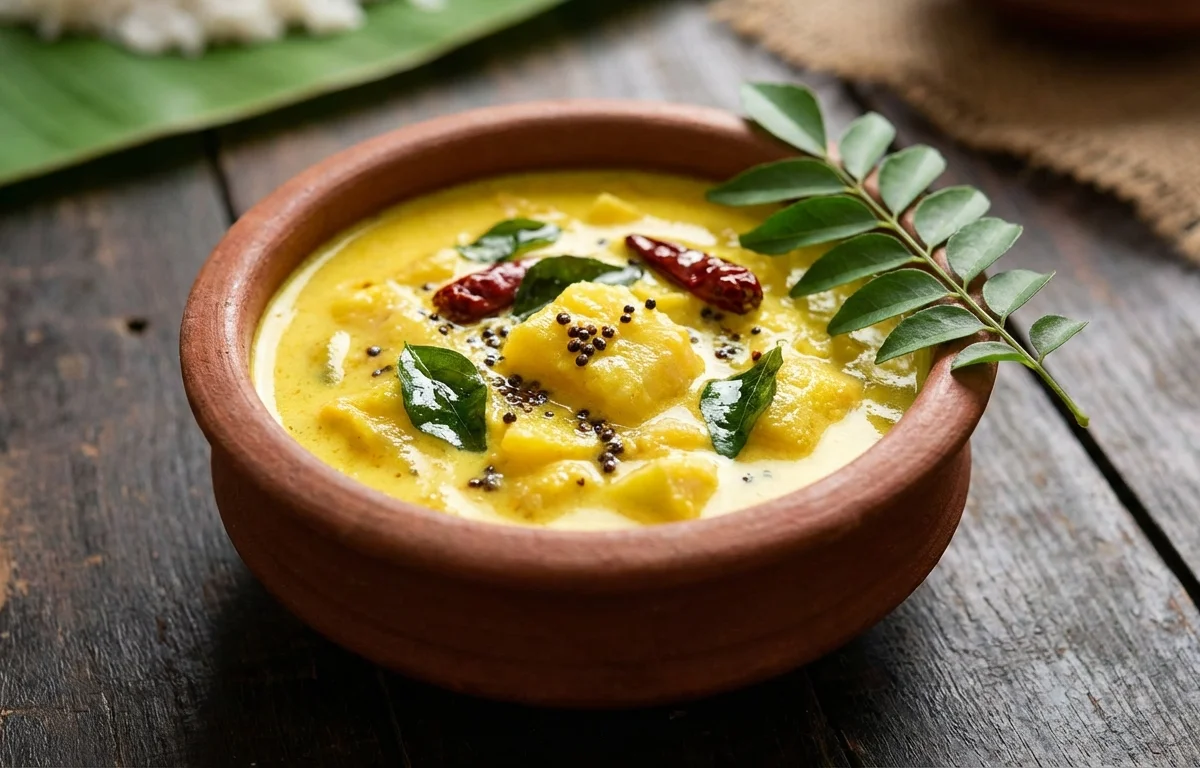
Manga Curry
A tangy and creamy Kerala-style curry made with raw mangoes and a luscious coconut paste. This delightful dish perfectly balances sour, spicy, and sweet notes, making it a perfect side for steamed rice.
For 4 servings
Prepare Mango and Coconut Paste
- Wash, peel, and chop the raw mangoes into 1-inch cubes, discarding the hard inner seed.
- In a high-speed blender, combine the grated coconut, cumin seeds, and green chillies.
- Add 1/4 cup of water and grind to a very smooth, fine paste. Add a splash more water only if needed for grinding. Set aside.
Cook the Mango
- Place the chopped mango pieces in a medium-sized pot or clay pot (manchatti).
- Add the turmeric powder, Kashmiri red chilli powder, salt, and 1.5 cups of water.
- Stir well, bring to a boil over medium heat, then reduce heat and simmer for 8-10 minutes, or until the mango pieces are tender but still hold their shape.
Combine and Finish the Curry
- Once the mango is cooked, reduce the flame to its lowest setting.
- Pour the ground coconut paste into the pot. Gently stir to combine everything.
- Add the powdered jaggery (if using) and stir until it dissolves completely.
- Heat the curry on the lowest flame for 3-4 minutes, stirring gently. DO NOT let it boil, as this will cause the coconut milk to split. The curry should just be heated through until it's steaming gently.
- Turn off the heat and set aside.
Prepare the Tempering (Tadka)
- In a small pan (tadka pan), heat the coconut oil over medium heat.
- Once the oil is hot, add the mustard seeds. Wait for them to splutter completely, which takes about 30 seconds.
- Add the fenugreek seeds, broken dried red chillies, and fresh curry leaves. Stand back as they will sizzle.
- Sauté for 30-40 seconds until the curry leaves are crisp and the chillies have darkened slightly.
Finalize and Serve
- Immediately pour the hot tempering over the prepared manga curry.
- Cover the pot with a lid and let it rest for at least 10 minutes to allow the flavors to meld.
- Gently stir before serving. Serve warm with steamed rice.
What to keep in mind.
5 tips from the recipe — small details that make a real difference to the final dish.
- 1Use firm, sour raw mangoes for the best authentic taste. The sourness is key to the dish.
- 2Never boil the curry after adding the coconut paste; just heat it through on a low flame to prevent it from splitting.
- 3Using coconut oil for the tempering is essential for the traditional Kerala flavor.
- 4For a smoother paste, you can use warm water while grinding the coconut.
- 5The curry tastes even better the next day as the flavors deepen and mature overnight.
Adapt it for your goals.
Sweeter Version
For a sweeter curry, use semi-ripe mangoes instead of fully raw ones. This version is known as Mambazha Curry and is equally delicious.
Creamier VersionCreamier Version
For a richer, creamier texture, you can add 2 tablespoons of thick curd (yogurt) along with the coconut paste. Ensure the curd is whisked well and the heat is very low.
With ShallotsWith Shallots
Add 2-3 sliced shallots (pearl onions) to the tempering along with the curry leaves for an extra layer of flavor.
Why this is on our healthy list.
Immunity Booster
Raw mangoes are an excellent source of Vitamin C, a powerful antioxidant that helps strengthen the immune system and protect the body against infections.
Aids Digestion
The fiber in raw mangoes, combined with digestive spices like cumin and fenugreek, promotes healthy gut function and can help prevent constipation.
Provides Healthy Fats
Coconut is a good source of medium-chain triglycerides (MCTs), a type of saturated fat that is more easily digested and converted into energy by the body.
Frequently asked questions
Look for firm, green, and distinctly sour raw mangoes. Varieties like Totapuri or any local sour mango work best. The firmness ensures they don't turn to mush while cooking.