
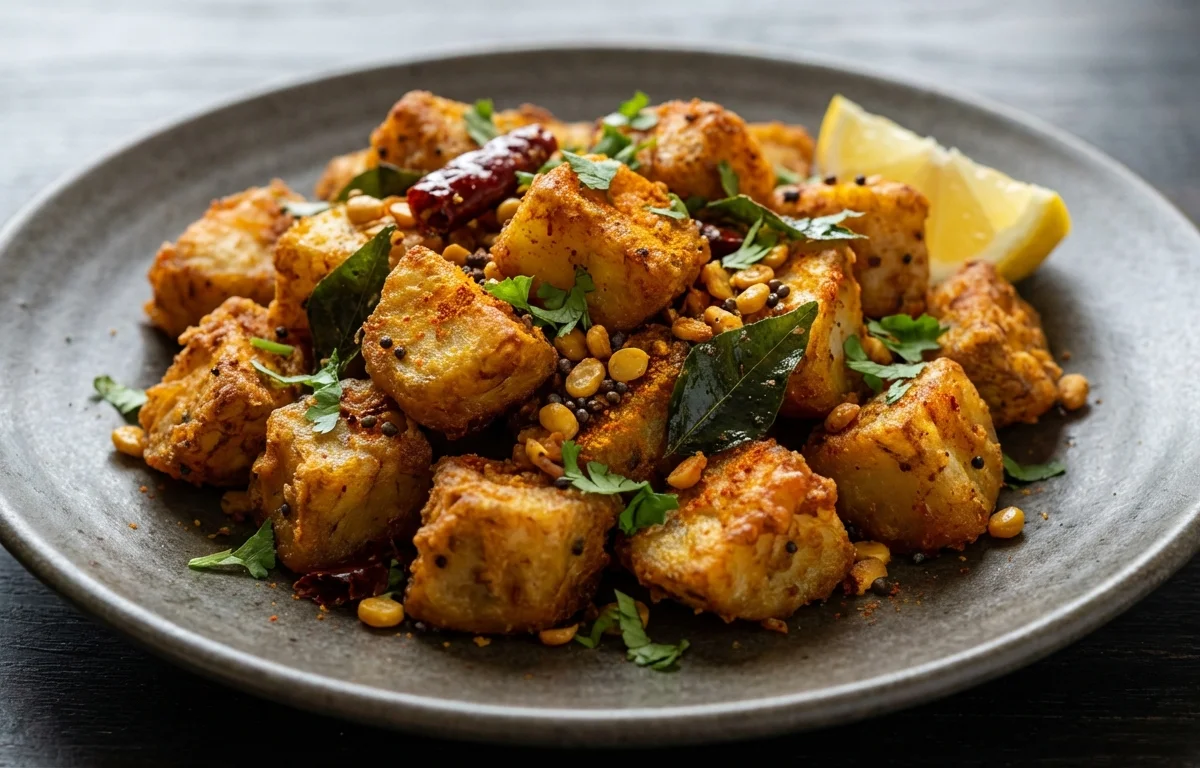
Chamadumpa Fry
A crispy and spicy stir-fry made with taro root, a classic side dish from Andhra Pradesh. The colocasia is first boiled, then pan-fried with aromatic spices until golden brown, making it a perfect accompaniment for rice and sambar.
For 4 servings
Boil and Prepare the Taro Root
- Wash the taro root thoroughly under running water to remove all dirt.
- Place the taro in a pressure cooker with enough water to cover them. Cook for 2-3 whistles (about 10-12 minutes) or until a knife can be inserted easily but the taro remains firm.
- Alternatively, boil in a pot for 15-20 minutes until just tender. Be careful not to overcook, as this will make them mushy.
- Drain the water completely and allow the taro root to cool down to room temperature. This step is crucial to prevent them from becoming slimy.
- Once cooled, peel the skin and chop the taro into 1-inch cubes or thick rounds.
Prepare the Tempering (Tadka)
- Heat oil in a wide, heavy-bottomed pan or kadai over medium heat.
- Add the mustard seeds and allow them to splutter, which should take about 30 seconds.
- Add the urad dal and chana dal. Sauté for 1-2 minutes, stirring continuously, until they turn a light golden brown and become aromatic.
- Add the broken dried red chilies, minced garlic, and curry leaves. Sauté for another 30-45 seconds until the garlic is fragrant and the curry leaves are crisp.
Fry the Taro Root
- Add the finely chopped onions to the pan and cook for 3-4 minutes until they soften and become translucent.
- Add the boiled and chopped taro pieces to the pan.
- Sprinkle the turmeric powder, red chili powder, coriander powder, rice flour, and salt over the taro.
- Gently toss everything together, ensuring each piece of taro is evenly coated with the spices. Avoid vigorous stirring to prevent the pieces from breaking.
- Spread the taro in a single layer and pan-fry for 8-10 minutes on medium-low heat. Stir occasionally, allowing the pieces to rest in the pan to develop a crispy, golden-brown crust on all sides.
Garnish and Serve
- Once the taro is crispy to your liking, turn off the heat.
- Garnish with freshly chopped coriander leaves and a squeeze of fresh lemon juice.
- Toss gently one last time and serve immediately as a side dish with hot rice and sambar or rasam.
What to keep in mind.
6 tips from the recipe — small details that make a real difference to the final dish.
- 1Do not overcook the taro root. It should be tender but firm, not mushy, to hold its shape during frying.
- 2Let the taro root cool completely before peeling and chopping. This helps it firm up and makes it less slimy and easier to handle.
- 3Adding rice flour is the secret to achieving an extra crispy exterior. Don't skip it!
- 4Fry on a medium to medium-low flame to ensure the taro becomes crispy evenly without burning the spices.
- 5For the best crust, avoid overcrowding the pan. If necessary, fry the taro in two batches.
- 6Use a wide, heavy-bottomed pan which provides more surface area for the taro pieces to crisp up.
Adapt it for your goals.
Spice Variation
Add a pinch of asafoetida (hing) to the hot oil during tempering for a traditional aroma and flavor.
Flavor BoostFlavor Boost
For a deeper flavor, add 1/2 teaspoon of ginger-garlic paste along with the onions.
Texture VariationTexture Variation
For a different kind of crispiness, you can substitute rice flour with 1 tablespoon of fine semolina (sooji/rava) or cornstarch.
Regional TwistRegional Twist
Incorporate 1 teaspoon of sambar powder or garam masala along with the other spice powders for a different flavor profile.
Why this is on our healthy list.
Rich in Dietary Fiber
Taro root is an excellent source of dietary fiber, which is essential for a healthy digestive system. Fiber aids in regular bowel movements, promotes gut health, and helps you feel full for longer.
Sustained Energy Release
As a starchy root vegetable, taro provides complex carbohydrates and resistant starch. These are digested slowly, offering a sustained release of energy and helping to maintain stable blood sugar levels.
Source of Essential Minerals
Taro root is a good source of important minerals like potassium, which is vital for heart health and blood pressure regulation, and manganese, an essential component of many enzymes in the body.
Frequently asked questions
One serving of Chamadumpa Fry (approximately 155g) contains an estimated 300-325 calories. The majority of calories come from the taro root (carbohydrates) and the oil used for frying.