
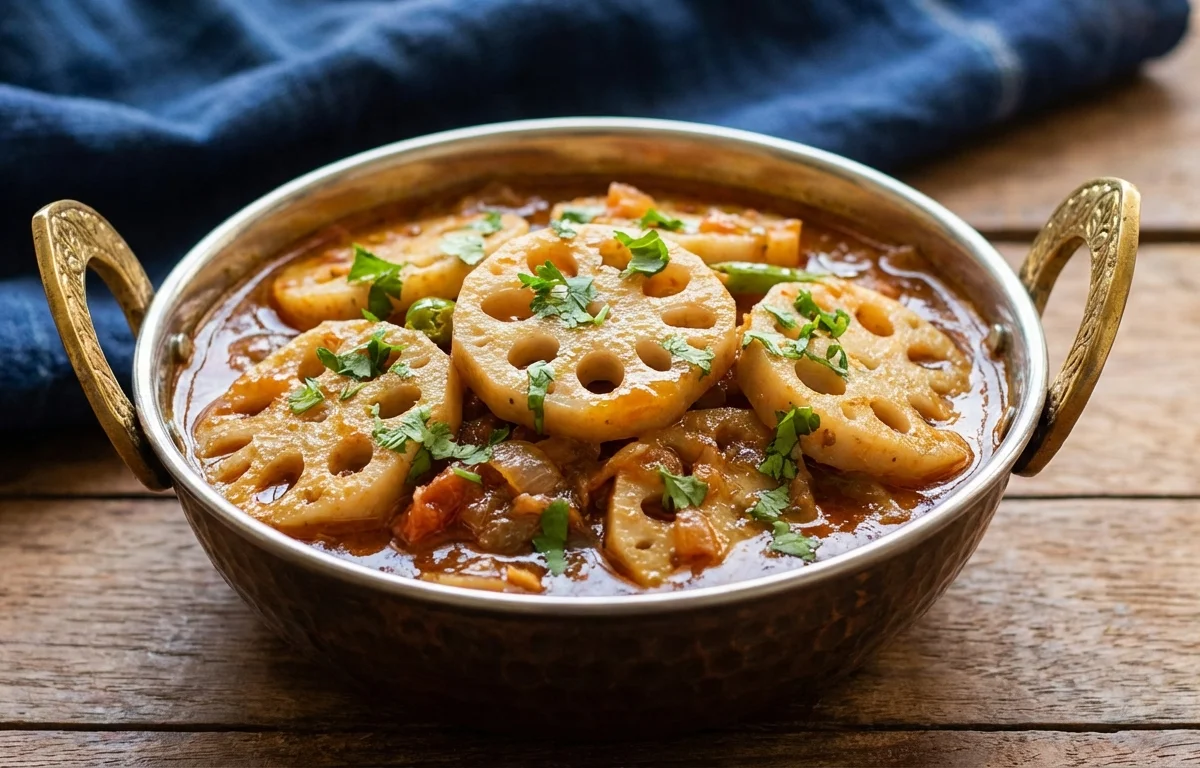
Bhein Basar
A classic Sindhi curry featuring tender lotus stem cooked in a rich, tangy onion and tomato gravy. This flavorful dish is a wonderful way to enjoy a unique vegetable, perfect with hot phulkas or steamed rice.
For 4 servings
Pressure Cook the Lotus Stem
- Place the cleaned and sliced lotus stem in a pressure cooker. Add 1 cup of water and 1/4 teaspoon of salt.
- Secure the lid and pressure cook on medium heat for 2-3 whistles, or for about 5-7 minutes on high pressure in an electric cooker.
- Allow the pressure to release naturally. Drain the lotus stem and set it aside. It should be tender but not mushy.
Prepare the Gravy Base
- Heat the vegetable oil in a heavy-bottomed pan or kadai over medium heat.
- Add the cumin seeds and let them sizzle for about 30 seconds until fragrant.
- Add the 2 finely chopped onions and sauté for 8-10 minutes, stirring occasionally, until they are deep golden brown. This step is crucial for the flavor of the gravy.
- Stir in the ginger-garlic paste and slit green chilies. Cook for another minute until the raw aroma disappears.
Cook the Masala
- Add the tomato puree to the pan and cook for 3-4 minutes, stirring frequently.
- Lower the heat and add the turmeric powder, red chili powder, and coriander powder. Mix well.
- Cook the masala for 5-7 minutes, stirring, until it thickens and you see oil separating from the sides.
Combine and Simmer
- Add the cooked lotus stem and the 1 thinly sliced onion to the masala. Gently stir to coat everything evenly.
- Pour in 1.5 cups of water, the remaining 1 teaspoon of salt, and the amchur powder. Stir well and bring the curry to a boil.
- Once boiling, reduce the heat to low, cover the pan, and let it simmer for 10-12 minutes. This allows the flavors to meld and the gravy to reach the desired consistency.
Finish and Serve
- Turn off the heat and stir in the garam masala powder.
- Garnish with freshly chopped coriander leaves.
- Let the curry rest for 5 minutes before serving hot with Sindhi phulkas, roti, or steamed rice.
What to keep in mind.
5 tips from the recipe — small details that make a real difference to the final dish.
- 1For best results, choose fresh, firm lotus stems that are whitish-brown and free from blemishes. Avoid any that look soft or dark.
- 2Thoroughly clean the lotus stem by peeling the outer skin and using a small brush or skewer to clean the holes under running water.
- 3The deep browning of the chopped onions is key to the authentic rich flavor and color of this Sindhi curry. Don't rush this step.
- 4The second, sliced onion is added later to provide a slight crunch and sweetness, which is a signature element of Bhein Basar.
- 5If you don't have amchur powder, you can use 1 tablespoon of tamarind pulp or a squeeze of fresh lemon juice, added at the very end.
Adapt it for your goals.
With Potatoes (Bhein Aloo)
Add one medium-sized potato, peeled and cubed, along with the lotus stem in the pressure cooker. This makes the curry heartier.
Creamy VersionCreamy Version
For a richer, milder gravy, stir in 2 tablespoons of fresh cream or a paste of 10 soaked cashews at the end of the cooking process.
With PeasWith Peas
Add 1/2 cup of green peas to the gravy along with the lotus stem for added texture and sweetness.
Why this is on our healthy list.
Rich in Dietary Fiber
Lotus stem is an excellent source of dietary fiber, which is essential for maintaining a healthy digestive system, preventing constipation, and promoting a feeling of fullness.
Good Source of Vitamin C
Both lotus stem and tomatoes are rich in Vitamin C, a powerful antioxidant that helps boost the immune system, protects cells from damage, and is vital for skin health.
Supports Heart Health
Lotus stem contains potassium, which helps regulate blood pressure, and pyridoxine (Vitamin B6), which helps control homocysteine levels in the blood, a factor associated with heart disease.
Frequently asked questions
First, peel the tough, brownish outer skin with a vegetable peeler. Then, slice it into rounds. The most important step is to check the holes for any trapped mud or dirt. You can poke a thin skewer through them or hold the slices under a strong stream of running water to flush them out.