
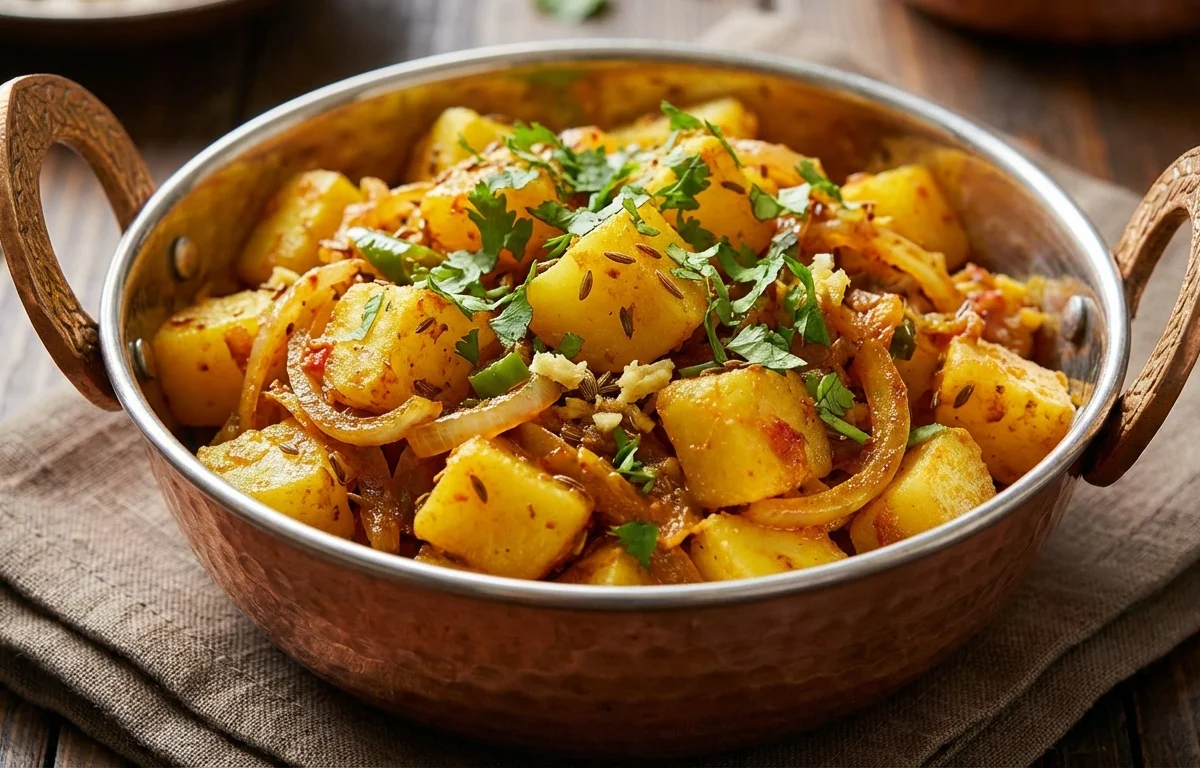
Aloo Pyaz ki Sabzi
A rustic and comforting North Indian curry made with tender potatoes and sweet, caramelized onions in a tangy tomato gravy. This simple, one-pot dish comes together quickly and is perfect for a weeknight meal with hot rotis.
For 4 servings
8 steps. 25 minutes total.
- 1
Heat oil in a heavy-bottomed pan or kadai over medium heat
- a.Once hot, add the cumin seeds and allow them to splutter for about 30 seconds. Add the hing and stir for a few seconds.
- 2
Step 2
- a.Add the thinly sliced onions and sauté, stirring frequently, for 8-10 minutes until they are deeply golden brown and caramelized. This step is crucial for developing the sweet, rich base flavor of the curry.
- 3
Stir in the ginger-garlic paste and slit green chilies
- a.Cook for about 1 minute until the raw aroma disappears.
- 4
Add the tomato puree
- a.Sauté for 2 minutes, then add the spice powders: turmeric, red chili powder, and coriander powder. Mix everything well and cook the masala, stirring occasionally, for 4-5 minutes until it thickens and you see oil separating at the edges.
- 5
Add the cubed potatoes and salt
- a.Gently stir to coat the potatoes evenly with the masala. Sauté for 2 more minutes.
- 6
Pour in 1.5 cups of water and stir well
- a.Bring the curry to a rolling boil, then reduce the heat to low. Cover the pan and let it simmer for 15-20 minutes, or until the potatoes are tender. You can check by piercing a potato with a knife; it should go through easily.
- 7
Once the potatoes are cooked, sprinkle in the garam masala and amchur powder
- a.Stir gently and let the curry simmer for another 1-2 minutes to allow the flavors to meld.
- 8
Turn off the heat
- a.Garnish with freshly chopped coriander leaves. Let the sabzi rest for 5 minutes before serving hot with roti, paratha, or puri.
What to keep in mind.
5 tips from the recipe — small details that make a real difference to the final dish.
- 1The key to this dish is caramelizing the onions well. Don't rush this step; sauté them on medium-low heat until they are a deep golden brown for maximum flavor.
- 2For a richer, creamier gravy, you can add 1 tablespoon of cashew paste or 2 tablespoons of full-fat yogurt (whisked) along with the tomato puree.
- 3If you don't have amchur (dry mango powder), a squeeze of fresh lemon juice added at the end will provide a similar tangy finish.
- 4To make this in a pressure cooker, follow steps 1-5, then add water and pressure cook for 2 whistles on medium heat. Let the pressure release naturally before adding the final spices.
- 5Using mustard oil instead of vegetable oil will impart a more traditional and pungent flavor to the sabzi.
Adapt it for your goals.
Aloo Matar Pyaz
Add 1/2 cup of green peas along with the potatoes for extra sweetness and texture.
Creamy VersionCreamy Version
Stir in 2-3 tablespoons of fresh cream (malai) or cashew cream at the end for a richer, restaurant-style finish.
With Baby PotatoesWith Baby Potatoes
Use 500g of baby potatoes, either whole or halved, instead of regular potatoes. They absorb the masala well and look appealing.
Jain Version (No Onion/Garlic)Jain Version (No Onion/Garlic)
Omit onions and ginger-garlic paste. Increase the amount of tomatoes and add a pinch more hing. The flavor will be different but still delicious.
Why this is on our healthy list.
Provides Sustained Energy
Potatoes are a rich source of complex carbohydrates, which are digested slowly, providing a steady release of energy to keep you active and full.
Rich in Antioxidants
Onions and tomatoes are packed with powerful antioxidants like quercetin and lycopene, which help protect your cells from damage and reduce inflammation.
Supports Digestive Health
The spices used, such as cumin, coriander, and hing (asafoetida), are traditionally known to aid digestion, reduce gas, and prevent bloating.
Naturally Vegan & Gluten-Free
This recipe is made entirely from plant-based ingredients and contains no gluten, making it an excellent choice for those following vegan or gluten-free diets.
Frequently asked questions
A single serving of Aloo Pyaz ki Sabzi (approximately 1 cup or 350g) contains around 240-260 calories. This is an estimate and can vary based on the amount of oil used and the size of the vegetables.