
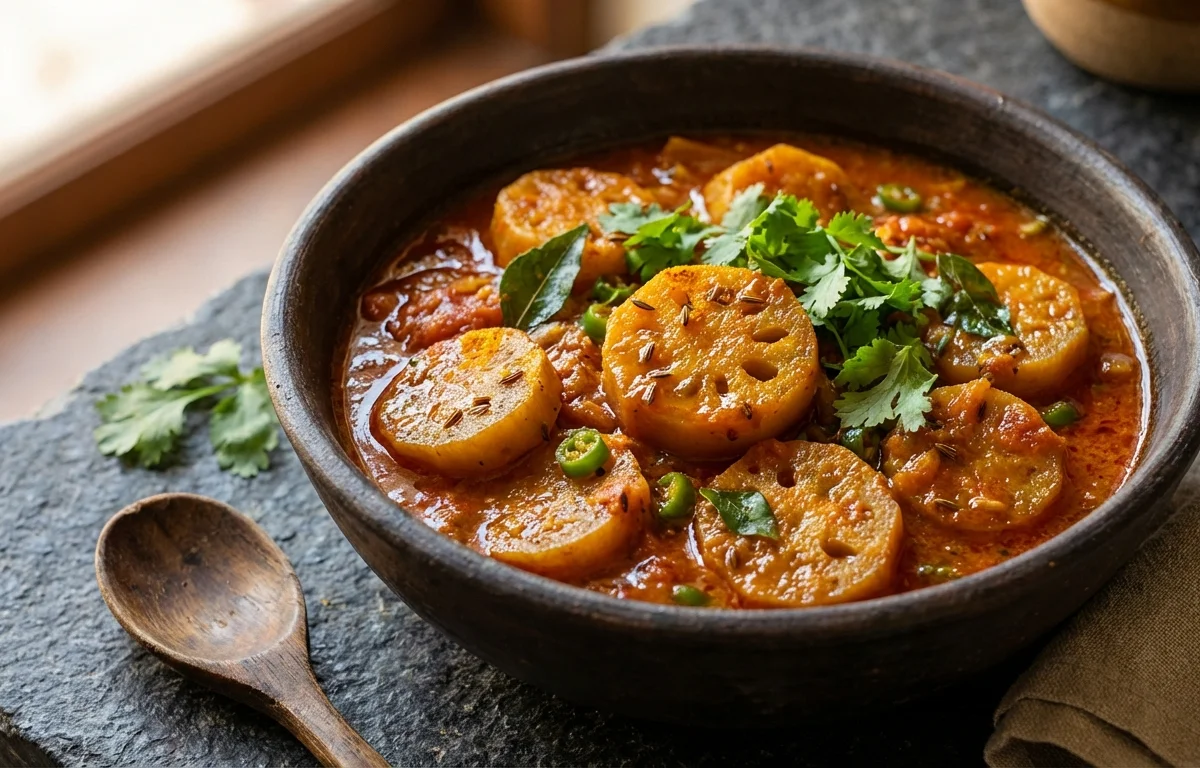
Singhi Tamate Mein
A classic Sindhi curry featuring tender, rehydrated lotus root simmered in a tangy and spicy tomato gravy. This comforting dish is a taste of traditional home-style cooking, best enjoyed with hot phulkas or steamed rice.
For 4 servings
Prepare the Dried Lotus Root (Singhi)
- Rinse the dried lotus root under running water to remove any dust.
- Place them in a large bowl and cover with ample water. Let them soak for at least 8 hours, or preferably overnight. They will swell and soften.
- Drain the soaking water. Transfer the soaked lotus root to a pressure cooker. Add 2 cups of fresh water and 0.5 tsp of salt.
- Secure the lid and pressure cook on medium heat for 4-5 whistles, about 15-20 minutes. Let the pressure release naturally. The lotus root should be tender but not mushy. Drain and set aside.
Create the Tomato Masala Base
- Heat oil in the same pressure cooker (or a heavy-bottomed pan) over medium heat.
- Add the cumin seeds and allow them to crackle for about 30 seconds.
- Add the finely chopped onions and sauté for 7-8 minutes until they turn soft and golden brown.
- Stir in the ginger-garlic paste and slit green chilies. Cook for another minute until the raw smell disappears.
Cook the Gravy
- Add the tomato puree to the cooker. Stir in the turmeric powder, red chili powder, and coriander powder.
- Mix well and cook the masala for 8-10 minutes, stirring occasionally. Continue cooking until the mixture thickens and you see oil separating from the sides of the masala.
- This step is crucial for developing a deep flavor in the curry.
Combine and Final Cook
- Add the pre-cooked lotus root to the tomato masala. Gently stir to coat them evenly.
- Pour in 2.5 cups of water and the remaining 0.75 tsp of salt. Stir everything together.
- Secure the lid of the pressure cooker. Cook on medium heat for 2 more whistles to allow the lotus root to absorb the flavors of the gravy.
- Turn off the heat and let the pressure release naturally.
Garnish and Serve
- Open the cooker lid. Sprinkle the garam masala and freshly chopped coriander leaves over the curry.
- Gently stir to combine. Let the curry rest for 5 minutes for the flavors to settle.
- Serve hot with phulkas (rotis), parathas, or steamed rice.
What to keep in mind.
4 tips from the recipe — small details that make a real difference to the final dish.
- 1Overnight soaking is highly recommended for the best texture. Do not skip this step, or the lotus root will be tough.
- 2The cooking time for lotus root can vary. If they still feel tough after the first pressure cook, cook for another 1-2 whistles.
- 3For a thicker, richer gravy, you can add 1 tablespoon of besan (gram flour) after sautéing the onions and roast it for a minute before adding the tomato puree.
- 4Adjust the tanginess by adding a teaspoon of amchur (dry mango powder) along with the garam masala at the end.
Adapt it for your goals.
Ingredient Swap
If you can't find dried lotus root, this curry can also be made with dried drumsticks (suhanjro) following the same soaking and cooking process.
Add VegetablesAdd Vegetables
Add 1-2 peeled and cubed potatoes along with the lotus root during the final pressure cooking stage for a more filling curry.
No Onion/Garlic VersionNo Onion/Garlic Version
For a satvik version, omit the onions and ginger-garlic paste. Increase the amount of tomatoes and add a pinch of asafoetida (hing) to the hot oil with the cumin seeds.
Why this is on our healthy list.
Rich in Dietary Fiber
Lotus root is packed with dietary fiber, which promotes healthy digestion, prevents constipation, and helps in maintaining stable blood sugar levels.
Boosts Immunity
The high Vitamin C content from tomatoes acts as a powerful antioxidant, strengthening the immune system and protecting the body against infections.
Anti-inflammatory Properties
Spices like turmeric (containing curcumin) and ginger have natural anti-inflammatory compounds that can help reduce inflammation in the body.
Good for Heart Health
Lotus root contains potassium, which helps regulate blood pressure. The fiber content also aids in managing cholesterol levels, contributing to overall cardiovascular health.
Frequently asked questions
One serving of Singhi Tamate Mein contains approximately 220-260 calories, depending on the amount of oil used. It's a moderately caloric dish that is quite nutritious.