
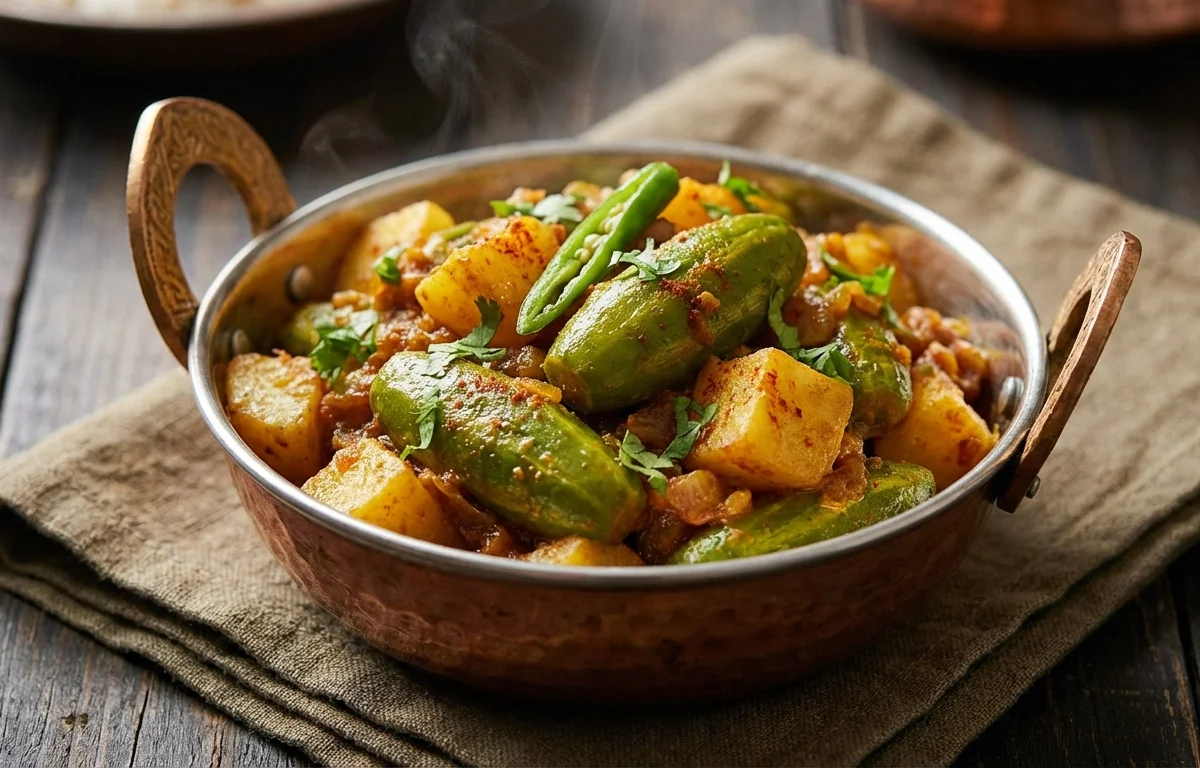
Parwal Sabzi
A simple and wholesome North Indian stir-fry made with pointed gourd and potatoes. This everyday sabzi comes together quickly with basic spices and pairs perfectly with roti or dal rice.
For 4 servings
Prepare the Vegetables
- Wash the parwal thoroughly. Lightly scrape the outer skin with a knife, but do not peel completely. Trim the ends and slice into 1/2-inch thick rounds.
- Peel the potato and dice it into 1/2-inch cubes. Place the cubed potatoes in a bowl of water to prevent them from browning.
- Finely chop the onion and tomatoes. Slit the green chilies lengthwise.
Sauté Aromatics and Spices
- Heat oil in a heavy-bottomed pan or kadai over medium heat. Once hot, add the cumin seeds and allow them to splutter for about 30 seconds.
- Add the finely chopped onions and sauté for 3-4 minutes until they become soft and translucent.
- Add the ginger-garlic paste and slit green chilies. Cook for another minute until the raw aroma disappears.
Cook the Masala Base
- Add the chopped tomatoes to the pan, followed by the powdered spices: turmeric powder, red chili powder, coriander powder, and salt.
- Stir everything together well. Cook the masala for 5-6 minutes, stirring occasionally, until the tomatoes break down and the oil begins to separate at the edges of the pan.
Cook the Sabzi
- Drain the water from the potatoes and add both the potatoes and parwal to the masala.
- Gently stir for 2-3 minutes to ensure the vegetables are evenly coated with the spice mixture.
- Pour in 1/4 cup of water, stir, and bring the mixture to a gentle simmer.
- Reduce the heat to low, cover the pan with a lid, and let it cook for 15-18 minutes. Stir once or twice in between to prevent sticking.
- Cook until both the parwal and potatoes are tender. You can check by piercing a piece with a fork.
Garnish and Serve
- Once the vegetables are fully cooked, remove the lid.
- Sprinkle the garam masala and freshly chopped coriander leaves over the sabzi.
- Gently mix to combine. Turn off the heat.
- Let the sabzi rest for 5 minutes before serving hot with fresh rotis, parathas, or as a side with dal and rice.
What to keep in mind.
5 tips from the recipe — small details that make a real difference to the final dish.
- 1Select young, tender, and bright green parwal for the best taste and texture. Avoid any that are yellowish or have hard seeds.
- 2Cutting the parwal and potatoes to a uniform size ensures they cook evenly and at the same rate.
- 3This is a dry sabzi, so add water sparingly. The vegetables should primarily cook in their own steam.
- 4For a slightly tangy flavor, you can add a teaspoon of amchur (dry mango powder) along with the garam masala at the end.
- 5To enhance the flavor, you can shallow fry the parwal and potato pieces separately until light golden brown before adding them to the masala.
Adapt it for your goals.
With Gravy
To make a gravy version, add 1 cup of water after sautéing the vegetables with the masala. Simmer until the vegetables are cooked and the gravy thickens. You can also add a paste of cashews or melon seeds for a richer, creamier gravy.
Punjabi StylePunjabi Style
For a richer, Punjabi-style flavor, increase the amount of onion and tomato. You can also add a tablespoon of curd or cream to the masala for a tangy and creamy texture.
No Onion No GarlicNo Onion No Garlic
For a Sattvic version, skip the onion and ginger-garlic paste. Add a pinch of asafoetida (hing) to the hot oil along with the cumin seeds for flavor.
Why this is on our healthy list.
Aids Digestion
Parwal is a gut-friendly vegetable that is light on the stomach and rich in dietary fiber. It helps regulate bowel movements and can prevent constipation.
Rich in Antioxidants
Pointed gourd is a good source of Vitamin A and Vitamin C, which are powerful antioxidants that help combat free radicals and boost the immune system.
Blood Purifier
In traditional Ayurvedic medicine, parwal is valued for its blood-purifying properties, which can help in cleansing the blood and tissues, promoting overall health.
Frequently asked questions
One serving of this Parwal Sabzi contains approximately 180-200 calories, making it a light and healthy option for a meal. The exact count can vary based on the amount of oil and size of the vegetables used.